How to Reduce Home Energy Bills with Roof Restoration

PUBLISHED ON : September 6, 2026
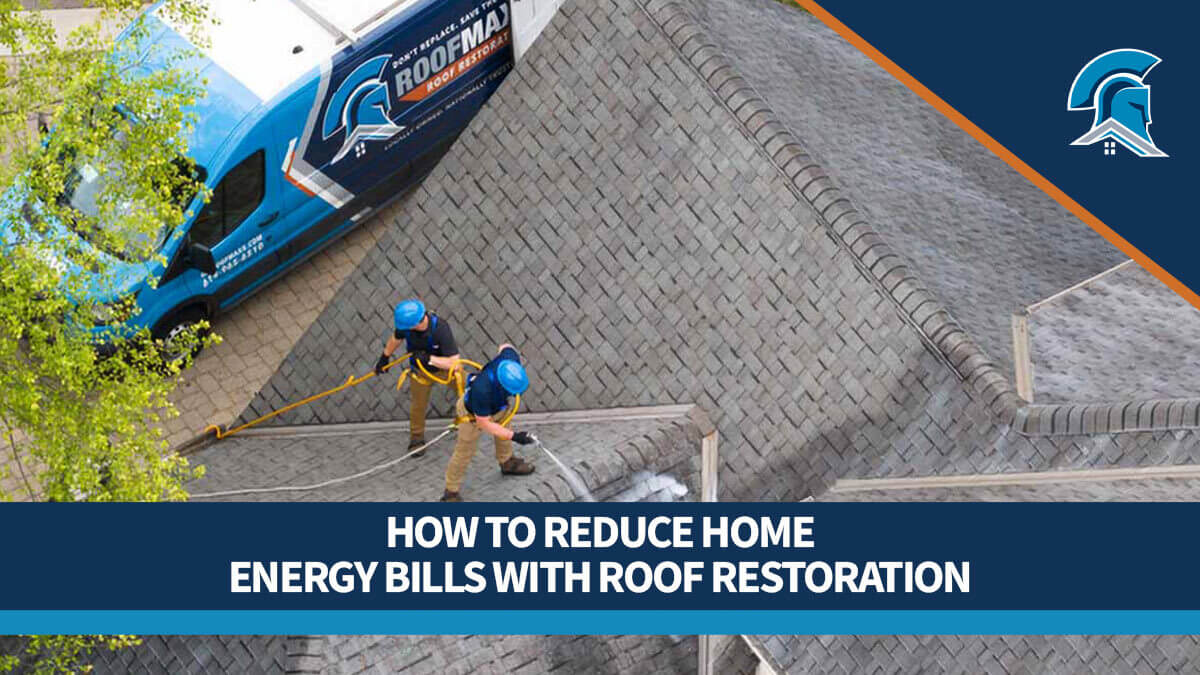
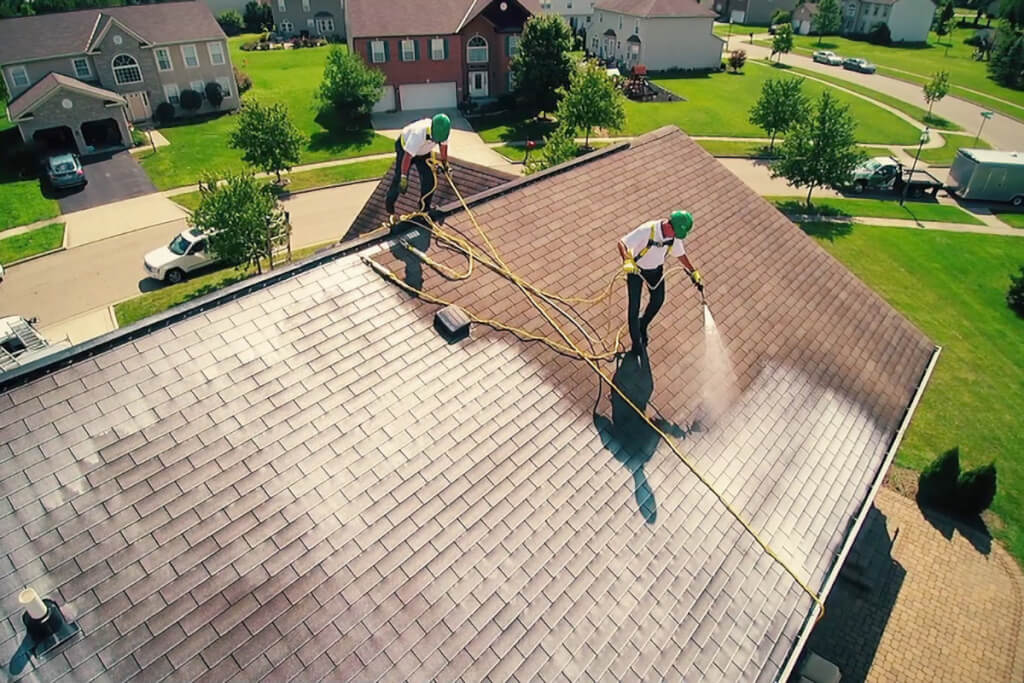
Two Roof Maxx dealers apply roof restoration treatment from an aerial view with a branded van visible nearby.

Summary

Home energy bills can rise when heat transfers through a poorly maintained roof into your home, forcing your HVAC system to work harder to keep indoor temperatures stable. While roof restoration doesn’t improve energy efficiency directly, it does effectively slow down the kind of damage that worsens heat gain and loss through the attic, including granule loss. For the greatest benefit, experts recommend pairing treatments with targeted upgrades like better attic insulation, air sealing, and improved ventilation.


Time to Read
  • ~8 Minutes
What You’ll Learn
  • How heat moves through your roof
  • The financial cost of heat gain and heat loss
  • Climate-specific opportunities to reduce waste
  • How roof restoration helps support better energy efficiency
Next Steps
  • Schedule a free roof assessment with Roof Maxx
  • Upgrade your attic insulation and ventilation
  • Find out how roof restoration can save you money

Home Energy Bills and Roof Restoration

American homeowners are paying more for electricity than they did just a few years ago, according to the U.S. EIA. The average cost per kilowatt-hour (kWh) for residential homes rose from an already lofty 13.15 cents in 2020 to 16.48 cents in 2024. That’s an increase of more than 25% in just four years!


Over 52% of all household energy use stems from heating and cooling, but reducing the related sticker shock doesn’t have to mean turning off your HVAC system in the middle of a blizzard or heat wave. You can save a bundle just by rooting out the most commonly overlooked causes of unintentional waste.


Below, you’ll learn why your efforts should always start at the roof and which targeted upgrades are most effective in different climates. Use our free calculator to quickly estimate your potential savings, then find out how Roof Maxx’s multi-step restoration solution can help protect your investment.

Roof Heat Transfer: The Sneakiest Contributor to Inefficiency

Your roofing system is the first line of defense between the elements and your home. Every layer of material from your shingles to the decking underneath them works together to provide protection from UV rays, temperature extremes, rain, ice, snow, and environmental debris.


Building materials like these all transfer heat to some degree through a physical process called thermal conduction. Warmth from the hotter side transfers into the cooler side as energy when they make contact, which results in heat loss on the first side and heat gain on the second.


The same process continues from one layer to the next until the temperature difference is gone or there are no more materials left for the heat to pass through.


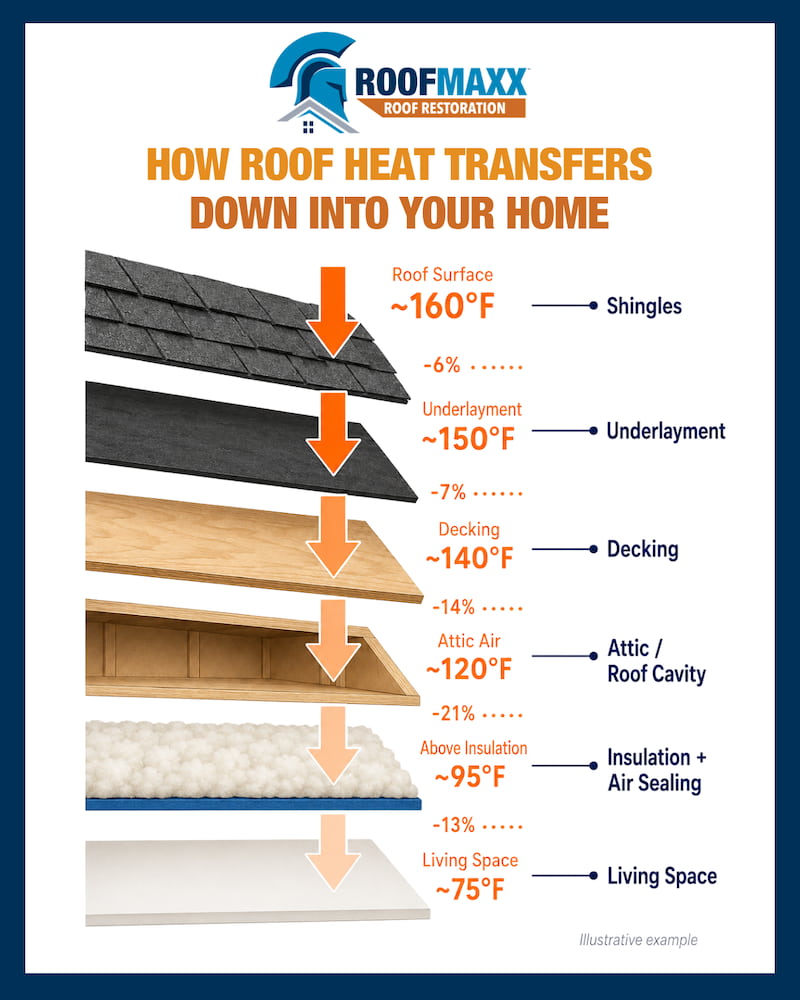
This is a little easier to understand visually, so here’s a helpful graphic:

Infographic showing how heat transfers from the surface of the roof down into the home.

The last “step,” in most cases, will be the air inside your attic or crawlspace, but since air is technically a fluid, temperature differences trigger convection instead:


  • Warm air rises to the roof
  • Cooler air sinks down toward the floor

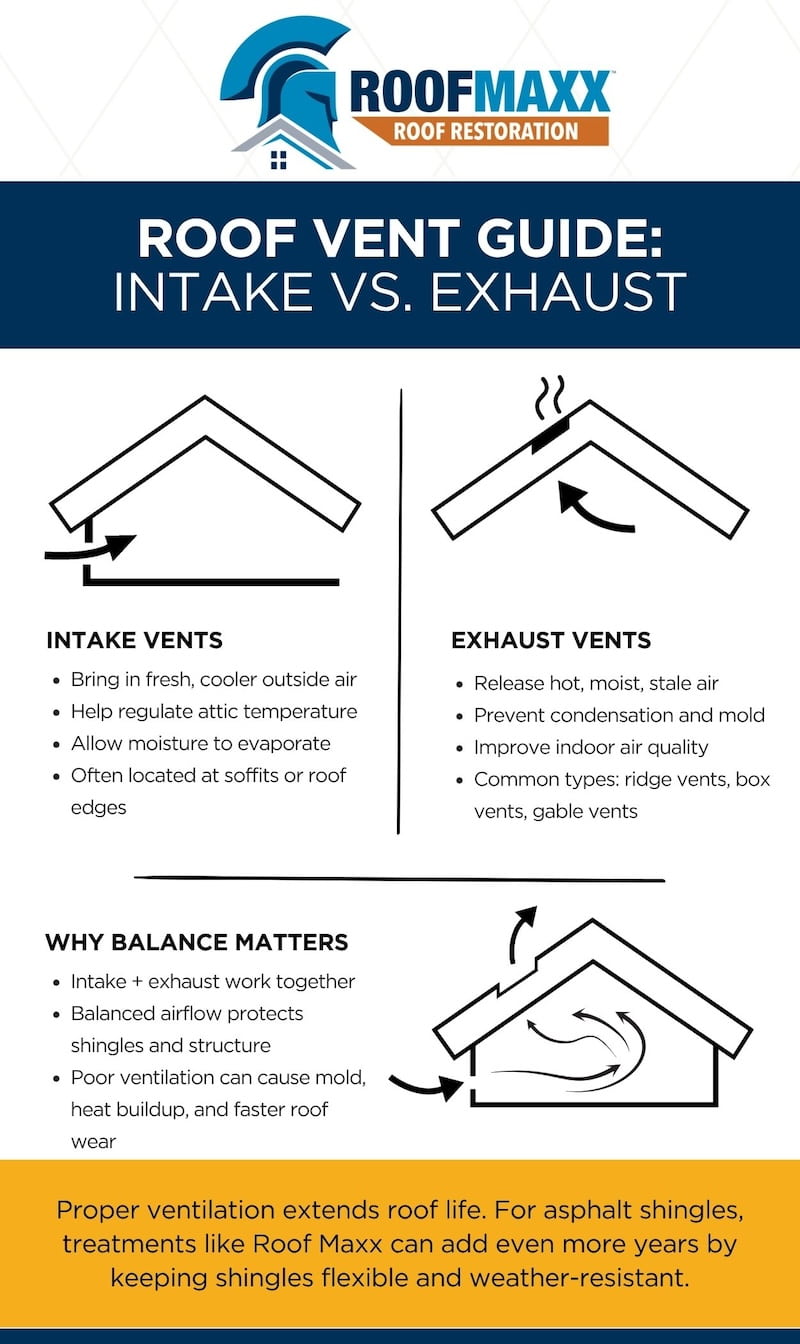
This continuous cycle can actually spread heat from the roof down into your home or accelerate how fast warm air escapes through the roof instead. It’s one of the main reasons why having the right number of intake and exhaust vents is so important.


You can see how this works in the graphic below:

Infographic showing how intake and exhaust vents circulate air in the roof.

The Financial Costs of Heat Gain and Loss

Any heat transfer that pushes indoor temperatures away from your thermostat setting forces your HVAC system to work harder. Your AC, furnace, or heat pump will kick in more often, run longer, and in severe cases, could run continuously around the clock, driving your bill up.


It doesn’t take much for that extra runtime to add up, either. Use the info in the chart below to get a rough estimate of what you’ll pay for just one extra hour of use per day over a single month or an entire year.


DeviceEnergy UseOver 30 DaysMonthly CostOver 1 YearApprox. annual cost*
Small window AC (8,000 BTU)0.7 kW21 kWh$3.63256 kWh$44.29
Large window AC (12,000 BTU)1.1 kW33 kWh$5.71402 kWh$69.55
Portable AC (10,000 to 12,000 BTU)1.2 kW36 kWh$6.23438 kWh$75.77
Mini-split or ductless heat pump (12,000 BTU)0.9 kW27 kWh$4.67329 kWh$56.92
Central AC, smaller home (about 2 tons)2.3 kW69 kWh$11.94840 kWh$145.32
Central AC, average home (about 3 tons)3.5 kW105 kWh$18.171,278 kWh$221.09

The prices shown here are based on the average price of electricity in the United States in 2025 (17.30¢ per kWh). Your actual cost will depend on local utility rates.

Climate-Related Risks and Opportunities

Cost-per-hour is a useful figure for analyzing your energy bills more closely, but you should also know that the risk of unwanted heat transfer is higher in certain climates. For the purposes of this article, we’ll specifically focus on the eight specific climate zones the DoE uses to establish building practices.


Find the option that best matches where you live in this chart to learn what you’re up against and get targeted recommendations for upgrades that deliver the highest potential savings.


ZoneExample LocationsMain RiskPotential UpgradesPotential HVAC Savings*
Hot-HumidMiami, Tampa, Orlando, Houston, New Orleans, HonoluluHeat gain and humidity
  • Cool Roof Technology
  • Radiant/Reflective Barriers
  • Seal & Insulate Ductwork
  • Whole-Home Dehumidification
9–14%
Hot-DryPhoenix, Tucson, Las Vegas, Palm Springs, YumaExtreme solar heat gain
  • Cool Roof Technology
  • Radiant/Reflective Barriers
  • Evaporative Cooling
  • Nighttime Ventilation
~14%
Mixed-HumidAtlanta, Charlotte, Nashville, Baltimore, St. LouisSummer heat gain + winter heat loss
  • Spray Foam Insulation
  • Moisture-Control Vapor Barriers
  • Humidity-Controlled Ventilation
  • Whole-Home Dehumidification
14–17%
Mixed-DryAlbuquerque, Amarillo, eastern NM, western TXSeasonal heat gain + heat loss
  • Evaporative Cooling
  • Nighttime Ventilation
  • Insulated/Buried Attic Ducts
  • Radiant/Reflective Barriers
~17%
MarineSeattle, Portland, Eureka, coastal Northern CaliforniaWinter heat loss + moisture
  • Heat-Recovery Ventilator (HRV)
  • Moisture-Control Vapor Barriers
  • Exterior Roof Insulation
  • Moisture-Resistant Roofing
~17%
ColdChicago, Detroit, Boston, Minneapolis, Denver, BuffaloWinter heat loss
  • Ice & Water Membrane
  • Exterior Roof Insulation
  • Heat-Recovery Ventilator (HRV)
  • Cold-Climate Heat Pump
16–18%
Very ColdDuluth, Grand Forks, Caribou, AnchorageSevere winter heat loss
  • Closed-Cell Spray Foam
  • Exterior Roof Insulation
  • Ventilated Roof Overlay
  • Ice & Water Membrane
~19%
SubarcticFairbanks, Nome, Bethel, UtqiaġvikExtreme heating demand
  • Ventilated Roof Overlay
  • High-R Exterior Roof Insulation
  • Cold-Climate Heat Pump
  • Heat-Recovery Ventilator (HRV)
~18%

*Amounts are based on ENERGY STAR estimates for air sealing and adding insulation in each climate and are for illustration purposes only. Actual savings from the other listed upgrades may be higher or lower depending on factors like the size of your home and the cost of materials.

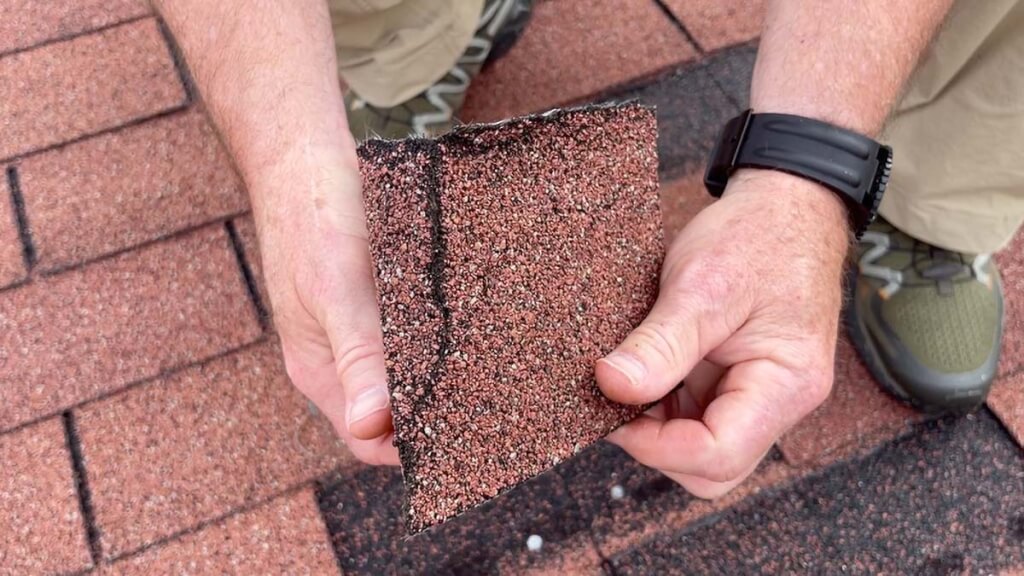
Close up shot of a roofer holding and showing a cracked shingle from a brown asphalt roof.

The Shingle Aging and Heat Transfer Connection

Generally speaking, you can expect an asphalt shingle roof to last around 20-30 years if you care for it properly, but the asphalt mix in the core starts to degrade almost from day 1. The wear and tear is usually obvious enough that a roofer can easily spot it during an inspection by around year 7-10.


UV radiation is the number one driver of age-related degradation. It causes the petrochemical oils in the core of each shingle to break down while also heating up the surface of the roof throughout the day. Add in thermal stress from temperature swings, and you have the perfect storm of self-perpetuating harm:

How Shingles Age Over Time:

  • The asphalt core becomes increasingly stiff and brittle first.
  • Shingles struggle to expand and contract as the roof heats and cools.
  • The reflective granules on the surface begin to fall off at a faster rate.
  • Bald patches start to develop, exposing the asphalt underneath to the hot sun.
  • Incoming UV rays are absorbed into the asphalt instead of reflected away from it.
  • Higher surface temperatures accelerate oil loss and add more thermal stress.
  • The cycle of aging progresses faster and faster.

Left unchecked, this will eventually cause the shingles to crack or even fail completely, but even minor age-related wear and tear can make it easier for heat to transfer through the roof in either direction.


That’s why you can’t really have a conversation about energy efficiency without talking about the condition of your roof at the same time. You can spend a small fortune on fancy high-efficiency HVAC equipment and still end up with a high bill if the roof is your number one source of heat gain or heat loss.

Two Roof Maxx dealers in green hard hats spray an asphalt shingle roof on a sunny day in a residential neighborhood.

The Best Way to Diagnose Roof-Related Inefficiencies

You can’t fix inefficiencies or plan out upgrades if you don’t fully understand what’s causing them in the first place. That’s why scheduling a Roof Maxx assessment should always come first.


You’ll work directly with a local dealer who will:

  • Schedule an in-person assessment at a time that’s convenient for you.
  • Ask you about the age of your roof, past repairs, and storm damage.
  • Walk the exterior to look for drainage problems and or visible signs of wear.
  • Confirm the condition of your shingles, flashing, seals, and other components.
  • Check your attic or crawlspace insulation and ventilation setup.

They’ll tell you what they find afterward and help you explore your options so you can determine the best way to proceed based on your needs and budget. There’s no obligation to proceed beyond that, but most homeowners do once they learn how much value Roof Maxx brings to the table.

How Roof Maxx Helps You Protect Your ROI

The best time to protect your roof from the harmful effects of shingle aging is before serious damage starts to stack up. The second-best time is whenever you want to get more life out of your existing roof.


Roof Maxx is a multi-step roof maintenance and restoration solution that can effectively roll back the clock on aging shingles by making them flexible again for up to five years, guaranteed.*


Homeowners with qualifying roofs enjoy big benefits:

  • Loss of the UV-reflective granules on the surface slows by up to 46%
  • Shingles regain the ability to expand and contract with the weather
  • The roof is better able to tolerate heat, impacts, and moisture because it’s intact
  • Better durability reduces the risk of future damage and shingle failure

While restoration doesn’t boost energy efficiency directly, it will help you keep your roof in good condition, especially if you pair it with our optional Roof Tune-Up. It’s a smart, affordable way to get more life out of your roof and protect everything underneath it at the same time.


*Some roofs may qualify for additional treatments at regular intervals, which can extend the life of your shingles by up to 15 years.

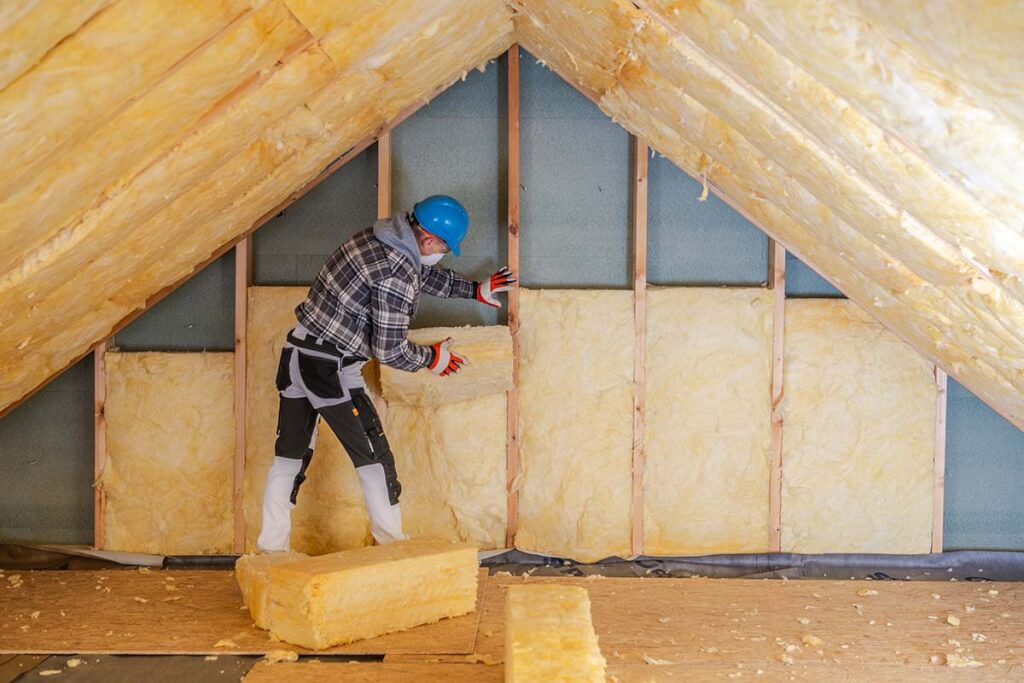
A worker installs fresh insulation in a customer's attic.

Other Upgrades That Reduce Your Energy Waste

Roof restoration is an effective solution for shingle aging, but it works even better when you pair it with proper roof care and the right efficiency upgrades. Scan the chart below to get a quick snapshot of what most experts recommend and what they typically cost.


UpgradeTarget IssueTypical CostUseful Benchmarks
Improve Your Attic InsulationHeat transfer via the attic floor$1,700 to $2,500Suggested R-Values:
  • Hot Humid or Dry: R-30 to R-60
  • Mixed: R-38 to R-60
  • Cold-Subarctic: R-49 to R-60
Add a Radiant BarrierSolar heat entering the attic$710 to $2,840
  • Best for: Hot-Humid Climates
  • Cooling savings: 8% to 12%
  • Minimum gap: 0.75″
Add More Ridge and Soffit VentsTrapped attic heat/moisture$615 to $1,115Recommended Vent Space Ratios:
  • Standard: 1 sq. ft. per 150 sq. ft.
  • Balanced: 1 sq. ft. per 300 sq. ft.
  • Ridge: 40% to 50% of the total vent area
Air Seal the AtticAir leaks between attic and living space$250 to $750Average Savings:
  • Heating/Cooling Costs: 15%
  • Total Energy Use: 11%
Seal Your DuctsConditioned air escaping through duct leaks$500 to $4,000
  • Potential Efficiency Boost: ~20%
Insulate all DuctworkHeat transfer through ducts$1,000 to $2,700
  • Target R-Value: R-6+
Seal Attic HatchesAir leaks through attic access$1 to $7/sq. ft.
  • Ideal R-Value: Match the attic
  • Weatherstrip the perimeter

Calculate Your Potential Savings and Upfront Costs

The last piece of the puzzle is to put all this information to good use by calculating how much roof restoration and efficiency upgrades can save you over time.


To use our free calculator:

  • Enter the size and pitch of your roof (your best guess is okay)
  • Tell us a little bit about your shingles and local climate
  • Pick the upgrades you’re most interested in leveraging
  • Click “see my results”

You’ll get an instant readout that includes helpful info about upfront costs and savings over 1 month, 1 year, and 5 years so you can get a jump on planning your next project.

Roof Maxx Energy & Roof Savings Calculator

Step 1 of 4

Tell Us About Your Roof

We'll use these details to give you a rough comparison between the cost of replacing your asphalt-shingle roof and treating a qualifying roof with Roof Maxx.18

Add Your Energy Costs

Use whichever information is easiest to find on your bill. We'll use it to create a simple energy-cost baseline.

$
kWh
¢/kWh
We'll estimate heating and cooling at 52% of your household electricity use, based on the U.S. average.2

Choose the Improvements You Want to Compare

Pick any or all of the following upgrades. We'll run a quick calculation that shows you the potential savings for each one over 1, 3, and 5 years compared to the cost to upgrade. If you aren't sure which improvements make the most sense, contact your local Roof Maxx dealer for a free assessment.

Common Roof & Attic Upgrades

Recommended for Your Climate

Your Estimated Savings & Costs

Your Current Annual Energy Bill
$0
Estimated Annual Cooling Cost
$0
Estimated Annual Heating Cost
$0

Potential Energy Savings

Each upgrade is listed on its own so you can explore the benefits individually.

20-Year Energy Savings View

This chart uses midpoint estimates to make the long-term relationship easier to see.

Cumulative Energy Savings Over Time
See how estimated energy savings can build over time. The dashed orange line shows the estimated cumulative cost of Roof Maxx treatments at years 10, 15, and 20.19

How Roof Maxx Can Help Protect Your Investment

Roof Maxx isn't designed to deliver energy savings or help lower heating and cooling costs directly. Instead, it keeps aging asphalt shingles flexible for at least five more years so they can continue handling UV rays, moisture, temperature changes, and impact without breaking down as quickly.

A healthy roof is much less likely to develop the kind of problems that cost thousands of dollars to fix, but neglect can also shorten the life of your roof or compromise your efficiency upgrades. For the best possible protection, always pair Roof Maxx with other recommended maintenance strategies.

Estimated Cost of Roof Replacement
$0–$0

Ballpark asphalt-shingle replacement estimate based on your roof details.18

Estimated Cost of Roof Maxx
$0–$0

Estimated cost for one qualifying treatment.19

Potential Upfront Difference
$0–$0

Illustrative difference between treatment and replacing the roof now.

Protect Your Efficiency Upgrades
COST TO REPLACE INSULATION: $1.50–$8.75/sq. ft.21

Roof leaks allow water to travel into the attic and soak insulation. Moisture can fill the tiny air spaces insulation relies on to slow heat transfer, which lowers the material's effective R-value and allows heat to move through more easily.36

Lower Your Repair Risk
COST TO REPAIR A LEAK: $700–$3,00020

Years of constant exposure to UV rays and temperature changes can dry out the petrochemical softeners in asphalt shingles. Brittle shingles don't properly expand and contract with the weather and may crack or break, exposing the rest of the roof to moisture.

Delay a Major Expense
POTENTIAL SAVINGS WITH ROOF MAXX: $0–$0

Once aging shingles become too dry and brittle to keep performing properly, replacement may become the only practical option. Roof Maxx helps you extend the life of your shingles so you don't have to absorb the expense until it's absolutely necessary.19

Projections generated by this utility are illustrative estimates formulated for informational purposes only. Actual costs and savings may vary depending on factors like the size of your home, climate, and HVAC usage patterns.
Sources Used In This Calculator
  1. U.S. Energy Information Administration — 2025 U.S. residential electricity rate.
  2. U.S. Energy Information Administration — household heating and cooling energy share.
  3. ENERGY STAR — modeled savings from air sealing and adding insulation.
  4. Florida Solar Energy Center — passive attic ventilation and photovoltaic attic-fan performance.
  5. ENERGY STAR — duct sealing and insulation benefits.
  6. U.S. Department of Energy — radiant-barrier guidance.
  7. U.S. Department of Energy — cool-roof performance guidance.
  8. U.S. Department of Energy — evaporative-cooling and ventilation guidance.
  9. ENERGY STAR — certified dehumidifier efficiency.
  10. U.S. Department of Energy / Building America — spray-foam and attic air-sealing guidance.
  11. Building Science Education Solution Center — vapor-control guidance.
  12. Building Science Education Solution Center — HRV and ERV guidance.
  13. U.S. Department of Energy — buried/encapsulated attic-duct research.
  14. Building Science Education Solution Center — exterior roof insulation.
  15. Building Science Education Solution Center — moisture-managed roof assemblies.
  16. Building Science Education Solution Center — self-sealing ice and water membrane guidance.
  17. U.S. Department of Energy — heat-pump energy savings.
  18. Roof Maxx Roof Replacement Cost Calculator — asphalt roof replacement framework and published replacement-cost range.
  19. Roof Maxx — Roof Maxx treatment planning range of $1.40–$2.75 per sq. ft.
  20. Angi — typical roof-leak repair costs.
  21. Angi — damaged-insulation removal and replacement costs.
  22. Angi — attic insulation and air-sealing costs.
  23. Angi — ridge and soffit ventilation costs.
  24. Angi and Angi duct-insulation guidance — duct project costs.
  25. Angi — cool-roof planning costs.
  26. Angi — radiant-barrier costs.
  27. Angi — solar attic-fan costs.
  28. Angi — whole-home dehumidifier costs.
  29. Angi — evaporative-cooling costs.
  30. Angi — whole-house fan costs.
  31. Angi — spray-foam and related planning costs.
  32. Angi — ERV/HRV planning costs.
  33. Angi — exterior roof-insulation costs.
  34. Angi — heat-pump installation costs.
  35. Angi — common residential roof pitches, including 4/12, 6/12, and 8/12.
  36. U.S. Department of Energy / Building America — wet insulation can lose thermal resistance and create moisture-related damage.
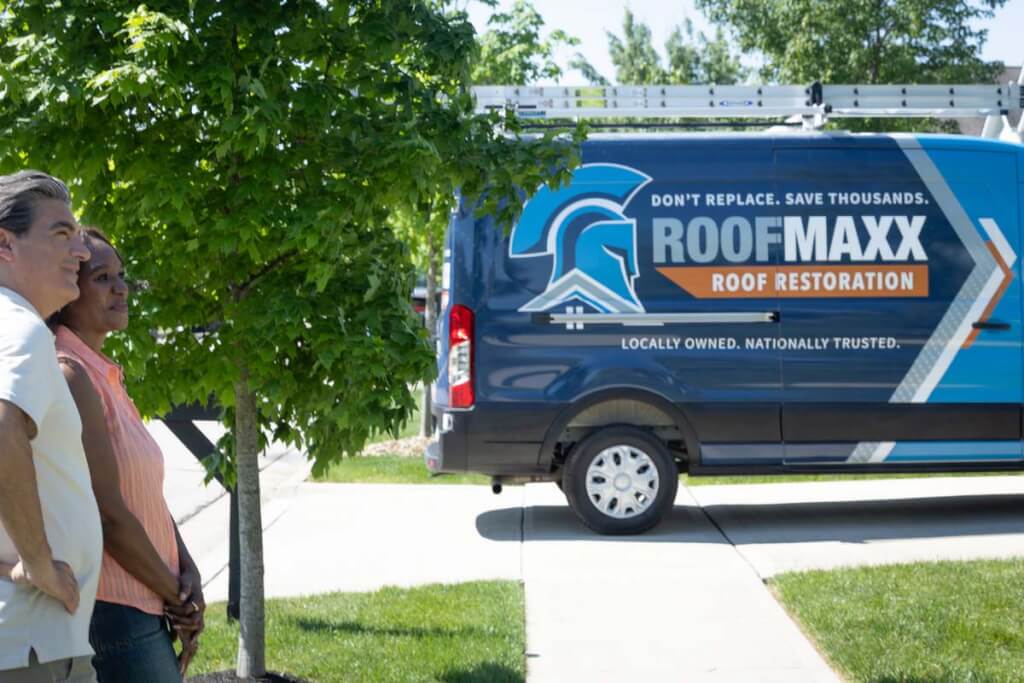
Happy homeowners stand next to a Roof Maxx branded van in a residential driveway.
Happy homeowners stand next to a Roof Maxx van

Make Every Energy Upgrade Count with Roof Maxx

So many homeowners are feeling the pinch of high electricity costs these days, but you don’t have to be one of them. Use it as the perfect excuse to improve energy efficiency in your home, and you’ll turn that unwelcome expense into a net positive win for your wallet and the environment.


Whether your main goal is to save or you just want to make your home a little more comfortable to live in, working with a Roof Maxx dealer is the best way to succeed. To take the first step towards a better roof and a more affordable future, schedule a free roof assessment.

Frequently Asked Questions About Energy Efficiency

Can roof restoration really lower my energy bills?

Not directly, although it does support your home’s overall energy efficiency in an indirect way. Restoring your roof keeps aging shingles in good condition so the kind of damage that leads to unchecked heat transfer is less likely to occur. Think of it less as a fix for high energy bills and more as preventive care that keeps your roof healthy long-term.

Not necessarily. If your attic already has the right type and amount of insulation for your climate, adding more won’t provide a meaningful boost in performance. In fact, it might even work against you by blocking airflow and creating a moisture problem if it’s piled on too thick.

It might sound like the equivalent to keeping the front door open all day, but they’re actually designed to work together as a system. Your vents keep air circulating into and out of the attic so heat and moisture don’t build up and cause damage. Insulation directly supports this and helps keep the temperatures in your home stable by limiting how much heat transfers through the attic floor.

Yes, absolutely. Undiagnosed roof issues can undermine an attic renovation and drive up heat gain or loss over time, raising your energy bill in the process. Scheduling a free roof assessment first lets you catch and fix those problems before they affect your renovation.
Share this post
Facebook
LinkedIn
X
Reddit
Tumblr
Threads
Email
Print
Picture of Georgios Karakitsios
Georgios Karakitsios
George Karakitsios owns the website and marketing technology behind Roof Maxx. He has spent more than 12 years building web experiences for homeowners and Roof Maxx customers.
Stay ahead of home repairs and protect your investment
Subscribe now for expert roofing and maintenance tips straight to your inbox!

Five Year Transferable Warranty

With our five-year, transferable warranty, you’ll enjoy the peace of mind that your roof and entire home are protected.

Stay ahead of home repairs and protect your investment
Subscribe now for expert roofing and maintenance tips straight to your inbox!