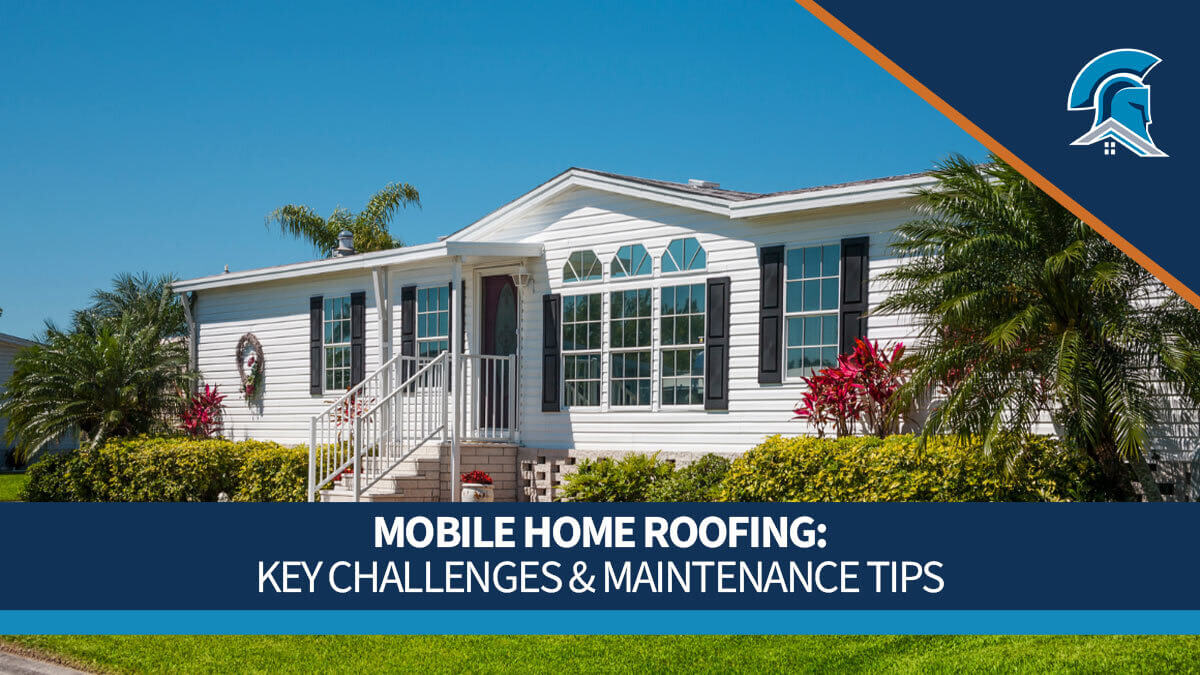

The biggest challenge with mobile home roofing is that manufactured homes are built to different standards set out under the federal HUD code. They typically have gabled roofs with a pitch under 4:12, a reduced load limit rating, and more joints where sections come together, which raises the risk for leaks. Regular inspections, monitoring from the ground, timely repairs, and roof restoration are still the most effective way to extend roof life if you live in a mobile home.
| Time to Read |
|
| What You’ll Learn |
|
| Next Steps |
|
More than 22 million people live in manufactured homes across the United States, and the market continues to grow as housing costs rise. At an average cost of around $84 per square foot, they’re usually significantly more affordable than site-built homes.
Saving money upfront is nothing to sneeze at, but there is an important tradeoff. The materials and building standards manufacturers follow for the roof and other areas are so different that the advice you’ll find in most homeowner’s guides just doesn’t really apply.
In this guide, you’ll learn how to tell which type of material you have on your mobile home and what you really need to know to stay on top of maintenance the right way. We’ll also tell you why Roof Maxx should be an essential part of your plan if you have an asphalt roof.
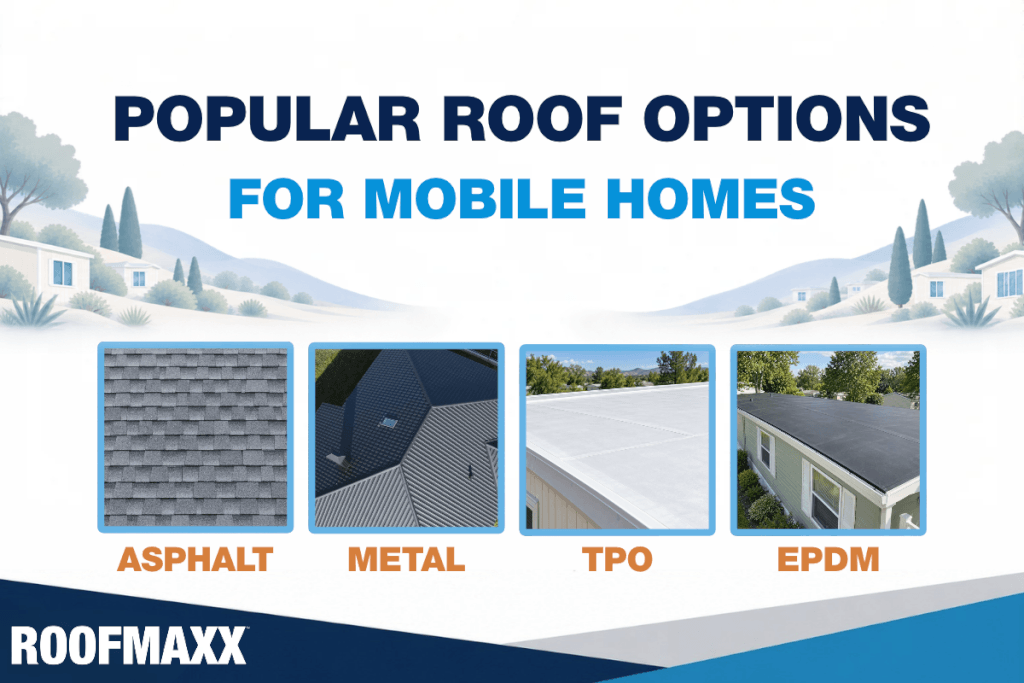
Asphalt shingles are the most popular residential roofing material here in the United States, so that’s what you’ll find on the vast majority of mobile homes these days. They’re easy to install, relatively durable when cared for properly, and significantly more affordable than other options.
While you can technically install most roofing materials on a mobile home, very few manufacturers go with premium options like clay tile, concrete, or slate. The price point alone is out of reach for many people, but they’re also so heavy that they often exceed the total load capacity for the building.
You’re much more likely to run into TPO, metal, or rubber membrane roofing instead. We put together the handy chart below to help you weigh the pros and cons of each one.
| Roof Type | Pros | Cons | Common Problems |
|---|---|---|---|
| Asphalt Shingles |
|
|
|
| Metal |
|
|
|
| TPO |
|
|
|
| Rubber Membrane (EPDM) |
|
|
|
It’s just as important to understand the maintenance routine for your specific roof type as it is to know the pros and cons of the material itself. Even a low-maintenance roof that’s installed correctly can fail early or develop serious problems without the right care.
For more in-depth advice on maintaining your asphalt roof, see our Roof Maintenance Guide.
See our Metal Roofs vs. Asphalt Shingles guide for a full breakdown on cost and lifespan.
Keep exploring different roofing materials in our Homeowner’s Guide to Roof Styles.
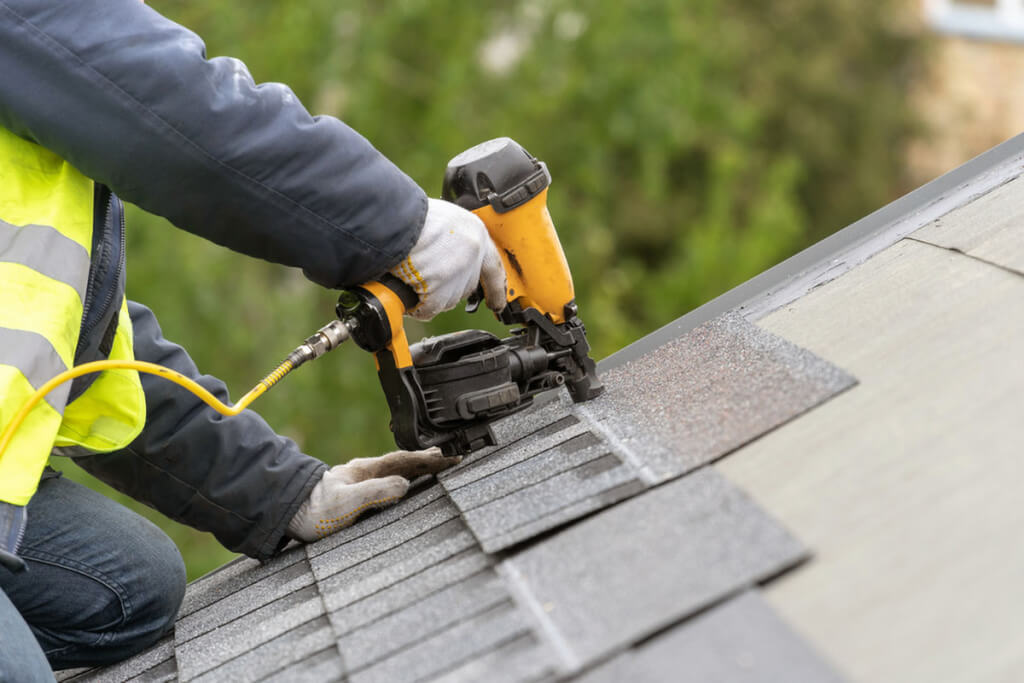
The simplest answer is that manufactured homes are governed by totally separate federal building codes that override most state or local standards. The Manufactured Home Construction and Safety Standards, commonly referred to as the “HUD Code”, sets strict requirements for almost every element of the roof.
Where it gets a bit more complicated is how those standards affect the way manufacturers actually build and produce them. Since keeping costs low is a priority, it’s standard practice to keep the roof pitch low and use lighter materials with simple, straightforward construction methods.
When you compare them against site-built homes, the differences become obvious. Check them out in the chart below, and you’ll see exactly what we’re talking about.
| Structural Difference | Manufactured Homes | Site-Built Homes | Why It Matters |
|---|---|---|---|
| Roof Pitch | 88% are 4:12 or lower | 83% are 5:12 or higher | Lower slopes give rain, snow, and debris a shallower path off the roof |
| Roof Load | ~20, 30, or 40 pounds per square foot based on zone. Most manufacturers build to the lowest allowable rate. | ~12–20 pounds per square foot minimum. Up to 200+ in extreme snow regions | Many roofing materials are too heavy for the structure to safely carry, especially when you factor in snow/ice |
| Roof Shape | Gable is the most common. Other options include flat, bowstring, and half-truss | Gable, cross-gable, hip, cross-hip, pyramid hip, jerkinhead, gambrel, mansard, shed, flat, saltbox, butterfly, bonnet, monitor, and M-shaped | Roof shape affects drainage, leak risk, and maintenance needs |
| Assembly | Some roof connections on multi-section homes are completed after delivery | The entire roof structure is framed, installed, and finished fully on-site | Manufactured homes have extra roof joints where leaks are more likely to start |
When it comes to roof troubles, leaks are definitely the number one issue most homeowners experience regardless of the type or style of roof they have. Any roofer who works on manufactured homes like these will confirm that the same typical patterns tend to show up again and again.
They almost always trace back to:
Leaks like these can be sneaky because they usually start where you can’t easily spot them from the ground, especially in mobile homes. There’s typically no direct access to the roof cavity to begin with, so it’s difficult to check, and it can take months or years for a tiny leak in a seam to finally reach the interior.
That’s a problem because “tiny” doesn’t necessarily equal “harmless.” Even a slow drip of water can lead to structural damage, damage the roof deck, or create the perfect breeding ground for mold.

The best maintenance plan starts with knowing what condition your roof is actually in. The catch with mobile homes is that most of the roofs on them really aren’t designed to cope with regular foot traffic, so ideally, you don’t want people walking around or working on them unless it’s absolutely necessary.
That’s also why our first tip is to never get up there on your own, and don’t hire anyone to handle the work who isn’t licensed and insured. A professional roofer will know how to navigate it and inspect it safely without putting the roof (or more importantly, your life) at risk in the process.
If you’re committed to doing the work yourself, make sure you read our Roof Work Safety Guide first.
There are plenty of ways to contribute to the good health of your roof without ever climbing a ladder. It’s helpful to start monitoring its condition either when it first goes on or right after an inspection, because that’s when you have the clearest baseline for what “good” should look like. Taking pictures will make it easier to compare later on so you can spot any changes or red flags as early as possible.
You’re mainly looking for symptoms like:
For asphalt roofs specifically, you should also be on the lookout for shingles that lift up and away from the roof during windstorms. Shingles should normally lie flat against the roof because they’re tightly connected to one another. If you’re seeing too much movement, the seals may be damaged.
From there, it’s mostly about keeping up on recommended maintenance like removing leaves and debris, reinforcing cracked or broken seals, and not putting off minor repairs. But there’s one more step that can help you get as much life as possible out of your asphalt roof: Roof Maxx.
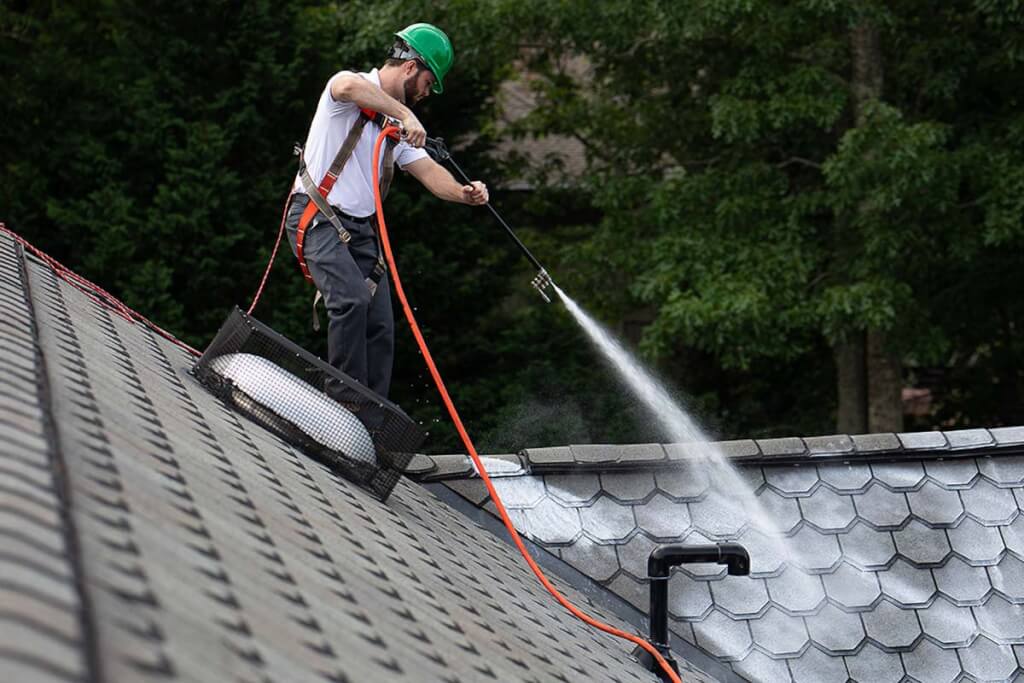
The petrochemical oils in asphalt shingles are what keep them soft, durable, and flexible, and regardless of what type of home they’re on, they all age and degrade more or less the same way. UV rays, high temperatures, and freeze/thaw cycles slowly dry them out and cause them to harden over time.
Brittle shingles lose the ability to expand and contract with the weather, and they’re much more likely to crack, break, or even shear off the roof completely. Roof Maxx is a comprehensive solution that gives you the power to roll back the clock, restore them, and potentially deal with minor repairs at the same time.
You may be a good candidate if:
The best part? It costs nothing to find out for sure, and you’ll also get valuable feedback about the condition of your roof from an expert who knows what they’re talking about. If you’re ready to find out how you can put off your next costly, life-disrupting total replacement risk-free, schedule an assessment.
For a lot of people, living in a mobile home is as much a way of life as it is a practical way to keep housing costs under control. It’s about keeping things simple and manageable so you can focus on what really matters: creating lasting memories with loved ones in a space that’s truly yours.
Staying ahead of roof maintenance is one of the best ways to ensure you’re protected from the top down, especially if you have an asphalt shingle roof. To take the guesswork out of what comes next and enjoy better performance from your asphalt shingles, to connect with a dealer in your area now.
Asphalt shingles are one of the most common choices because they’re affordable, widely available, and relatively easy to repair. Metal, TPO, and EPDM rubber roofs are also common depending on the age and construction of the home.
The most common problems include failed seams, cracked or loose vent boots, and condensation inside the roof cavity. Multi-section manufactured homes may also have additional roof joints that create potential entry points for water.
Technically, yes, but they really aren’t designed to cope with constant foot traffic. Many mobile home roofs aren’t designed for regular foot traffic, and walking on them can damage the roofing or put you at risk. Leave inspections or repairs that require roof access to a qualified professional.
Schedule a professional inspection at least once a year and check for visible changes after severe weather. Between inspections, you can monitor the roof from the ground and watch for problems like loose materials, granule loss, staining, or changes in the roofline.
Yes! Roof Maxx is designed for aging asphalt shingles that are still in generally good condition, so the roof needs to be assessed first to determine whether rejuvenation or another solution makes the most sense.



With our five-year, transferable warranty, you’ll enjoy the peace of mind that your roof and entire home are protected.