
More roofing companies are now offering maintenance plans in response to increasing demand from customers with older homes and tighter budgets. Plans like these vary widely, but will typically include basic preventative steps like annual inspections, storm prep, roof and gutter cleaning, flashing checks, limited minor repairs and shingle rejuvenation treatments. Homeowners benefit from smaller, more predictable payments, while roofers get to bring in more business and better meet their needs.
| Time to Read |
|
| What You’ll Learn |
|
| Next Steps |
|
Until recently, most roofing companies followed the same general business model that’s been around for decades: fix the customer’s roof only after it fails. This break-fix approach benefits both sides because it brings in money for the contractor and ensures homeowners can get help when something goes wrong.
Now, there’s another option available. A growing number of roofers are starting to offer long-term maintenance plans that put prevention first. It’s a more affordable, homeowner-friendly way to reduce the need for repairs and get more life out of your current roof before it’s time for a replacement.
In this guide, you’ll learn what’s driving this trend and what plans like these typically cover. We’ll also tell you why so many roofers now make Roof Maxx a part of them to help save you more money.

So many of the homeowners we’ve talked to about these changes automatically assume they’re happening because of the ever-increasing cost of maintaining a home. They aren’t wrong! The price of everything from wood to shingles and even caulking continues to rise all across the country.
But there’s more going on than just that:
There’s also the fact that roofers and the communities they operate in directly benefit from plans like these. Steady scheduled work lets them hire more crews and keep them on longer.
What’s so special is that the boost in business doesn’t come at the expense of homeowners. In fact, you’ll typically spend less on roof care over time by choosing maintenance instead of reactive fixes. Payments stay small and predictable so you aren’t hit with a shockingly high bill later on.
Want More Tips on Maintaining Your Roof?
Get all the most important details now in our Roof Maintenance Guide.
Preventive roofing can sound a little bit abstract until you see it in action. Is it just a quick inspection? Will they come out and take care of those shingles that came off in the last storm, or is that extra?
The truth is that every plan is different, so you’re going to want to check locally and confirm what they offer before you sign anything. In most cases, though, you’re getting far more than just a few basic checks every couple of years.
Check out the chart below to get a general overview, then use the info to shop for the best plan.
| Service | What’s Involved? | Why You Need It | How Often? |
|---|---|---|---|
| Roof Inspection | A complete check of the entire roof and shingles. | Early detection makes most issues cheaper and easier to fix. | At least once a year and/or after major storms |
| Roof Maxx* | A Roof Maxx dealer applies a safe, all-natural solution to your shingles to restore shingle flexibility and performance. May also include an optional Roof Tune-Up. | All shingles dry out, become brittle, and stop performing over time. Roof Maxx restores them for up to five years. | At set intervals over the life of your roof |
| Storm Prep | Repairing loose shingles and flashing, re-sealing cracked caulking, and other weatherproofing | Securing vulnerable areas reduces the risk of leaks and wind damage. | Seasonally and before bad weather |
| Roof Cleaning | Removing leaves, branches, moss, and other debris from the roof surface. May also include soft washing or other powerful all-natural solutions. | Debris and organic growths can trap moisture against the shingles. | Once or twice a year |
| Gutter and Downspout Cleaning | Clearing out leaves, twigs, nests, and other blockages. | Bad drainage can force water back up under your shingles. | Once or twice a year |
| Flashing and Sealant Checks | Inspecting and resealing the joints around chimneys, vents, and skylights. | Most leaks begin at connection points like these. | Yearly |
| Ventilation Check | Checking for blocked or failing vents. May include vent repairs or replacements. | Poor airflow traps heat against your shingles and leads to condensation, rot, and mold in the attic. | Yearly |
*Not every roofer is a Roof Maxx dealer. If the company you use doesn’t have one on staff and you’re interested in having your roof treated, ask them to get in touch with us!
Don’t have a company in mind? Find a dealer near you.
Up to 90% of the roofs our dealers assess after replacement is recommended aren’t actually at the end of their lifespan. The shingles are just dried out after years of exposure to UV rays, wind, and rain. Left untreated, this will speed up the aging process and lead to failure, but it doesn’t have to be that way.
Roof Maxx gives roofers a tested and proven tool they can use to provide maintenance on the roofs they install, but it also opens up new opportunities to help customers who aren’t ready for a new roof. Replenishing shingles with safe, all-natural oils restores flexibility and extends the life of the existing roof.
This always includes:
Some dealers also offer an optional Roof Tune-Up before your treatment, and it usually includes repairs for minor issues like nail pops, clogged gutters, cracked caulking, and more. It’s an honest, flexible, and affordable way for them to better serve your needs even if you aren’t ready for a replacement.
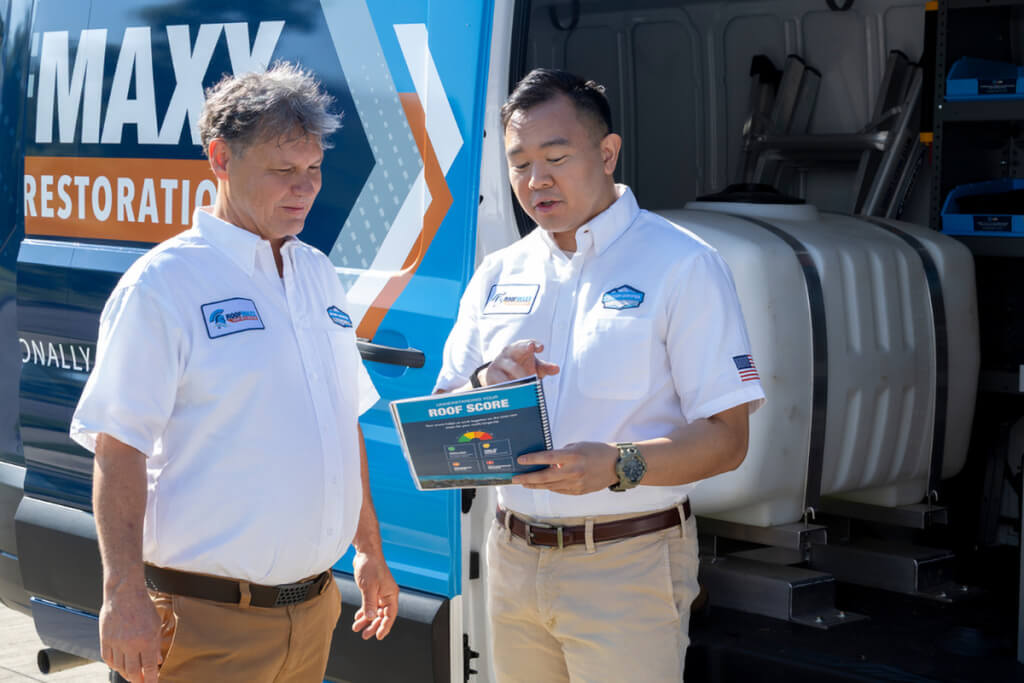
Roof Maxx is a smart option for roofers who are either already offering maintenance plans or plan to do so in the near future.
From a business perspective, there are so many benefits:
We provide all the training and the equipment itself fits onto the trucks they already have, so there’s no need to build a new business from scratch or buy one. They have support at every step.
A maintenance plan isn’t a one-off transaction. You’re essentially picking a person or company who will potentially be up on your roof a couple of times a year for over a decade. While you can always switch later on, it’s better to properly vet them in the first place so you don’t have to.
| QUICK LOOK: VETTING ROOFER MAINTENANCE PLANS | |
| What to Ask About the Contractor | What to Ask About the Maintenance Plan |
| Are you licensed and insured? | What services are included, and how often do you perform them? |
| How long have you worked in this area? | Are there any services my plan doesn’t cover? |
| What’s your process for documenting what you find or fix? | What happens if I need an emergency repair? |
| Can you provide local references? | Can I cancel or change the plan later? |
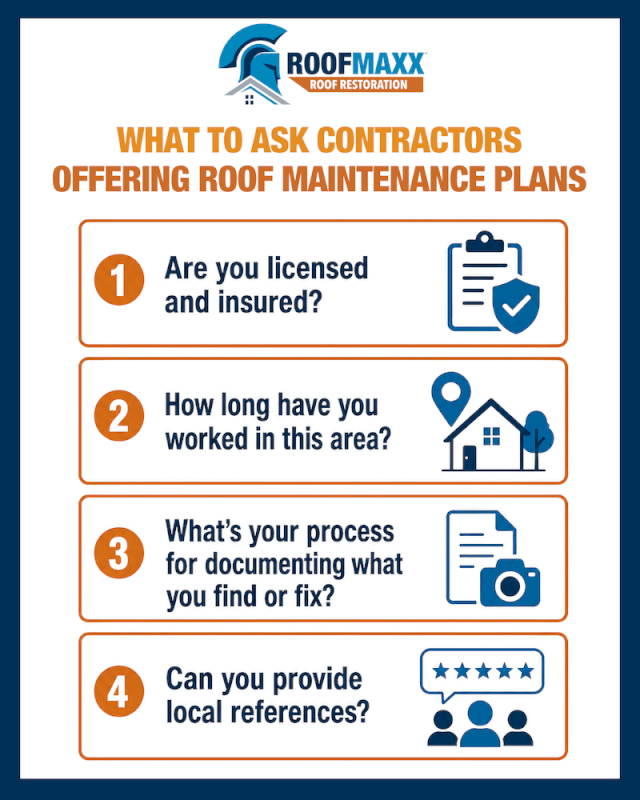
1. Are you licensed and insured?
This should always be your first question. Ask to see both, and confirm the coverage is current before anyone sets foot on your roof. No license or insurance? Don’t do business with them.
2. How long have you worked in this area?
A maintenance plan only works if the company plans to stick around to honor it. Local roots and a long track record tell you they’ll still be answering the phone in five years.
3. What’s your process for documenting what you find or fix?
You should get written reports and photos after every visit, not a verbal all-clear from the driveway. Keep these for your records; they can help with insurance or warranty claims later on down the road.
4. Can you provide local references?
Ask to speak with recent customers in your area instead of just reading online reviews. While they won’t hand over private information (and that’s a good thing), most will happily reach out to a satisfied customer to ask if it’s okay to forward their info. They may also have photos or videos of their work.
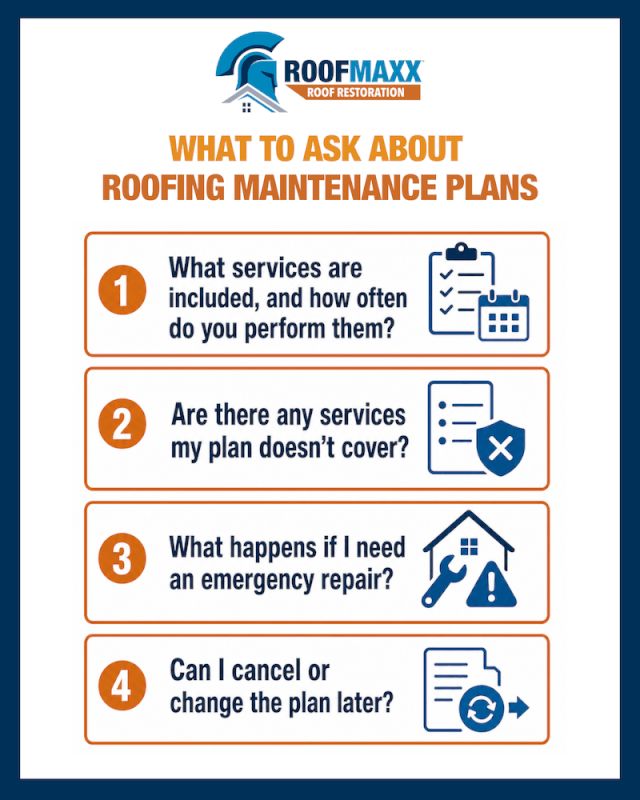
1. What services are included, and how often do you perform them?
Get the full list of services in writing, along with a schedule for each one. Read all of the fine print carefully, too. The older the roof, the more likely you are to need their services over time.
2. Are there any services my plan doesn’t cover?
This is a big one because every roofer is different. Some plans will consider minor repairs to be maintenance, while others consider them a separate service. Knowing where the line falls will help you avoid nasty surprises later on.
3. What happens if I need an emergency repair?
Some plans give members priority scheduling in storms and holidays or a discount on repairs. Very few will actually come with coverage for emergencies, so expect to still pay out of pocket for this. Knowing what to expect, and who to call if you need help, will make you more prepared.
4. Can I cancel or change the plan later?
Ask about the length of the contract, cancellation terms, and if they charge a penalty for leaving. You’ll want to factor your future into this, too, because if you’re planning to sell in five years, you’ll need an off-ramp. Setting reasonable expectations from day 1 protects everyone involved.
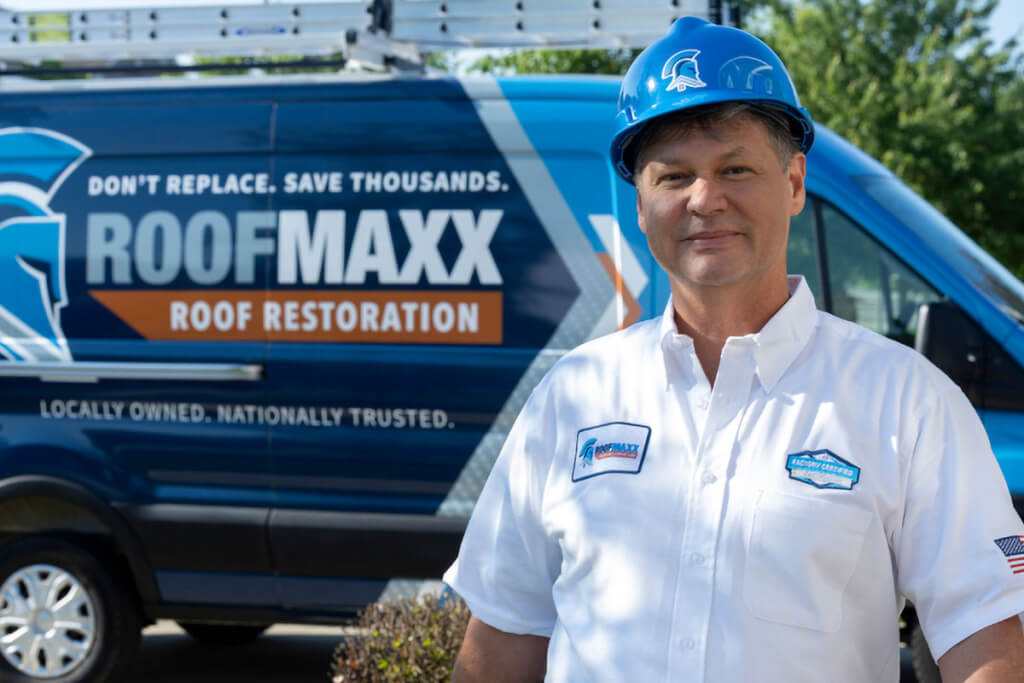
Working with a roofer who offers maintenance plans is a bit like hiring a family doctor for your roof. They’ll get to know you and your roof and help you keep it in good health by scheduling regular visits for much-needed preventive care over time.
If you already work with a roofer you love, ask them if they offer maintenance plans that can help you save money over the life of your roof. To learn how Roof Maxx can help you get more life out of the roof you have for up to 80% less than a replacement, get a free roof assessment.
Minor problems rarely stay that way for long. A tiny crack in a shingle or even the seals around your flashing can eventually turn into a leak you don’t notice. By the time you have stains on the ceilings inside your home, you’re looking at a serious leak that costs thousands of dollars to fix.
Regular maintenance lets you fix those issues for less or even prevent them from happening in the first place. It’s also the best way to get as much life as possible out of your roof.
Yes! You’re potentially looking at up to $20,000 or more to totally replace your roof. Simple preventive care like inspections, cleaning, and minor repairs cost a tiny fraction of that by comparison. Even roof restoration treatments like Roof Maxx cost up to 80% less.
Check with whoever handles your roof to confirm, but you should generally set aside a few hundred dollars each year for basic inspections and cleaning. You may want to keep a slightly larger reserve in a savings account for repairs. If you don’t end up needing it, the money will collect interest for you instead.
All roofs should be inspected by a professional at least once a year. The older the roof, the more important this is for preventing failure. Beyond that, we also recommend roof and gutter cleaning, flashing and sealant checks, pre- and post-storm checks, and Roof Maxx.
Ask for proof of a current license and if they carry liability insurance and workers’ comp first. It’s also worth asking how long they’ve worked in your area if you aren’t familiar with them, because a company with local roots is more likely to stick around long-term.
Make sure you get the full service list and terms in writing, too. Take your time to review it and see if you’re happy with what it does and doesn’t cover, because it’s what you’ll be relying on for a long time.
While more roofers are choosing to add it to their plans, not everyone is a Roof Maxx dealer, and not every roof qualifies for restoration. You can always schedule a free assessment with your local dealer if you’re interested in making it a part of your maintenance strategy.




With our five-year, transferable warranty, you’ll enjoy the peace of mind that your roof and entire home are protected.