
Roof replacement is one of the most expensive maintenance decisions you can make as a landlord. Replacing the roof on a single-family rental can cost upwards of $20,000, and larger apartment complexes can run well over $150,000, not counting the days of tenant disruption and lost rental income that come with a full tear-off. Roof Maxx restoration extends the life of aging asphalt shingles by up to 15 years for up to 80% less, with no interior access and minimal impact on the people living in your buildings.
| Time to Read |
|
| What You’ll Learn |
|
| Next Steps |
|
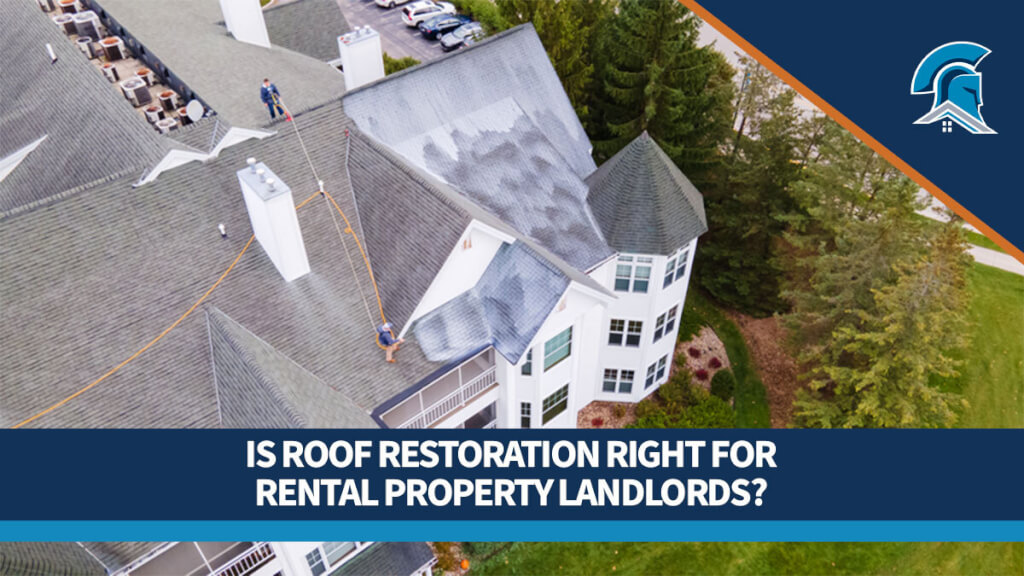
Replacing the roof on a rental property is one of the biggest expenses you’ll deal with as a landlord. It’s also one of the longest and most disruptive on-site jobs, which is a problem when you have tenants trying to live their lives inside while the crew tears the roof off right over their heads.
There’s another option that can help you avoid it completely for a fraction of the cost. If your asphalt shingle roofs are aging but still in decent shape, roof restoration can help you roll back the clock and keep your shingles performing well for years at a time without driving your tenants to complain.
Below, you’ll learn how much roof replacement really affects your Net Operating Income (NOI), what restoration can do for your business, and how it can help you build a scalable maintenance plan. Use the free calculator at the halfway point to get a quick estimate of how it can affect your costs!
Replacing a 2,000 square foot roof on an average single-family rental can easily cost up to $20,000 or more in many areas of the U.S. Extrapolate that out to larger multi-family dwellings like duplexes, triplexes, and apartment complexes, and the costs really start to ramp up fast.
You’re potentially looking at as much as:
The more problems the roofing team finds in the process of tearing the old one off, the higher your final bill. What seems like a straightforward end-of-life replacement can easily turn into a major capital project if the roofing team finds a major leak, structural damage, mold, or wood rot in the process.
Want a more accurate estimate? Get it in seconds with our free Roof Replacement Cost Calculator.
According to the IRS, a full roof replacement is usually treated as a capital improvement because it restores a major part of the building and provides lasting value. Instead of deducting the full cost in the same tax year, as you often can with qualifying repairs, you typically need to claim a portion each year through depreciation.
The recovery period depends on the property:
For example, let’s say you spend $25,000 replacing the roof on a duplex this year. If that cost is depreciated over 27.5 years, you can only deduct about $900 at tax time. Spend the same amount on roof repairs, and you can deduct it all at once, potentially lowering your taxable income by much more.
That difference can leave more money in the operating budget for the upcoming year. It makes repair or maintenance work a little bit easier to justify when the roof still has serviceable life left.
Roof replacement is one of the largest expenses a landlord can face, second only to the cost of buying or developing the property in the first place. When that much money leaves the business at once, it can affect cash flow in ways that affect so much more than just the building itself.
You may find yourself needing to:
Most landlords plan for contingencies like this, and many have the capital, reserves, or financing relationships to work around them. But that doesn’t make them any less stressful to deal with.
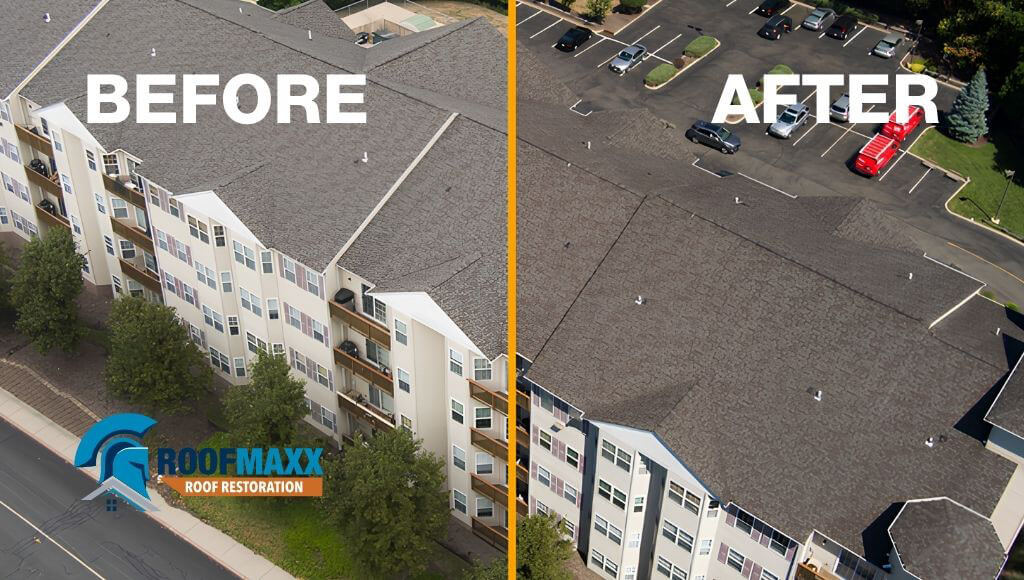
The median age for rental market housing stock here in the U.S. hit 45 in 2023, and much of our non-residential stock isn’t all that far behind. By around age 30-40, most buildings no longer have the original roof on and are anywhere from 5-10 years into the second one.
Anything younger is highly likely to still be on the first roof, and it probably hasn’t reached the end of its lifecycle yet. Both are in the sweet spot where they stand to gain the most benefit from restoration.
In many cases:
The shingles themselves may be looking a little worn down or feel stiffer than they did when they were new, but this is expected.
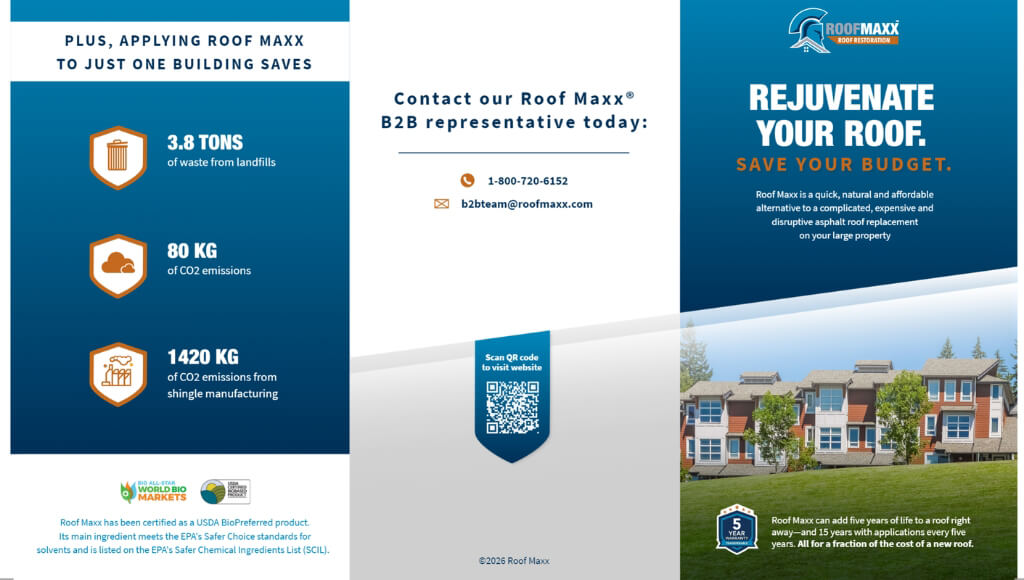
Roof restoration is a multi-step process that includes a roof assessment, cleaning, and Roof Maxx treatment to roll back the clock on your shingles. Some Roof Maxx dealers also offer a Roof Tune-Up, which includes fixing minor issues like cracked caulking or a missing shingle or two at the same time.
Roof Maxx itself is a spray-on treatment that’s designed to treat the number one cause of early shingle failure: depleted petrochemical oils. It soaks down deep into each shingle and replenishes them with safe, all-natural oils derived from plants.
It only takes a single treatment to:
Best of all? It costs up to 80% less than the cost of a total replacement and the treatment process takes less than an afternoon to finish. It’s also perfectly safe for pets, kids, and the environment, so there’s no need to displace anyone or worry about how the process will affect them.
A promise alone isn’t enough to convince smart property managers why they should spend thousands of dollars on roof restoration. They need hard proof that every cent will translate into real, measurable benefits over time in order for the investment to make good financial sense.
Both of the experts below did their due diligence on Roof Maxx, then made it a part of their roof maintenance strategy.
With at least 360 units available, The Everly Roseland’s 30 two-story garden-style buildings are as much a community as they are somewhere for locals to call home. Skylight Real Estate Partners director of construction Jonathan Casilli turned to Roof Maxx when those roofs needed a little TLC in 2018.
Certified Master Inspector® James Gonte and Roof Maxx co-founder Mike Feazel inspected two of Gonte’s investment properties just a week after Hurricane Ian made landfall in Sebring, Florida. Find out how the treatment helped and why he swears by it below.
[Embed Video]
While the numbers will look different for every property, the gap between restoration and replacement is usually significant. Use the calculator below to compare what you’d spend on a Roof Maxx treatment versus a full tear-off, factoring in the cost of tenant displacement and lost rental income.
Estimate your roof size
Roof Maxx treatment estimate
—
Full replacement estimate
—
Estimated savings with Roof Maxx
—
All estimates are based on Roof Maxx's internal figures and are provided for planning purposes only. The actual price of both restoration and replacement varies depending on roof size, slope, height, location, condition, and many other factors.
“Roof Management serves the world’s largest real estate owners and managers, so our reputation is at stake, and we choose Roof Maxx because it delivers on its promises.”
— Jack Jenkins, Steep Slope Division Director
When asset managers at that level back the work, it’s because the process is built to handle complexity. Our dealers work with landlords to manage anywhere from a few units to dozens all the time, whether you need to slow-drip each job over a set period of time or handle them all at once.
We work hard to make your life easier with:
For larger portfolios, dealers can also stagger treatments across properties so costs are spread out. The IRS considers Roof Maxx maintenance and repair, too, which means you can claim it all at tax time.
A little communication goes a long way when work is scheduled at a rental property. Roof restoration is generally fast and non-invasive, but your tenants won’t necessarily know that unless you tell them.
Some jurisdictions require advance written notice before any work happens on the property, even for exterior maintenance. If you’ve been landlording for a while, you may have this info already.
If you don’t, you can check:
When in doubt, default to giving more notice rather than less. It costs nothing and helps you stay on the right side of the law.
Tenants don’t necessarily need to know the inside-out of your entire maintenance plan. Most just want to be informed when someone is coming, know how the treatment will affect them, and feel confident that you’re taking care of the place.
Let them know:
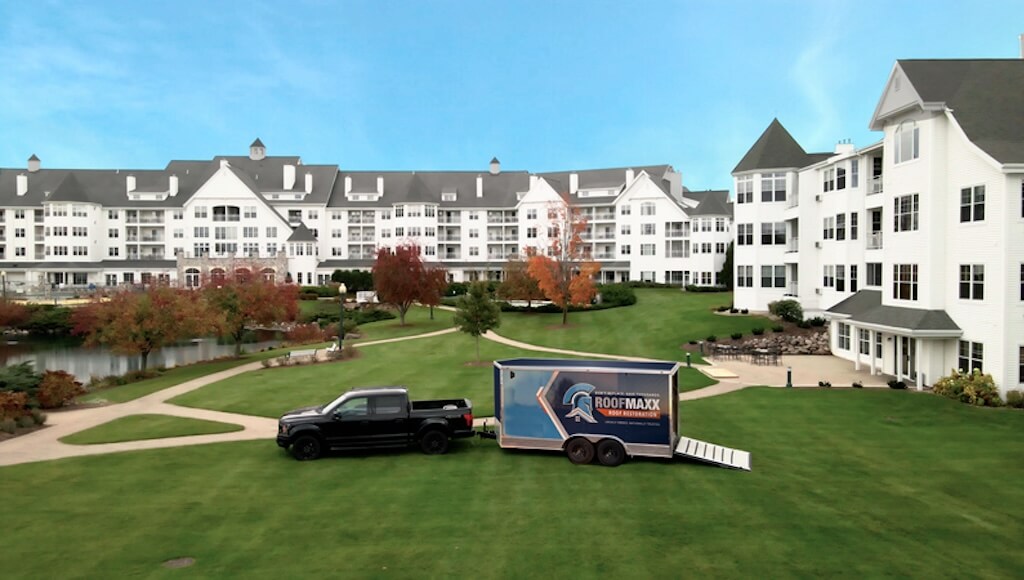
Some dealers drive branded Roof Maxx vans, others use unmarked vehicles. All will be able to show proof of who they are upon request, but it’s also a good idea to encourage tenants to call you with questions.
For non-residential tenants, you may also want to flag whether parking access, deliveries, or signage will be affected during the treatment window. A short email a few weeks ahead is usually all it takes to keep everyone on the same page.
Replacement isn’t always the right answer for the roofs on your rental properties, especially when they have plenty of life left in them. Roof Maxx can help you protect your property, keep your tenants happy, and preserve your cash flow for less.
Making the most of what you already have is just good business sense. Find a Roof Maxx dealer in your area and schedule a free evaluation across your entire portfolio today.
Not typically, although every policy is different, so we can’t make any guarantees.
Roof Maxx may potentially influence your property insurance coverage in a positive way. In some cases, it’s actually helped property owners secure coverage when their insurer raised concerns about the roof.
No. We’ve treated over 100 million square feet of roofs with no indication that the treatment voids or limits warranty coverage, and the largest shingle manufacturer in the industry has formally confirmed that coatings and penetrants like ours don’t void their warranty.
You do get our 5-Year Flexibility Warranty that guarantees your shingles will stay flexible for at least 60 months. It’s our way of standing behind our work.
No! Roof Maxx is applied to the roof surface, so it doesn’t matter if they’re home or out as long as they can access the roof.
Some rental jurisdictions also require landlords to provide notice before maintenance or contractor visits, even when workers don’t need interior access. We recommend confirming well before the day arrives.
Roof Maxx restores flexibility to aging asphalt shingles, but it won’t repair any damage that’s already occurred. It also won’t fix a roof that’s already at the end of its natural lifespan or actively failing.
Some Roof Maxx dealers do offer a Tune-Up to address minor problems like nail pops, cracked caulking, or a couple of missing shingles. Taking care of issues like these beforehand helps you get even more life out of your asphalt shingle roof and as much benefit as possible from the treatment.
A single Roof Maxx treatment can extend the life of your asphalt shingle roof by up to five years. Some roofs may qualify for up to two additional treatments at five-year intervals, which may allow you to enjoy up to 15 more years of usable life instead.
Making Roof Maxx part of your maintenance strategy can have serious financial benefits. The longer you can keep a serviceable roof in good condition, the less often you may need to budget for major repairs or full replacement.
Yes. Many landlords and property owners use Roof Maxx as part of a broader maintenance strategy across multiple buildings. Instead of waiting for several roofs to need replacement at once, you can evaluate each property individually and prioritize work based on roof age, condition, and budget.
Yes. Roof Maxx is designed for asphalt shingle roofs of any size or configuration. Whether the property is a single-family home, a duplex, or a small apartment building, the treatment process is essentially the same. Larger properties just take a little longer to complete.
It depends on the size of your dealer’s service area, but in many cases yes. If your properties fall outside one dealer’s territory, our team can coordinate with multiple dealers to make sure every roof gets the same quality of work and that you have a single point of contact for the project.
Yes. Roof Maxx is applied entirely from the exterior and doesn’t involve loud demolition or heavy equipment, so tenants working from home usually don’t need to change their routine. A heads-up before the appointment is still a good idea so they know what to expect.


With our five-year, transferable warranty, you’ll enjoy the peace of mind that your roof and entire home are protected.