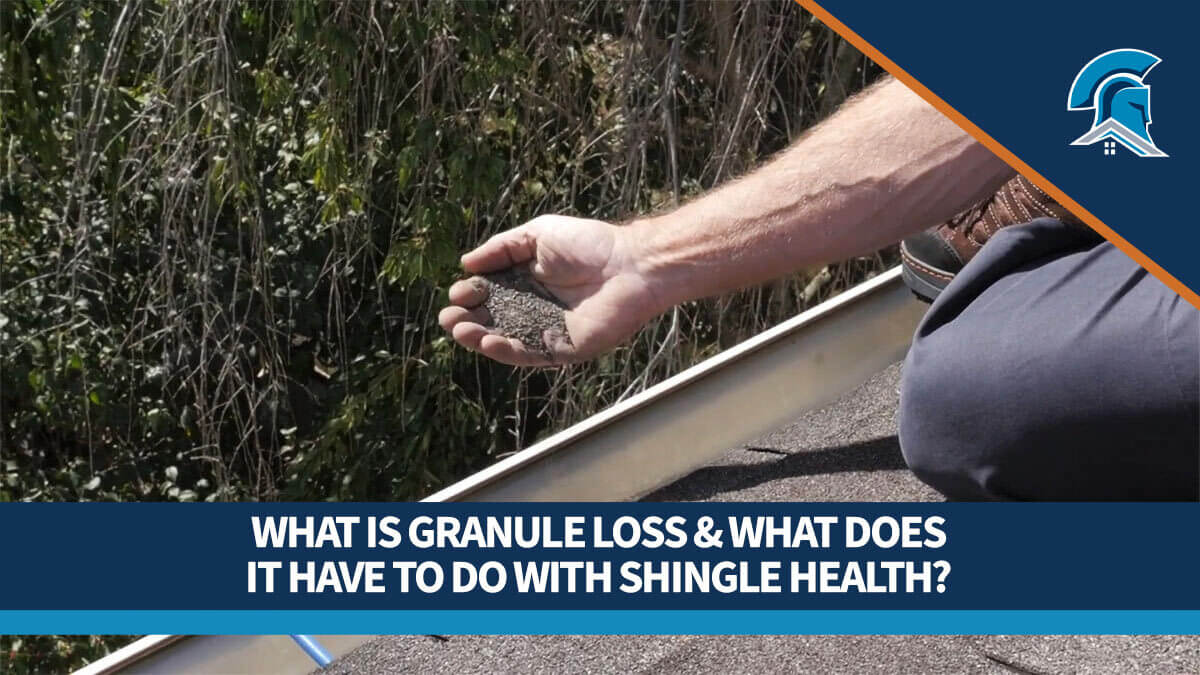

Granule loss is the gradual shedding of the protective mineral coating on asphalt shingles. This fine grit is typically made from a mixture of ceramic-coated stone and slag and bonded to the asphalt core during manufacturing. It serves an important role in the health of the shingle by protecting it from UV rays, high temperatures, and impacts and also lowers the flammability of the shingle itself. Heavy granule loss is never normal and should be addressed right away.
| Time to Read |
|
| What You’ll Learn |
|
| Next Steps |
|
Most homeowners will notice at least some granule loss over the life of their shingles. Early on, it usually shows up as dark or greyish sandy grit in your gutters or below your downspouts after it rains. It can seem minor, which makes it easy to brush off.
But those tiny granules do a lot more than sit on the surface of your roof. They protect the asphalt underneath from sunlight, weather, impact, and heat. Once enough of them are gone, there’s no practical way to replace them, so the goal is to slow down the loss before it turns into bigger roof damage.
In this guide, you’ll learn why granule loss is such a big deal, how it can affect the overall condition of your shingles, and what you can do to stop the damage from compounding over time. We’ll also explain the mechanism behind Roof Maxx and how it can help.
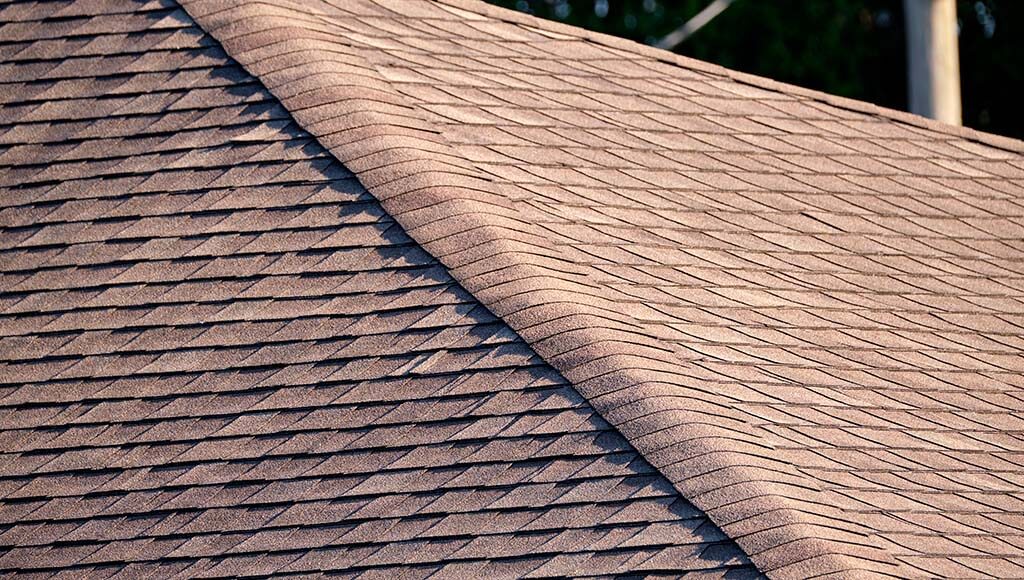
Granule loss is one of the clearest indicators that an asphalt shingle roof is aging, but it isn’t always easy to spot early on in the process. In this short video from the experts at Roof Maxx, you’ll see what it looks like at every stage and get the answers you need to resolve it before it’s too late.
All asphalt shingles are manufactured with a layer of crushed ceramic-coated stone or slag that coats the entire surface of the shingle. This is what gives your roof its color, and in some cases, creates the illusion of dimension on your roof from the curb.
They also provide important protection by:
It’s normal for asphalt shingles to shed a few granules here and there. Large piles in your gutters, downspouts, or along the roofline are different. That usually means it’s time to take a closer look.
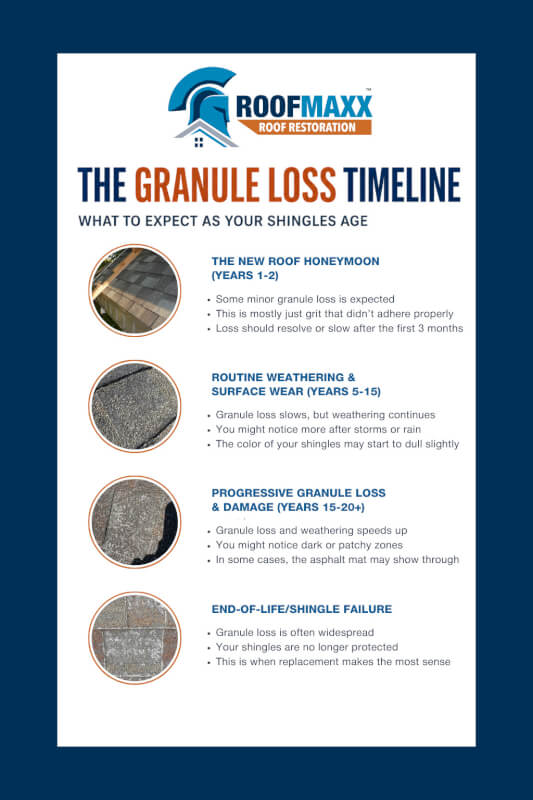
A brand-new asphalt shingle roof will usually shed some loose granules during the first few months after it’s installed. This is somewhat expected, and for the most part, you’re only really losing the grains that weren’t properly adhered to the asphalt in the first place.
At this stage, you can expect:
This early shedding is usually normal as long as it tapers off. Heavy granule loss that doesn’t change over time may be a sign that your shingles are defective.
After the roof settles, granule loss should slow to an almost unnoticeable trickle. The condition will stay more or less the same for the first decade or so even though weather and sunlight are actively wearing your shingles down behind the scenes.
By year 5 or so, there’s been enough UV exposure, temperature change, and expansion and contraction to noticeably dry out the asphalt. That’s a problem because stiff, dried-out asphalt can’t hold onto the surface granules as well.
This can lead to:
Routine maintenance is usually enough to keep your shingles in good condition at this point, and it’s the perfect time to schedule your first Roof Maxx treatment, too.
Aging really starts to accelerate here, and the drier and more brittle the asphalt gets, the harder it is for the surface to hold onto remaining grit. This can set off a vicious cycle where each issue exacerbates the other, causing the aging process to substantially speed up.
And just about everything contributes to it:
At this point, you might notice dark patches, smoother-looking shingles, uneven colour, or areas where the asphalt mat is starting to show through. The window for restoration is beginning to close.
Eventually, the protective granule layer wears down enough to leave your shingles vulnerable to failure. More UV rays can reach the asphalt surface, which speeds up drying, brittleness, and surface breakdown.
Brittle shingles are more likely to curl, cup, crack, lift, or break apart under stress. These changes leave more of the roof system exposed to weather and make leaks more likely, and in some cases, repairs won’t be enough to turn them around.
You’ll likely start to see:
When shingles reach this condition, replacement is usually the safest option. No roof lasts forever!
Maybe you aren’t the first owner, or you just don’t remember when it was installed. We put together a free guide to help you get answers faster.
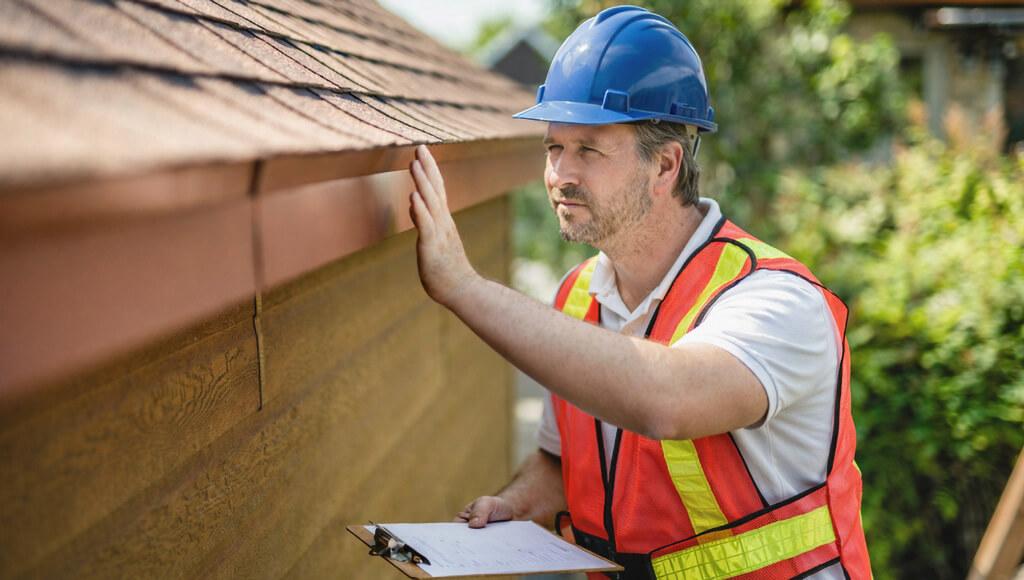
You won’t be able to spot the most subtle granule loss without getting up on the roof, which we don’t recommend unless you have the right safety equipment. So, if you want to confirm for sure if it’s there, it’s best to schedule a professional inspection.
There are two main ways you can look for it on your own at home:
The main reason you want to wait for a nice day relates to the fact that granules contain materials that can reflect light. Like the surface of a lake, they’ll often sparkle or shimmer in the sun.
The asphalt in your shingles is made from a mixture of heavy compounds called asphaltenes that are suspended in light petrochemical oils like maltenes and resins. It’s pretty much the exact same material that’s used to pave roads and driveways, so both age along the same general timeline.
You’ve probably watched this play out more than once:
The more “glue,” or maltenes, that disappear, the more concentrated the heavier asphaltenes left behind become. Eventually, you’re left with a product that’s stiffer, harder, and much more vulnerable to damage.
Surface treatments like coatings or sealants don’t work for this, because at the end of the day, the shingle underneath them is still stiff. The only reliable ways to roll back the clock are to replace them completely or replenish the oils deep within the shingle, and that’s where Roof Maxx comes in.
ProTip: Today’s shingles don’t last as long as they used to, mostly because they contain less asphalt in the first place. Maintaining an older roof can actually be smarter than installing a new one.
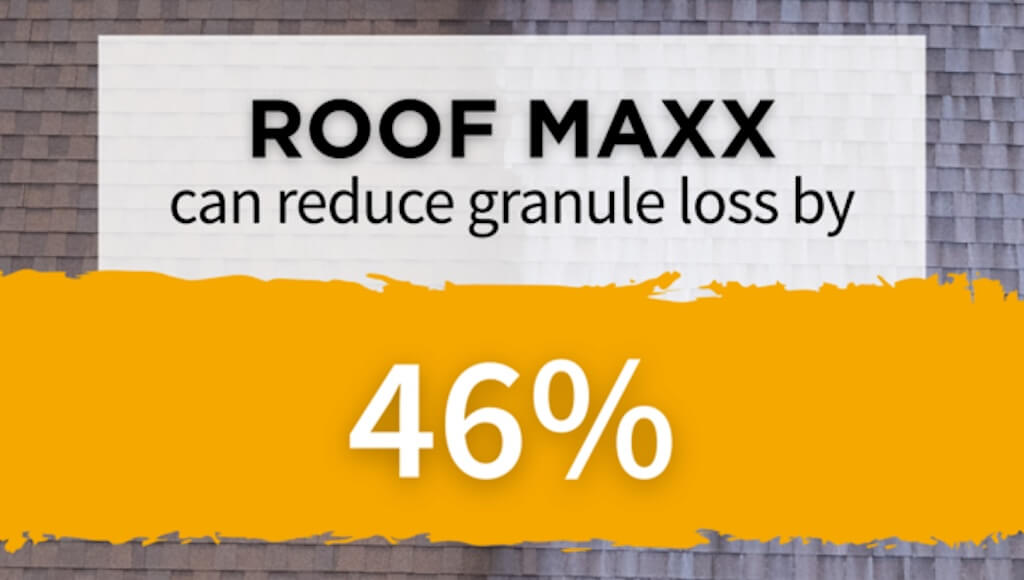
Roof Maxx is one of the most effective shingle rejuvenation products on the market for slowing down granule loss, and there’s hard proof to back it up. Independent tests at Ohio State University showed a remarkable improvement in granule adhesion after just a single application.
It was a simple study: researchers brushed both a control and a treated shingle 50 times to mimic the impact of long-term wear, then weighed the amount of grit that came loose from each one. Treated shingles lost 46% less grit overall.
Slowing granule loss is just one part of what Roof Maxx does. Roof restoration can also interrupt the cycle of aging and slow it down before you lose so many granules, replacement is the only viable option. It can help you get more life out of your asphalt shingles for up to 80% less than the cost of a new roof!
Once it’s applied, the solution immediately starts:
It’s a bit like walking on a freshly paved road compared to walking on old, dried out pavement. One will gently grab on to your shoes, while the other is more likely to crumble under your feet instead.
The best time to start thinking about roof maintenance is the day the shingles are installed. The second-best time to begin is today!
One of the most common questions we get is how to tell if you need to replace your roof or just rejuvenate it. Severe granule loss can be a sign that your roof is reaching the end of its natural life cycle, but the right path for you will depend on the overall condition of your shingles.
Rejuvenation is usually the right call when:
Replacement is better when:
The sooner you know where your roof stands, the more options you’ll have to keep it going. That’s why we offer free roof assessments! Our dealers will come out and inspect your roof to see if you stand to benefit from Roof Maxx, then let you know which option is best for you.
Get a quick estimate in seconds with our free Roof Lifespan Calculator.

The most important thing to take from this post is that waiting until granule loss is severe is always a mistake. Skipping out on maintenance will make your roof age faster, and that means you’re spending more money on roof replacements over time than you have to.
If you’ve been finding granules in your gutters, downspouts, or along your roofline, this is your sign to take action on it so you can find ways to slow it down. Schedule your free roof assessment today so you can find solutions before it’s too late.
No. If you find a product online that claims to deliver results like these, don’t spend your money on it, because it’s definitely a scam. The bond between granules and asphalt is formed during the manufacturing process under intense pressure and heat, and there’s no way to replicate it aftermarket.
It depends on the manufacturer and the age of the roof. Most warranties will cover granule loss caused by defective shingles within the first few years, but not from age, weather, or wear. Check your specific warranty paperwork and contact the manufacturer if you suspect a defect.
A small amount in your gutters after a storm is normal. Heavy or sustained shedding, visible bald patches, or large amounts of grit collecting along your roofline are all signs that something has gone wrong and it’s time for an intervention. This is a good time to schedule a professional inspection.
Yes! As roofing industry professionals, we ask you to please put the pressure washer down. High-powered heated water jets can strip the granules off your shingles completely instead of just cleaning them. If you need to address algae, moss, or stains, use a deck brush and a mild detergent instead.
Roof Maxx works best on shingles that still have most of their granules intact. If the asphalt mat is already widely exposed, the shingles are usually too far gone for treatment to extend their life meaningfully. It’s still worth scheduling an assessment, though, because many people jump to replacement too soon. You may have other options!



With our five-year, transferable warranty, you’ll enjoy the peace of mind that your roof and entire home are protected.