
The best exterior projects for high-wind homes depend on the part of your home you’re trying to reinforce. Most roofers recommend enhanced underlayment, high-wind fastening patterns, and impact-resistant shingles, but these all require a full tear-off of the roof. Roof restoration and deck re-nailing can help if you aren’t ready for a new roof. Reinforced garage doors, hurricane straps, and impact-resistant windows all reduce the risk of your interior being exposed to moisture during a storm.
| Time to Read |
|
| What You’ll Learn |
|
| Next Steps |
|
High winds are one of the most common causes of exterior damage in the U.S. Gusts only need to hit around 58 mph to start lifting shingles off your roof or ripping off your siding, which can expose the interior of your home to moisture, cause leaks, or even force you into an expensive early replacement.
While no part of the U.S. is completely safe from gusts like these, the level of risk isn’t the same for everyone right across the board. Data from NOAA confirms that you’re much more likely to face a problem like this eventually if you live in one of the country’s top high-wind zones.
In this guide, you’ll learn which states fall under this classification and how strong gusts can speed up the shingle aging process, jeopardizing your entire roof. We’ll also tell you which exterior projects deliver the best defense for your money and why roof restoration should always make the list.
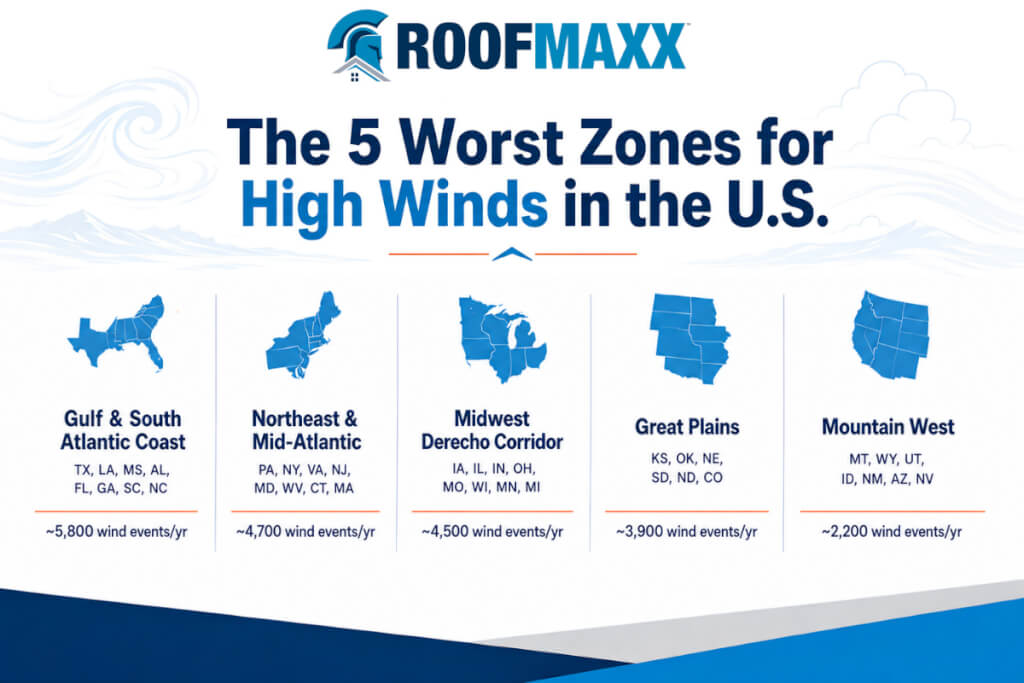
NOAA logged approximately 24,000 damaging wind events during each year between 2020 and 2025 across the nation. We broke that data down by region and took a closer look at the type of storms you’re most likely to face in each one to help you predict your personal level of risk.
High winds go hand-in-hand with life along the coast, so we were expecting the Gulf to rank highly on NOAA’s list. What might catch you by surprise is the fact that only two out of the top five zones hit the hardest by events like these are anywhere near the ocean at all.
Take a look for yourself:
| Zone | States | Peak season | Wind events per year* | Strongest gust | Storm Types and Other Contributing Factors |
|---|---|---|---|---|---|
| Gulf & South Atlantic Coast | TX, LA, MS, AL, FL, GA, SC, NC | April to June | ~5,800 | 130 mph | Thunderstorms, hurricanes, tropical storms, hail, EF2+ tornadoes |
| Northeast & Mid-Atlantic | PA, NY, VA, NJ, MD, WV, CT, MA | June to August | ~4,700 | 120 mph | Thunderstorms, nor’easters, post-tropical storms, winter storms, ice storms |
| Midwest Derecho Corridor | IA, IL, IN, OH, MO, WI, MN, MI | June to August | ~4,500 | 145 mph | Thunderstorms, derechos, supercells, hail, ice storms, EF2+ tornadoes |
| Great Plains | KS, OK, NE, SD, ND, CO | May to July | ~3,900 | 130 mph | Thunderstorms, supercells, downbursts, hail, blizzards, dust storms, EF2+ tornadoes |
| Mountain West | MT, WY, UT, ID, NM, AZ, NV | June to August | ~2,200 | 130 mph | Downslope windstorms, canyon winds, thunderstorms, heavy snow, dust storms |
*For this guide, we’re treating high-wind zones as regions that repeatedly experience damaging gusts of 58 mph or more, especially where severe wind events occur year after year.
Most wind damage comes from uplift: as air moves across the roofline, it creates negative pressure along the edges of your shingles that suctions them upward. If you’ve ever cracked a car window on the highway and felt the air pull outward instead of rushing in, the effect is generally the same.
Your shingles have three main features that help resist it:
The goal of elements like these is to turn the entire roof into one continuous surface so wind, rain, and snow can’t sneak up under the edges of each additional shingle. And here’s a little fun fact for you: the first two were put into practice centuries ago when roofers were still mainly working with shake and tile.
If you’re wondering about those adhesive strips, manufacturers didn’t start adding those until around the late 1950s. But the primary reason they were added at all was to provide better resistance to wind.
Learn More: How to Tell if Your Roof Has Storm Damage
You can hear the wind roaring outside, and you just saw a shingle go flying across the yard. What happened to all those important defenses? As your shingles age, the seals and edges that keep them in place become more vulnerable to repeated stress, so they’re more likely to fail.
It’s a compounding process that builds up over time:
Stiff shingles are more likely to cup or warp, which makes it easier for the wind to put upward pressure on them individually. But the adhesive strips themselves are also made of asphalt, and the tabs are just a part of the shingle itself, so they all age the same way on the same general timeline.
This is where things start to get messy for most homeowners, because you won’t be able to notice the earliest warning signs from the ground until it’s too late and you have shingles laying in the yard. The good news? Your local Roof Maxx dealer can help as long as you book an assessment early enough.
Roof Maxx is a multi-step restoration solution that starts with a free assessment and includes an optional Roof Tune-Up followed by one of the industry’s most effective treatments for loss of flexibility. Every step qualifies as critical maintenance your roof already needs to keep performing well over time.
Our safe, all-natural treatment process can:
Roof restoration isn’t a magic fix, so we can’t promise you that it will make your roof last forever or prevent all wind damage completely. What we can confidently say is that it will make your roof flexible again for up to 60 months, guaranteed—and flexibility is exactly what your shingles need to keep performing well.
Connect with a dealer in your area now to learn more.
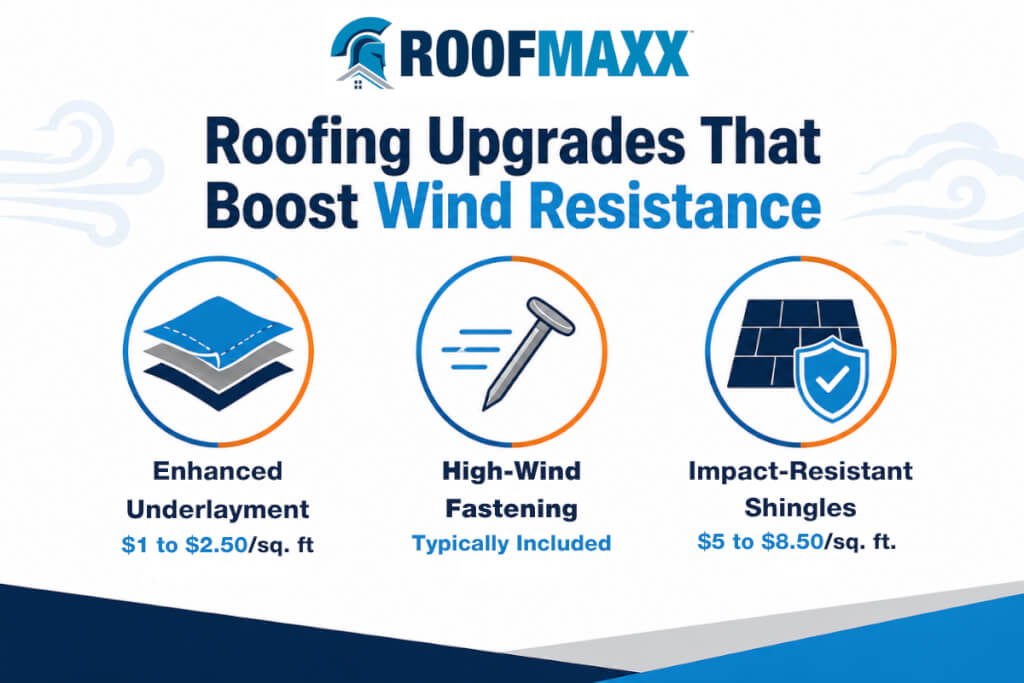
Your next roof replacement is the cheapest time to schedule roofing upgrades for wind resistance for a simple reason: you have to tear the roof off to install most of them anyway. If you aren’t planning to do that for a while, or you’re going with roof restoration instead, stick them on your long-term “to do” list.
See the chart below for info about our top 3 recommendations.
ProTip: Not sure what you need? Check out our Roof Replacement Vs. Restoration guide next.
| Upgrade | What’s Involved | What to Look For | Approximate Cost |
|---|---|---|---|
| Enhanced Underlayment | Roofers install a stronger secondary water barrier over the roof deck during your roof replacement. | Synthetic or self-adhered underlayment (not felt) with high tear and wind resistance. | $1 to $2.50 per sq. ft. installed |
| Improved Fastening Patterns | Roofers use up to six nails in each shingle instead of four during your roof replacement. | Request that they follow the manufacturer’s fastening recommendations for high wind zones. | Typically included |
| Impact-Resistant Shingles | Special high-durability polymer-reinforced shingles are installed during your roof replacement. | Shop around for products with a UL 2218 Class 4 rating specifically. | $5 to $8.50 per sq. ft. |
Remember how we said high winds can expose the interior of your home to moisture once part of the exterior fails? Your roof gets most of the attention (rightfully so), but your doors, windows, and any other connection points are just as vulnerable to strong gusts.
The three projects in the chart below can also help:
| Project | What’s Involved | What to Look For | Approximate Cost |
|---|---|---|---|
| Reinforced Garage Doors | Installers either replace the door with a wind-rated model or bolt a bracing kit onto the existing one. | A wind load rating in mph that matches or exceeds local building code. | $1200 to $6,000 for a completely new door $750 to $1,300 for a bracing kit |
| Hurricane Straps | Contractors work from inside your attic to nail metal connectors between each rafter and the wall plate. | Straps should be securely fastened with at least three nails each. | $3000 to $5,000 |
| Impact-Resistant Windows | Installers remove your existing windows and fit laminated glass into the openings. | Glass should be laminated, not tempered, and have the correct design pressure rating for your zone. | $40 to $60 per sq ft Costs may vary depending on the size of your windows |
Wind-resistant roofing products only perform as advertised when they’re installed correctly according to both manufacturer and local code requirements. You don’t want just anyone off the street doing this kind of work for you because there’s just too much that can go wrong if it isn’t done right.
Don’t sign anything until you ask each roofer these questions:
Don’t just ask verbally, either. Request that they show proof of every answer by putting it right on your estimate before signing off on it. Most reputable roofers will do this automatically anyway, so if you meet resistance or they try to push back, you should consider it a serious red flag.
Want more tips for finding the right roofer? Get them right here.
Storm prep in high-wind zones should always start with knowing how much flexibility your shingles still have left in them. Your local Roof Maxx dealer can solve this problem for you by evaluating where they are in the aging process and what kind of condition they’re in.
It’s also the best way to find out if roof restoration can help you extend the life of your shingles for up to 80% less than a life-disrupting replacement. Getting the info you need to make the right decision for your home costs nothing, so connect with a dealer in your area now to learn more.
It only takes a gust of around 58 mph for your shingles to start lifting away from the roof, especially if they’re older or have some granule loss and damage in the first place. The risk of losing shingles or even the roof itself rises exponentially as speeds increase during hurricanes, tornadoes, or ice storms.
What defines high-wind zones is mostly the frequency and total speed of gusts recorded in the area of a period of one year. The five top regions include the Gulf & South Atlantic Coast, Northeast & Mid-Atlantic, Midwest Derecho Corridor, Great Plains, and Mountain West.
Enhanced underlayment, manufacturer-approved high-wind fastening patterns, and impact-resistant shingles are three of the best upgrades to consider. It’s easier and cheaper to install them during a planned roof replacement instead of trying to retro-fit them onto an existing roof.
No. Roof Maxx doesn’t make your roof windproof or guarantee protection from storm damage. It restores lost flexibility in qualifying asphalt shingles so they can continue performing as they should even as the years roll by. Flexibility may reduce your overall vulnerability to minor wind damage in some cases.



With our five-year, transferable warranty, you’ll enjoy the peace of mind that your roof and entire home are protected.