
Homeowners often miss roofing estimate red flags like a vague scope of work, missing permit and warranty info, or inadequate planning for hidden deck damage. These items must be clearly laid out in writing to protect both you and the roofer and ensure the work is done correctly. A reputable roofer will always correct the bid if it’s a simple oversight. Suspiciously low bids and high-pressure sales suggest the roofer is taking shortcuts that jeopardize the quality of any work.
| Time to Read |
|
| What You’ll Learn |
|
| Next Steps |
|
Your roof needed a little TLC, so you did your due diligence and called around to a handful of local roofing companies to ask for a quote. The problem? None of them look even remotely the same, and like most homeowners, you don’t really know how to tell which one you can trust.
The first one is three pages long and filled with roofing jargon. The second and third barely fill a sheet of paper, and the fourth is little more than a single line item with a price tag that makes you sweat.
In this guide, you’ll learn what every trustworthy estimate should always include and the six most common red flags that could cost you big-time in more ways than one. We’ll also explain how a Roof Maxx assessment can help you understand all of your options before you decide what to do next.

Roof replacements are one of the most expensive projects you’ll ever take on as a homeowner, but they’re also the bread and butter of the roofing industry. It pays to be skeptical of any contractor who tries to pressure you into one without laying out all of your options first, including roof restoration.
Roof Maxx is a safe, easy, proven, and affordable alternative to replacement that can help you get more life out of your existing roof for up to 80% less. All you have to do to find out if you qualify and get valuable feedback about the condition of your roof is schedule a free assessment.
On the day of your appointment, your local dealer will:
You’ll also get a fully transparent upfront quote on our treatment, but there’s no obligation to proceed. And if your roof is truly at the end of its lifespan? The dealer can give you helpful advice for finding someone local you can trust. It’s a win-win.

Most homeowners will only really need to look at them a handful of times over the life of their home if they’re lucky. While you may not get much time to study them on your own, many of our dealers are successful roofers by trade who are happy to share what they know.
Ultimately, the best estimates are rich in information, but it has to be the right type. The scope of work needs to be clearly outlined with written proof of all terms to protect you and the contractor. Check out the image above this section; it’s a great example because it has all the right details in place.
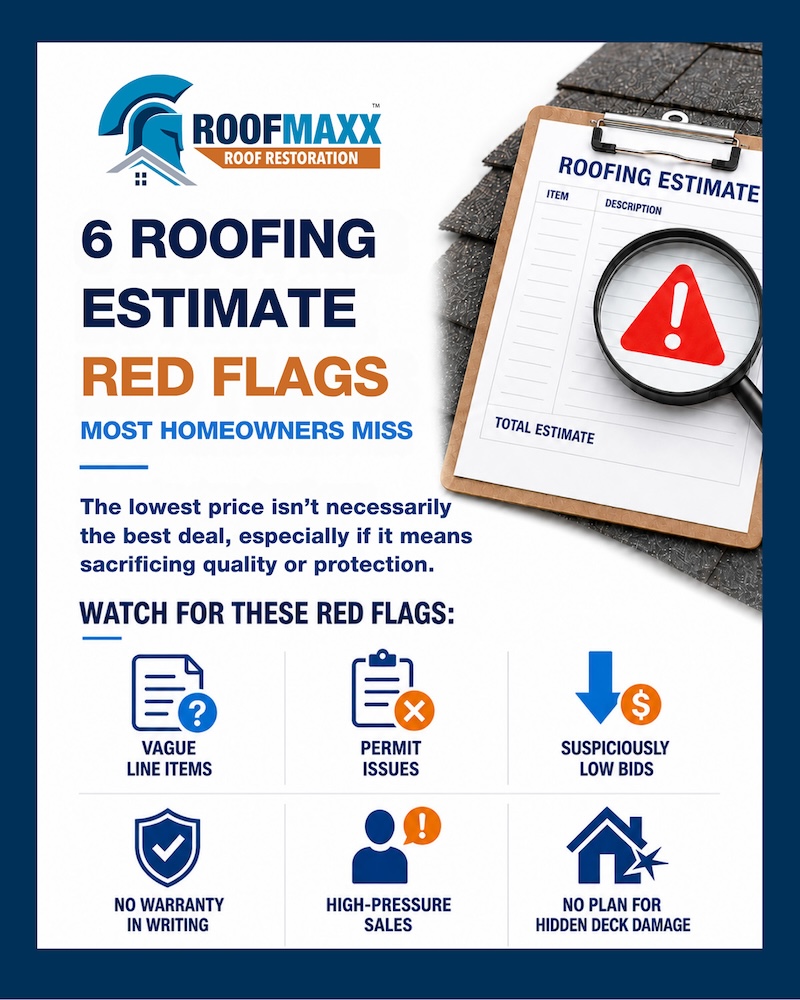
Every estimate tells you a little bit about the contractor who drew it up. A polished design, for example, tells you they care enough about their business to make a good first impression. With red flags like these, what matters more is whether the info is missing, misconstrued, or even misrepresented.
Red Flag: Work is missing completely or lumped into generic terms like “shingle work.”
Generic descriptions give the roofer room to install the cheapest material possible despite what they charge you. More importantly, it’s almost impossible to dispute the final invoice later on if you don’t have proof of what you were supposed to be getting in the first place.
What to Do Next: Ask the roofer to revise for clarity. If they’re unwilling, it’s your sign to move on.
Red Flag: There’s no mention of permits or the listed permit doesn’t seem to match the work.
Most jurisdictions make permits mandatory for any roofing work that goes beyond replacing a few shingles and other minor repairs. Unlicensed contractors may skip out on this step to artificially lower the bid, but proceeding without one can jeopardize your insurance or even cause delays if you decide to sell.
What to Do Next: Call the city or building department to confirm whether a permit is needed first. Then, call your roofer and ask for an update. If it’s a simple oversight, they’ll have no problem adding it on.
Red Flag: The cheapest quote you get is thousands lower than the rest.
If it seems too good to be true, it probably is. Some contractors cut costs by using cheaper materials, hiring unlicensed workers, or reusing parts that should have been replaced instead. Others don’t offer workers’ comp, which may leave you on the hook if there’s an accident.
What to Do Next: Ask for a simple explanation, but stay skeptical. It’s okay to walk away if the best answer you manage to get is “we’re just cheaper.”
Red Flag: The roofer promises great coverage that never appears on the estimate.
Promises are only as good as the paperwork behind them. Whether the coverage comes from the contractor or the manufacturer, the terms should always be outlined in writing upfront. If the contractor won’t put the terms on paper, it could be because they aren’t certified to offer them in the first place.
What to Do Next: It’s worth doing a little research at this step on your own. If you know what products they’ll be using, call the manufacturer and clarify the terms. The workmanship warranty is only as trustworthy as the company itself, so don’t be afraid to keep asking questions until you’re satisfied.
Red Flag: The price is “only good for today” or you have to sign the contract right now.
The longer you shop around, the more likely you are to find a better deal. Rushing you into a signature is one way some companies make sure you never get to explore their competition. It isn’t fair, and you shouldn’t be rushed into a decision you aren’t ready to make.
What To Do Next: If you aren’t ready, you aren’t ready. Take the time to shop around and do your research in spite of their claims. There are plenty of roofers out there who will give you all the time you need (within reason; most quotes are good for around 30 days).
Red Flag: The estimate never mentions the current condition of your decking or what happens if the crew finds damage, like rot in your decking, under your shingles.
Technology hasn’t come far enough (yet) to let roofers X-ray a roof, so it isn’t outside the realm of possibility for deck damage to crop up mid-job on an older home. A good roofer will account for it in the quote instead of using it as an excuse to surprise you with a big bill later on.
What to Do Next: Ask the roofer to add on a repair allowance and a per-sheet price for decking that goes beyond just what’s scheduled. More importantly, make sure there’s a clause in there that prevents them from making changes without getting your express written permission first.

The easiest way to compare roofing estimates is to lay them out side by side and review them line-by-line. You can do this with paper copies at your own kitchen table, but our free comparison tool should make it a little easier to spot any problems before you commit.
It’s designed to work with the info from any estimate, regardless of how it’s formatted or arranged on the page, so you can focus on what matters most.
To get your results:
The scorecards will automatically grade each one and give them a score from 1-10. You’ll also get helpful messages about any major issues worth examining more closely so you don’t miss them.
ProTip: Want to know how your quotes stack up against the going rate? Use our Free Roof Replacement Cost Calculator to get a rough estimate of what you can expect to pay in seconds.
Comparison cards will appear below the table and update automatically as you change values.
| Item | ||||
|---|---|---|---|---|
| Itemized Work With Individual Pricing | ||||
| Specific Materials (Brand/Product Line/Color) | ||||
| License Number | ||||
| Proof of Insurance (Liability and Workers' Comp) | ||||
| Estimate Date and Validity Period | ||||
| Workmanship Warranty | ||||
| Manufacturer Warranty | ||||
| Start Date and Timeline | ||||
| Permit Info, if the Job Needs One | ||||
| Hidden Damage Plan | ||||
| Written Approval for Extra Charges | ||||
| Total Price ($) | ||||
| Deposit ($) |
Loading comparison… If this message stays visible, JavaScript is blocked or delayed on this page. Check your caching/optimization plugin exclusions for "rm-rec".
This tool only compares the quotes you enter against each other. It cannot tell you whether a price is fair for your area, whether the contractor is qualified, or whether the proposed work is necessary.
Always weigh the results against your own best judgment.
Detailed written estimates make it easier to hold a contractor accountable, but they won’t tell you much about a person’s skill, experience, or track record. Asking for references, testimonials, and examples of past work is an excellent way to learn more about them before you sign anything.
At Roof Maxx, we believe homeowners should always be in the driver’s seat, regardless of whether they need a replacement or just a few simple repairs. To get straightforward answers about what your roof needs and what you should do next, schedule a free roof inspection today.
It’s best to aim for at least three so you have a realistic sense of the going rate in your region. Comparing them side-by-side will make red flags like a suspiciously low price or vague line item descriptions easier to spot. It’s okay to ask for clarification or a revision if you aren’t happy with what you receive.
In most cases, yes. Reputable roofers are happy to work up a basic quote because that’s how they bring in business. Some companies will charge you for in-depth roof inspections and other special services, like moisture testing, which can help them better assess your needs and provide a more accurate quote.
It varies. You’ll find that most contractors will honor a quote for somewhere around 30 days, while others may set it to expire much earlier or later. If you can’t find the expiration date on the estimate, ask the company to clarify how long you have to make a decision.
An estimate is just an offer. The roofer is telling you what the job should cost and what it covers, and they’re free to revise or pull that offer at any time.
The contract itself is a separate legal document that makes the terms in the offer official. Once both of you sign it, the price, timeline, and payment are locked in, so make sure you read the fine print carefully first.

With our five-year, transferable warranty, you’ll enjoy the peace of mind that your roof and entire home are protected.