Gas leaks aren’t always easy to spot at first. Common warning signs include dizziness, nausea, and the smell of sulfur or rotten eggs in the home. Regularly inspect your gas lines, meters, and appliances for corrosion, cracks, or loose fittings, and use a dish soap and water solution to test for leaks safely. Install and maintain carbon monoxide and natural gas detectors, and protect gas lines near attics or crawl spaces by keeping the roof in good condition.
| Time to Read |
|
| What You’ll Learn |
|
| Next Steps |
|
Gas leaks are a serious threat. Even a slow leak from a small crack or loose connection can make your family sick or cause a devastating fire, and many of the most common symptoms aren’t obvious unless you know what you’re looking for in advance.
While we don’t recommend trying to fix gas appliances or gas lines yourself, you don’t need to wait for a technician to learn how to spot early warning signs. A little bit of knowledge is your best defense!
Below, we’ll share five smart strategies for spotting gas leaks. We’ll also tell you how Roof Maxx can help extend the life of your asphalt shingle roof for top-down protection and why your roof matters so much.
We made a quick video explaining the warning signs of a gas leak, where to check for one, and what to do if you suspect a leak in your home. Watch this video to learn:
Need more details after watching? Read the article below.
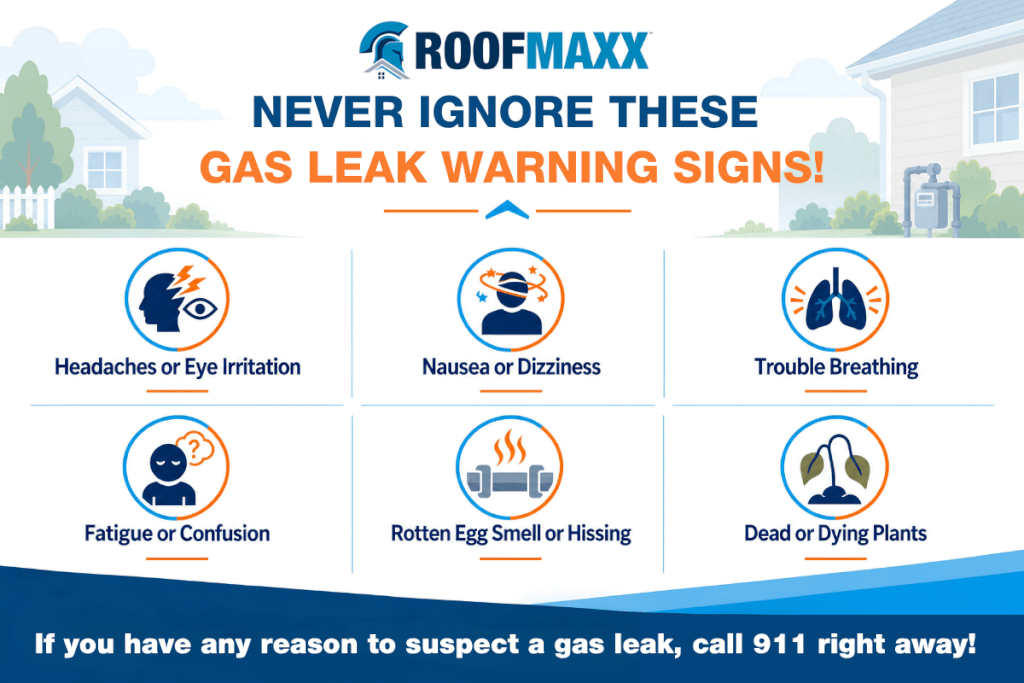
According to the EPA, exposure to gas leaks can make people acutely or chronically sick, and the symptoms are very difficult to pin down because they closely mimic the early stages of a cold or flu. Be on the lookout for symptoms like these, especially if they come on suddenly or affect everyone in the home.
Most fuel sources release volatile organic compounds (VOCs, which can displace oxygen in enclosed spaces. VOCs are inherently toxic, but not getting enough oxygen also makes it impossible for your body and brain to function correctly.
It’s also important to note that the consumption of nearly all fuel types creates carbon monoxide (CO), which can also leak into the air in your home. CO poisoning carries many of the same symptoms.
Not all gas leaks cause physical symptoms right away. Sometimes, your immediate surroundings will tip you off first. Keep an eye and nose out for these common warning signs:
It’s important to note that looking for environmental signs is more about positively identifying a leak than ruling one out. Even if you don’t hear or smell fuel, you could still have a leak.
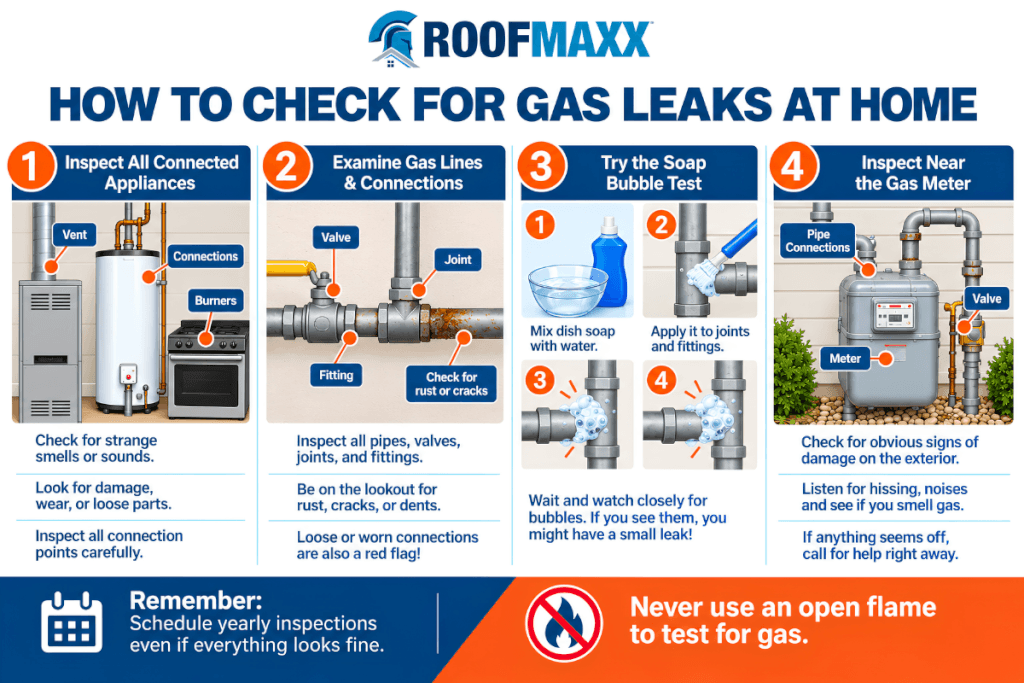
Most gas leaks start where you use gas the most: your fuel-burning appliances. The easiest way to catch warning signs early is to inspect them often. A few common examples include:
Remember: even if everything looks fine, appliances are still a high-risk zone, and it’s better to be safe than sorry. That’s why we strongly recommend scheduling yearly inspections even if they look fine.
Gas lines usually run through areas of your home that aren’t openly visible, but that doesn’t mean you should skip inspecting them now and again. Start with a thorough visual inspection of anything you can access: pipes, lines, connections, valves, etc.
Here’s what you’re looking for:
Can’t see any obvious signs of a leak? If you’re still suspicious, try the soap bubble test next. It’s easy and doesn’t require any special tools.
Here’s how it works:
Never light a match or use an open flame to test for gas. You may have seen people do this in social media videos, but it’s dangerous and misleading. If there’s enough ambient gas in the room, or the flame enters the pipe and travels to the source, it can ignite the entire line and trigger a major explosion.
Gas meters are another common source for leaks because the connections can weaken and corrode slowly over time. If your line or meter is outside, check it closely for any evidence of rust, wear, or unusual sounds and smells. For indoor meters, check for the same symptoms in your utility closet instead.
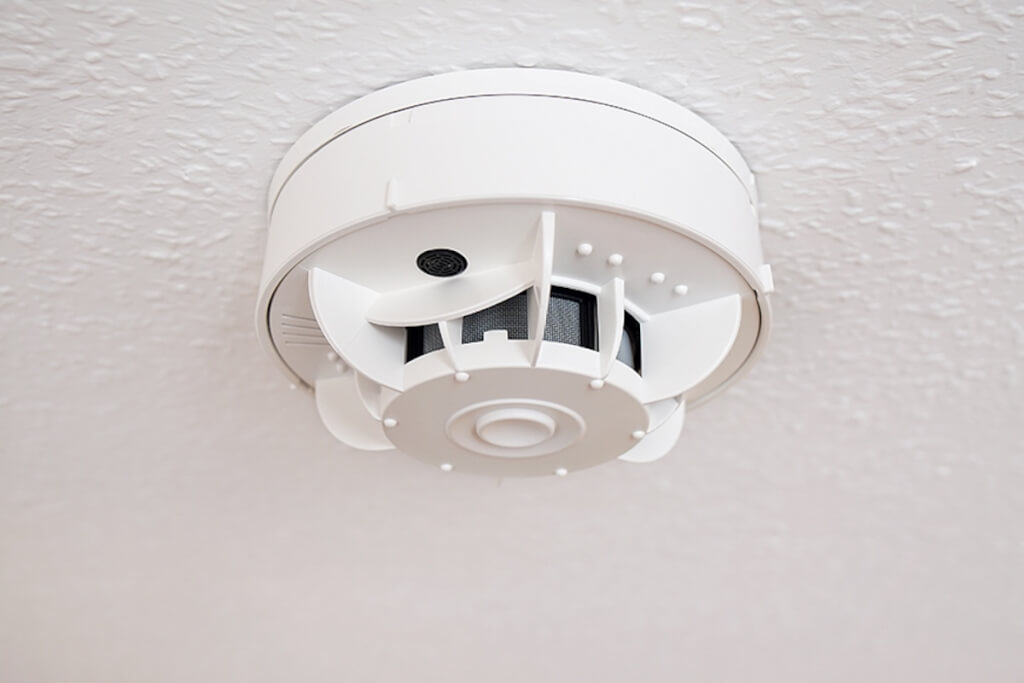
Detectors are one of the easiest ways to catch leaks. They provide 24/7 coverage so you’re protected when you’re asleep, outside, or distracted, and will go off long before you ever smell gas or start to experience physical symptoms. You have a few options to choose from:
For best results, read the packaging on each device carefully so you fully understand what it can do before you make a purchase. Install your detectors near gas appliances, inside or near sleeping areas, in basements, and on every level of your home on the ceiling or high on the wall.
Detectors are only reliable when they’re working correctly. Testing them regularly and keeping them clean is the best way to ensure you’re always protected.
Follow these best practices:
If you find yourself dealing with a detector that won’t stop chirping or refuses to chirp at all, there may be a more serious issue with the unit itself. It’s safest to throw it away and install a new one in its place.
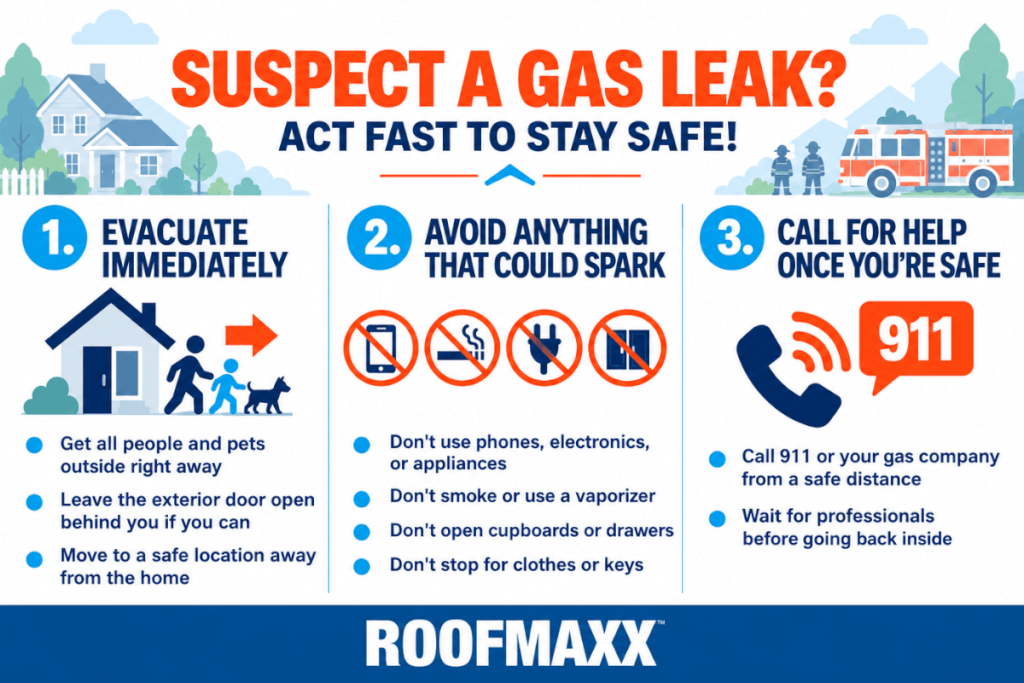
If you have any reason to suspect a gas leak, immediately evacuate all people and pets out of your home to a safe location and leave the exterior door open behind you. It is critically important that you don’t do any of the following on the way out:
All of these activities can create a spark large enough to ignite a flash fire or explosion. Once you’re a safe distance away or in another location, contact your gas company to report the leak or dial 911.
Once a professional tells you it’s safe to go back inside, open as many windows and doors as possible to increase ventilation and release any residual gas. Schedule annual inspections so you can enjoy your home without needing to worry about whether your connections and appliances are safe and up to code.
A strong, well-maintained roof protects against water infiltration, which can corrode any wiring or piping near the roof or even leak down into your home over time. For homeowners with asphalt shingle roofs, the main priority is keeping shingles flexible enough to expand and contract with the weather.
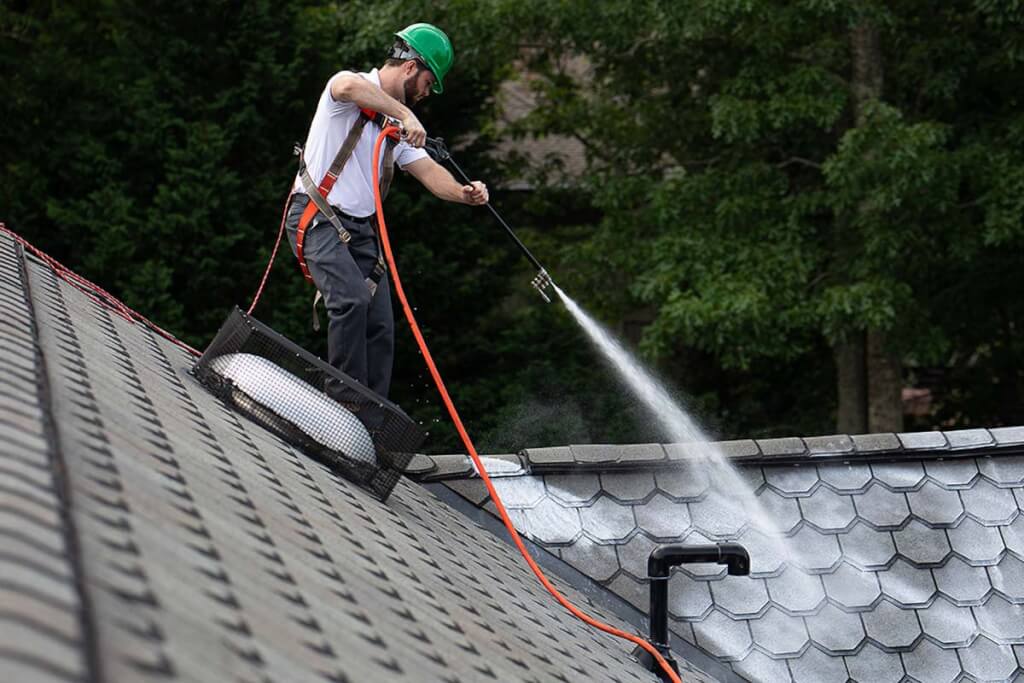
Roof Maxx treatments rejuvenate asphalt shingles by replacing the petrochemical oils they lose over time with safe, all-natural oils, but that’s not the only benefit.
Having your roof restored by us can:
Some of our dealers also offer an optional Roof Tune-Up or cleaning services, so you can take care of concerns like nail pops or stains at the same time. Less money wasted on replacing the roof early means you can spend more on upgrades like detectors that help keep your family safe, and that’s what matters.
Get a free roof assessment today to learn more!
The best way to protect your home and family from gas leaks is to stack these strategies for maximum protection. Get to know the most common symptoms, check for leaks regularly, schedule annual inspections, install detectors, and test your devices regularly to protect your home year-round.
For even better protection, follow these efforts up with proper roof care and a Roof Maxx treatment. Taking care of your asphalt shingle roof lowers your risk for leaks and other threats that can affect gas lines near your roofing system. Connect with a dealer in your area to get your free, no-obligation assessment.
No! Testing conducted by Ohio State University confirmed that Roof Maxx doesn’t increase your risk for a fire or speed the spread of flames from an existing fire, either. So, you don’t need to worry about trading one concern for another.
The primary ingredient in Roof Maxx is a plant-based, food-grade, non-toxic oil that won’t harm the environment, pets, or kids. While it won’t slow down a fire, it will help reinforce the integrity of your roofing system, which can protect you from many of the issues that lead to house fires—like leaks near gas lines.
No. The solution is specifically engineered to work on asphalt shingle roofs, the most common roof type in North America. If your roof is made from bitumen, metal, composite, or some other material, Roof Maxx probably isn’t the right option for you, but you likely know someone who can benefit from it!
With our five-year, transferable warranty, you’ll enjoy the peace of mind that your roof and entire home are protected.