

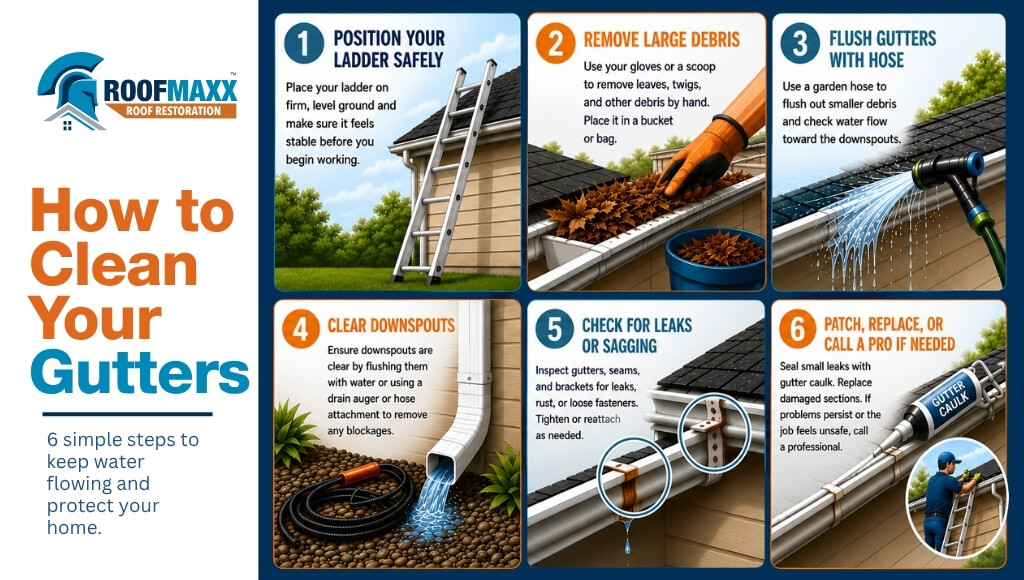
You can clear the gutters on your home yourself as long as you’re comfortable working on a ladder and your roofline is easy to reach safely. To keep them in good working order, you should remove any debris or leaves from both the gutters and downspouts, then flush them out to ensure water is traveling through them efficiently. Damaged sections with holes should be patched, repaired, or replaced as soon as you notice them to protect your shingles and roof.
| Time to Read |
|
| What You’ll Learn |
|
| Next Steps |
|
One of the most important tasks on your home maintenance list is cleaning your rain gutters. These out-of-sight chores often fall by the wayside until they cause serious damage to the roof, shingles, siding, or foundation.
To prevent that from happening, you need to know when and how to clean your gutters and what to do if you find holes or other damage. This is one of the few roof-related jobs you can do on your own at home, as long as you’re comfortable working at heights or on a ladder.
Below, we’ll show you what equipment you need to get the job done and walk you through the steps to clean your gutters and downspouts effectively. We’ll also explain why it’s the perfect time to inspect your shingles to see if they’re in need of restoration and what Roof Maxx can do for your roof.
Short on time? We turned the steps below into a quick video that can help.
You’ll learn what you need to clean your gutters safely and effectively, plus an overview of every step in the process from start to finish.
If you need more details after watching, you’ll find them in the rest of this article. Good luck!
Cleaning your gutters might feel like a low-priority chore, but skipping it can lead to expensive problems later on down the line. The whole point of a gutter is to carry water safely away from your home. That can’t happen if the inside is completely stuffed with leaves and tree fallout or even partially blocked.
The damage rarely stays in one place:
The good news is that all of this is easy to prevent just by cleaning them out every so often. Why pay to fix expensive damage to your shingles and roof when you can prevent it from happening in the first place?
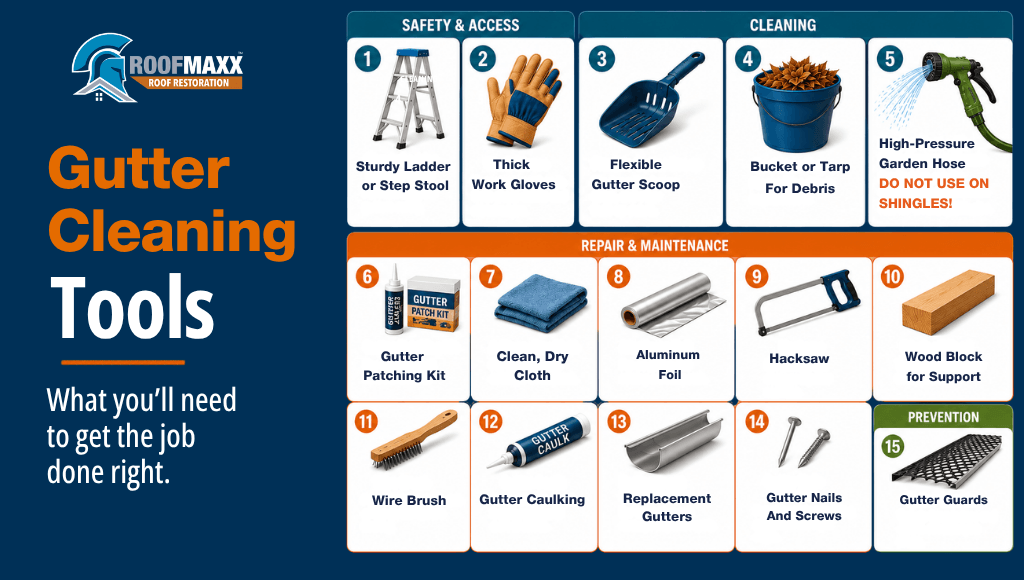
To clean your gutters out efficiently and effectively, you’ll need a few simple pieces of equipment. Use the table below to gather everything before you get started.
| Equipment | What You’ll Use It For |
|---|---|
| Sturdy Ladder Or Step Stool | Reaching the gutters safely |
| Work Gloves | Protecting your hands from sharp debris and metal edges |
| Flexible Gutter Scoop | Removing leaves, twigs, and built-up debris |
| Bucket Or Tarp | Catching debris as you clear it |
| Garden Hose With High-Pressure Nozzle | Washing out dirt and flushing downspouts. NOT for cleaning shingles! |
| Gutter Patching Kit | Sealing small holes and leaks |
| A Clean, Dry Cloth | Covering and setting a fresh patch |
| Aluminum Foil | Covering and setting a fresh patch |
| Hacksaw | Cutting out damaged gutter sections |
| Block Of Wood | Supporting the gutter while you cut |
| Wire Brush | Scrubbing the inside of the gutter before sealing |
| Gutter Caulk | Sealing the joint between old and new sections |
| Replacement Gutter Section | Swapping out damage beyond repair |
| Gutter Nails Or Screws | Re-securing sagging gutters at the right angle |
| Gutter Guards | Keeping debris out after cleaning |

Chances are you’ll have to get up on a ladder or step stool, or in some cases, climb up onto the roof itself, when you’re cleaning your gutters. That’s exactly when accidents are most likely to happen, so it’s critical that you take precautions and work carefully at all times.
Most of what we recommend is essentially common sense:
If your roof is very high, the pitch is steep, or you have physical limitations that affect your ability to work at heights, pay a professional to clean them instead. There’s no shame in keeping both feet on the ground if that’s what protects you from harm.
See our full Roof Safety Guide for more helpful info on how to stay safe.
Sometimes, what you really need to tackle a job like this is expert advice that comes straight from the source. Watch the video below before you get started to get all of Roof Maxx Dealer Scott Papendorf’s top tips for gutter cleaning in under three minutes!
| Task | Difficulty | Steps |
|---|---|---|
| Remove leaves and loose debris | Easy |
|
Start by clearing out the debris inside the gutter channel. You can technically do this by hand if you wear tough gardening gloves, but a flexible gutter scoop makes the work much more efficient.
This first pass is about removing the heaviest buildup so water can move through the system again. Once the larger material is gone, you’ll be able to rinse, inspect, and repair the gutters more effectively.
ProTip: If you frequently notice fallout from trees near your home, or the branches on nearby trees hang over the roof, consider cutting them back. It will reduce your risk for roof damage.
| Task | Difficulty | Steps |
|---|---|---|
| Flush dirt and sediment out of the gutters | Easy |
|
After you’ve cleared out the large debris, wash the gutters with a hose and high-pressure nozzle. This helps remove the lower layer of dirt and sediment left behind after scooping. It also helps you test whether the system is moving water toward the downspout properly.
Look for red flags like:
Consider these warning signs that you may have gutter damage or a blockage hiding somewhere along the line. A properly functioning gutter should move water smoothly toward the downspout quickly.
| Task | Difficulty | Steps |
|---|---|---|
| Clear and test the downspouts | Easy |
|
Cleaning the gutters is only half the job. If your downspouts are also clogged, water will stay trapped in the system and create the same problems you were trying to prevent by cleaning them in the first place.
If there’s a problem, you might notice:
If flushing them out doesn’t correct the problem, you may need to disconnect the downspout or call a professional for help. A clear downspout should move water away from your home freely.
ProTip: Are your downspouts clogging often? You may need to upgrade to a bigger size. See our Downspout Guide for more information.
| Task | Difficulty | Steps |
|---|---|---|
| Patch small holes and leaks | Moderate |
|
Small holes can lead to bigger cracks that eventually render your gutter useless. Repairing them early with a gutter patching kit can help extend the life of the gutter system and prevent leaks from getting worse.
For best results, make sure the damaged area is clean and dry before you begin. Follow the instructions included with your patch kit carefully, because curing times and application methods aren’t always the same. If you get it wrong, it may not protect the gutter properly.
| Task | Difficulty | Steps |
|---|---|---|
| Replace any damaged sections | Moderate to Advanced |
|
If a section of your gutter is beyond repair, you may need to replace it instead of patching it. This is a bigger job than sealing a small hole, but it can help you avoid replacing the entire gutter system until you absolutely have to. That can help you save money without just ignoring the issue.
It’s essential to make sure the replacement section overlaps the existing gutter on both ends. This will maintain the flow of water and help keep the new section of gutter snugly in place. If you’re not comfortable cutting, sealing, or fastening gutter sections while working from a ladder, call a pro for help.
| Task | Difficulty | Steps |
|---|---|---|
| Secure any sagging gutters in place | Moderate |
|
In addition to pulling away from the roof, gutters can start to sag over time. This causes water, ice, and snow to collect in low spots and create ice dams instead of flowing toward the downspout.
Potential causes include:
You can replace the gutter nails or use screws to secure the gutters at the proper angle. Since there’s a lot that can go wrong with this one, we recommend consulting a roofer before you tackle this task.
| Task | Difficulty | Steps |
|---|---|---|
| Install gutter guards after cleaning | Moderate |
|
Once your gutters are clean, it’s time to start thinking about how to prevent them from blocking in the future. Gutter guards are screens or covers that make it harder for leaves and other debris to enter the system without interfering with the flow of water off of your roof.
While installing guards can reduce how often you need to clear your gutters out, they won’t eliminate the need for cleaning completely. You should still check them after storms and/or every few months.
The answer to this question will depend on where you live, what the climate is like, and how many trees are near your roof. Cleaning them out every three months or so is a good place to start, but this will be overkill for some homes, yet still be much too long for others.
You may need more frequent cleanings if:
Spring and fall are usually the best time to clear your gutters out. Staying consistent with maintenance helps keep water moving properly and may extend the life of both your gutters and roof.
Gutter cleaning is the perfect time to get a closer look at your shingles, even if you don’t get up on the roof itself. While you’re near the roofline, inspect your shingles closely for signs like curling, cracking, bald spots, or heavy granule loss.
If you can safely reach the shingles without stretching, you can also gently run your hand over the surface to see how it feels. Shingles that feel brittle, crumble, or lose granules when you touch them may benefit from a Roof Maxx treatment, which will restore their original flexibility for a fraction of the cost.
Having your roof treated can:
Roof Maxx is designed to rejuvenate aging asphalt shingles and help homeowners get more life from the roof they already have. That’s why so many homeowners make it a part of their maintenance plan.

Once your gutters are clear and ready to defend your home again, take a few minutes to assess your shingles up close. Look for hairline cracks, bald spots, and stiffness or granule loss, as these are all a sign that your shingles are starting to wear down.
Roof Maxx is an easy and effective alternative to total replacement that can roll back the clock on your shingles and make them flexible again. Making the treatment a part of your regular maintenance plan can help you get more life out of your existing roof for up to 80% less.
Schedule your free roof assessment today to learn more!
Definitely! When they’re blocked, water gets trapped against the roofline or spills down onto your wall instead of traveling away from your home. Over time, this can contribute to leaks, fascia rot, ice dams, and shingle damage, so it pays to stay on top of it.
Maybe. You’ll need to be comfortable working at heights first and foremost, but you’ll also need a sturdy ladder, proper safety gear, and an easy-to-reach roofline. We recommend waiting for a dry, mild day if possible as well, because ice, snow, and rain increases the risk of falls.
If your roof is high, steep, or difficult to access, hiring a professional is the safer choice.
No. Gutter guards should reduce the amount of leaves, twigs, and debris that enter your gutters, but they won’t block everything. You should still inspect them after storms and clean them when buildup starts to affect water flow.
One strong indicator is if water spills over the gutter edges during rain or drains slowly when you flush the gutters with a hose. You may also notice sagging near connection points, standing water on your roof, gurgling downspouts, or debris collecting near the roofline.



With our five-year, transferable warranty, you’ll enjoy the peace of mind that your roof and entire home are protected.