
Repeated temperature swings can definitely damage your asphalt shingles over time, especially if you live in an area where extreme highs and lows are common. This is called thermal cycling, and it’s a physical process where your shingles expand in the heat and contract in the cold. This constant back-and-forth cycle causes the asphalt in the core to degrade, dry out, and become even more vulnerable to damage. Professional roof maintenance and proper attic ventilation can help you slow it down.
| Time to Read |
|
| What You’ll Learn |
|
| Next Steps |
|
A video’s worth at least a thousand words, so we made one to explain exactly how thermal cycling can damage your asphalt roof shingles over time.
Watch now and learn:
Need more details after watching? Just keep reading; we’ll explain everything.
Every day, your shingles expand as they warm up and contract as they cool down. This process is called thermal cycling, and it can strip the oils out of your shingles and even cause them to crack, cup, curl away from the roof, or fail completely.
No asphalt shingle roof is truly immune to this process, but the degree of damage does vary depending on where you live in the U.S. Below, we’ll tell you how Roof Maxx can help slow it down, what’s actually happening to your shingles, and what you can do at home on your own to prevent or correct it.
Years of thermal stress can strip the oils out of our shingles and make them so brittle, they can no longer flex with the weather. A Roof Maxx maintenance treatment, applied by a trained dealer, replaces them with safe, all-natural oils made from plants to restore flexibility so shingles can expand and contract again without developing cracks.
Having your roof treated can also:
Thousands of homeowners all over the United States already rely on Roof Maxx to help them manage and treat age-related wear and degradation. But don’t take our word for it. Hear what they have to say about Roof Maxx maintenance in their own words right now.
*Some roofs may be eligible for up to two more additional treatments at five-year intervals. If this is the case for you, Roof Maxx can help you extend the life of your roof by up to 15 years!
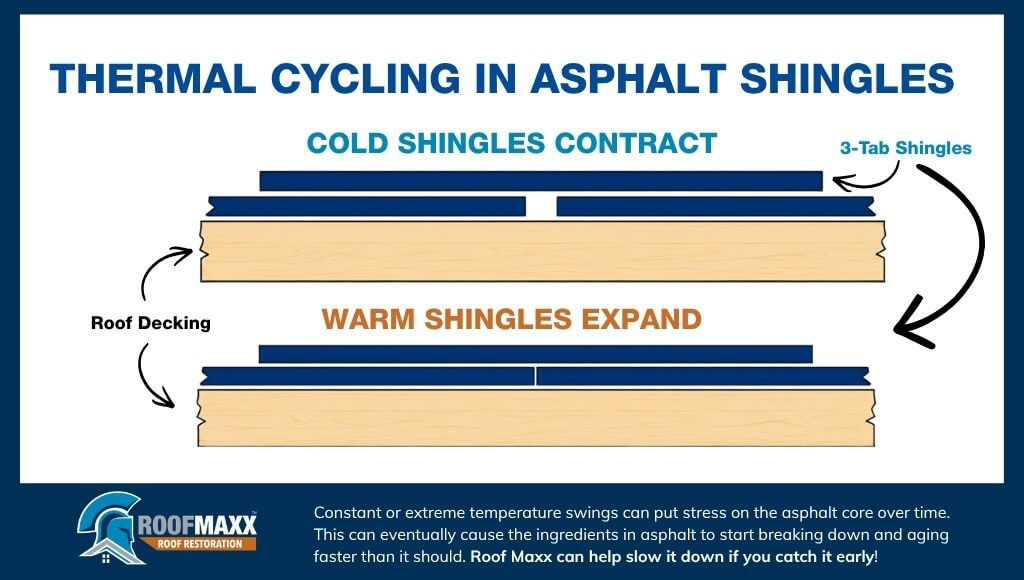
Thermal cycling is essentially a form of material fatigue, which is a fancy way of referring to how a material weakens when it’s exposed to temperature swings over time. Nearly everything is affected by it to at least some degree, but we’re specifically talking about the effect it has on your shingles, which contain asphalt.
Just about everything that affects the temperature outside can kick it off:
Sometimes, these shifts are very mild and do almost no damage to your shingles at all. In other cases, they can be so extreme, the asphalt starts to break down surprisingly fast. Paved roads actually go through the same process, which is exactly why potholes happen after intense freeze-thaw cycles.
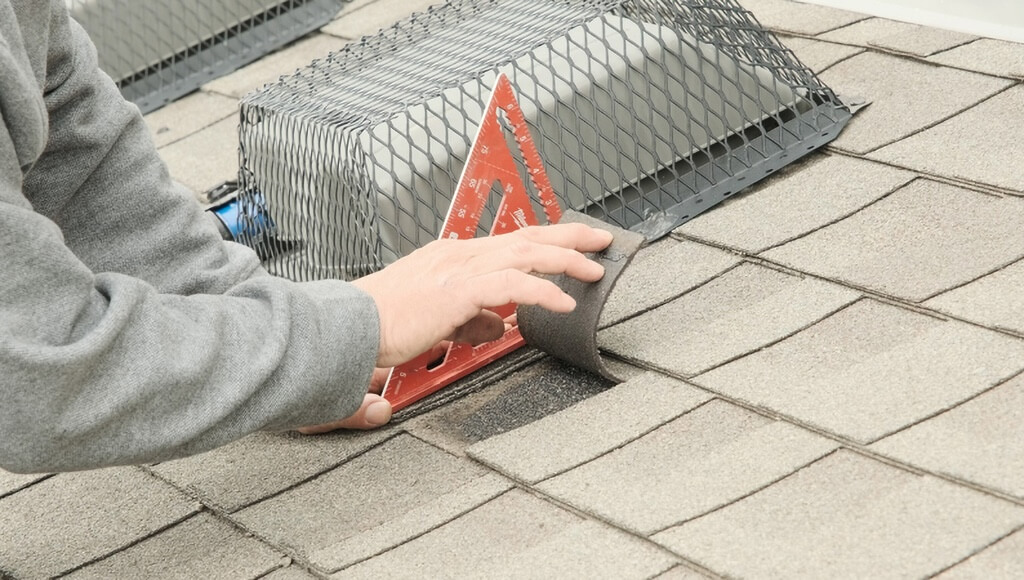
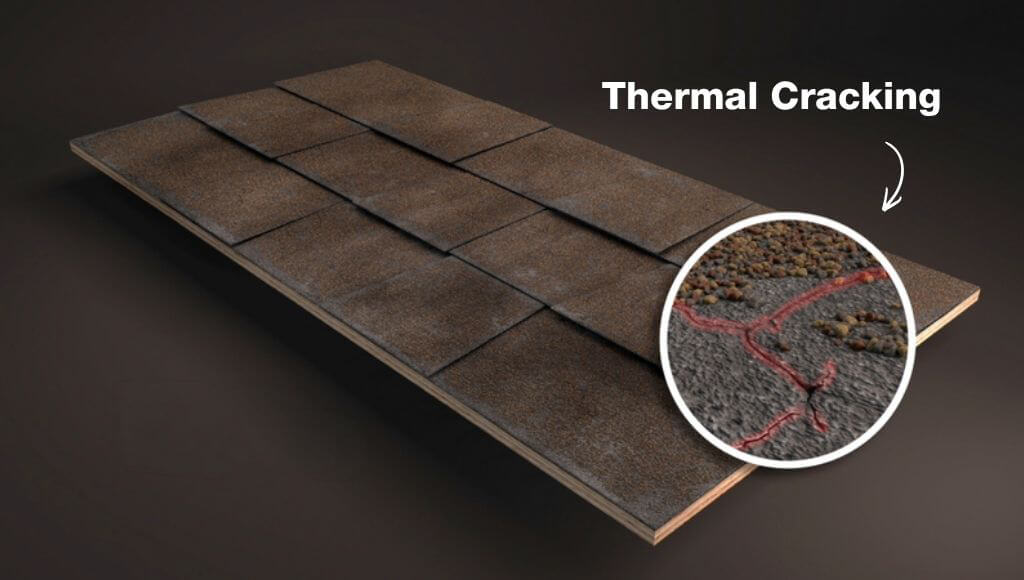
Brand-new shingles are always flexible enough to bend almost in half without breaking. That’s a design feature that ensures they can shift around slightly, absorb impacts, and respond to temperature changes without just splitting in half or coming off of the roof.
Frequent or intense thermal cycling forces the shingle to expand and contract repeatedly, sometimes in a very short time frame (like overnight). The change is often so minor, you can’t see it, but it’s enough to stress the asphalt in the core in ways that cause the asphalt core to dry out.
The decline happens slowly but surely:
It’s a bit like repeatedly bending a paperclip or a piece of wire back and forth in different directions. The material gets stiffer and more brittle with every pass, until eventually, it just snaps. In severe cases, the shingle can actually just crumble away from the roof completely, but this doesn’t happen right away.
Thermal cycling is more damaging when temperature swings are bigger or more frequent. A roof that stays within 10F and 20F definitely won’t be affected as much as one in an area where temperatures swing rapidly from 80F+ to 35F or less overnight.
That means a roof in southern Florida is going to face very different stressors in the middle of August than a roof in Arizona or Nevada. Similarly, winter thermal cycling can be worse in areas like the northeastern coastline where hurricanes are common because roofs in these areas are already at risk.
Curious where your climate falls? Find it on the chart below to get a quick estimate.
| Climate Type | Example Locations | The Main Problem | Example Seasonal Temperature Swings |
|---|---|---|---|
| Continental | Midwest, Great Plains, Upper Midwest | Freeze-thaw cycles, spring and fall shifts |
|
| Northeastern Coastal | Maine, Massachusetts, Rhode Island, New York, New Jersey | Freeze-thaw cycles and coastal storms |
|
| Desert | Arizona, Nevada, Inland California | Extremely hot days and very cold nights |
|
| High-Altitude | Colorado Rockies, Utah Mountains, Wyoming | Strong sun and cold nights speed up wear. |
|
| Humid Subtropical | Florida, Gulf Coast, Georgia, Carolinas | Heat, humidity, UV exposure, and storms accelerate aging. |
|
Thermal cycling doesn’t usually destroy a roof overnight. It’s also almost never the only factor at play when a roof is at the end of its lifespan or suddenly fails. Instead, it’s just one factor in a long list of negative influences that wear away at the entire shingle, and eventually, the entire roofing system.
This might include:
If you’ve ever played a game of Jenga, the degradation process is a little similar. Each factor knocks away one “block” of support after another, until eventually, the shingles are so degraded they fail. Any one influence might seem minor on its own, but still contribute to the overarching pattern of harm.
Learn More: Common Winter Roofing Problems (& How to Avoid Them)
The best way to tell if your shingles are suffering from temperature stress is to have an expert come in and examine the roof in person. Getting up close and personal is the only real way to spot the earliest signs of damage before it reaches a point where it’s obvious from the ground.
Your local Roof Maxx dealer may be able to help with this! If you’re considering Roof Maxx, they’ll give you their honest feedback about what they find, with photo evidence, during your free assessment. You get the info you need to move forward, and we get the opportunity to help you protect your roof.
Here’s a quick look at what our dealers usually look for:
| Sign | Where to Look | What It Means |
|---|---|---|
| Ridge Cracking | Along the peak and hip lines at the top of the roof | The ridge flexes most as the roof expands and contracts, so the shingles on it often wear out and split faster. |
| Lifted or Torn Tabs (3-Tab) | The exposed bottom edge of the shingle (what you can see) | The adhesive strips holding them in place are degraded or too dried out to function. |
| Cupping/Curling | The sides and bottom edge of your shingles | The asphalt core is shrinking and drying out, creating more tension across the surface |
| Surface Cracking | Across the face of the shingle, often in a web or grid pattern | This is another sign that the asphalt core is becoming too brittle to properly expand or contract. |
| Granule Loss | On the roof, in gutters, and near downspout outlets | The asphalt core is no longer soft and sticky, so granules fall off more easily. |
| Gaps Between Shingles | Where shingle edges meet across the field | Repeated shrinking and expanding can actually pull shingles apart or dislodge them. |
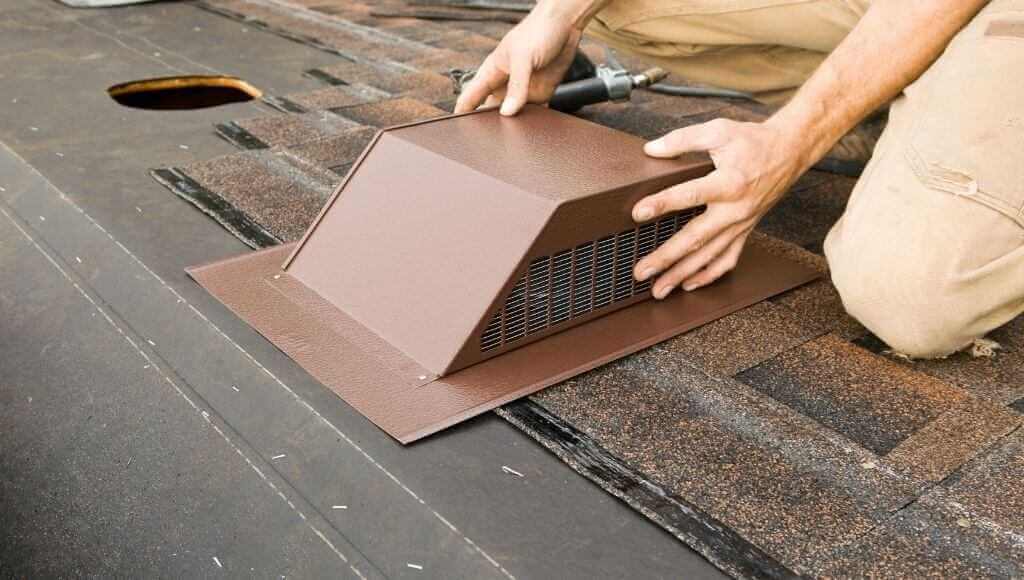
One of the best ways to slow thermal cycling is to improve your attic ventilation. Roof Maxx co-founder Mike Feazel talks about why it’s so important and what you can do to improve it in this short video:
The temperature in an attic can easily climb past 150 degrees in the summer if it isn’t properly ventilated or if the vents aren’t working properly. This can actually worsen thermal cycling as it happens or even create a new swing if the temperature suddenly drops outside before the attic cools down.
It can also make your top floors miserable to live in and cost you a fortune in air conditioning. Add in humidity, and it could even create a breeding ground for mold. That’s no fun for you or your wallet!
What we know from our time in the roofing industry is that as many as 75% of homes don’t have enough ventilation, and a poorly ventilated roof can wear out up to 50% faster than it should. So, if you’ve been having issues with sweltering upper floors, it’s definitely time to address it.
You don’t need a contractor for this one!
To get a quick read on the temperature in your attic:
If your attic or upper floors are running much hotter than that, something is off. Either you don’t have enough ventilation to begin with or something is preventing air from flowing through the ones you already have. Insect nests, pests, leaves, and even bird nests are all a possibility.
Learn how to pick the right vents for your roof in our Roof Vent Guide!
ProTip: You can run the same test in the winter if you’re dealing with ice or moisture build-up in the attic that you can’t track down. This time you want it within about 10 degrees of the outdoor temperature, since a warm attic melts roof snow that refreezes into harmful ice dams.
Here’s a little fact that surprises most homeowners: research tells us that attic insulation probably doesn’t have a meaningful effect on the temperature of your shingles when it’s hot out. What it does do is protect your roof from the harmful effects of ice, snow, and freeze-thaw cycles in the winter.
The mechanism of protection comes from the way it keeps hot air in:
Not sure where yours stands? If it’s unfinished, there’s an easy way to check: look and see if you can visualize the tops of your floor joists from the hatch. If the answer is yes, there’s a good chance you need to look at having more put in. The good news is that it’s pretty cheap to add.
Learn More: The Best Energy Efficient Windows & Doors in 2026
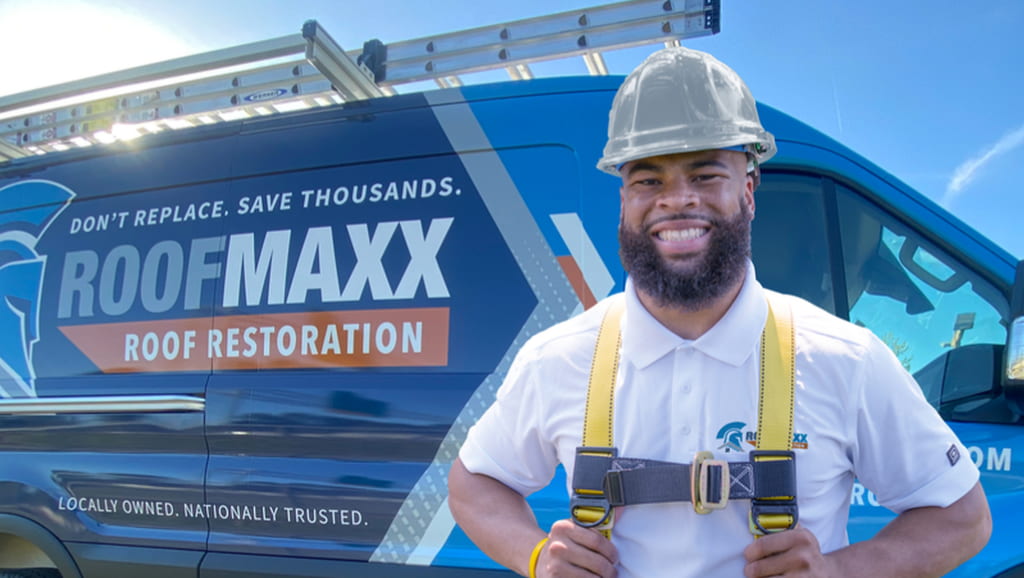
Thermal cycling is a fact of life for homeowners who live in most of the U.S., but that doesn’t mean the damage is inevitable. Roof Maxx maintenance helps you slow it down by replacing the petrochemical oils that get stripped out of your shingles with safe, all-natural oils so they survive it and stay flexible.
Remember: thermal stress compounds over time, and while you might not see it from the ground, it’s almost certainly there, especially if you live in a high-risk zone. Take action today to get ahead of it and get more life out of your asphalt shingle roof by scheduling your free roof assessment.
Yes, but the degree of damage will typically be minor for at least the first few years. The asphalt core in a new shingle is still rich in petrochemical oils and flexible enough to expand and contract easily. That said, they also contain less asphalt than they did 20 or 30 years ago, so it may compound faster over time.
Yes and no. It’s more about the degree of difference in the swing than how high or low the temperatures go, although temperature extremes can also age your shingles faster. For example, roofs in the desert often suffer the most from the shift between hot days and dry nights, while homes in Alaska deal with freeze-thaw cycles more often instead. It’s the same problem on a slightly different spectrum.
Look at the sides and edges from the ground. If you notice any cracking, cupping, curling, loose tabs, or heavy granule loss, there’s a good chance the asphalt in the core needs a little TLC. Have a roofing contractor in right away to address the problem before it gets any worse.
Absolutely! Good attic ventilation helps release trapped heat, which can slow down shingle aging and reduce extra stress from high roof temperatures. It also helps keep the inside of your crawl space or attic close to the ambient temperature outside and stops conditioned air from escaping out of the roof.
No. Temperature changes will always make shingles expand and contract. What Roof Maxx does is slow it down and treat the damage by making your shingles flexible again. It soaks down past the granules on the surface and saturates the core with safe, all-natural oils made from plants.
The result? Your shingles can expand and contract again, and they’re much less likely to split or crack when they do. Use our free calculator to estimate how much longer your roof could last if you make Roof Maxx a part of your maintenance strategy.


With our five-year, transferable warranty, you’ll enjoy the peace of mind that your roof and entire home are protected.