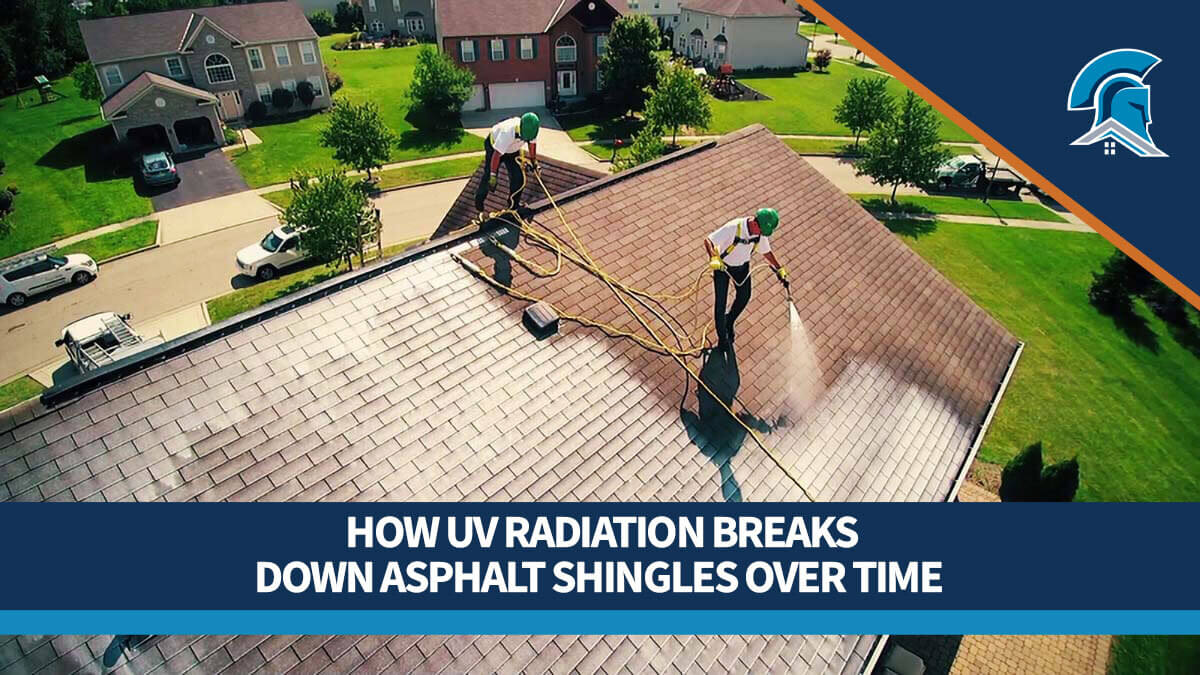

Ultraviolet (UV) light is the single biggest driver of asphalt shingle damage because it causes the petrochemical oils in the asphalt core to break down and evaporate. Known as “maltenes,” these softeners play a critical role in how your shingles perform, how well they hold onto granules, and even how long they last. South-facing roof slopes are the most likely to be affected, and the hotter the climate, the faster the damage stacks up.
| Time to Read |
|
| What You’ll Learn |
|
| Next Steps |
|
Spend a day at the beach without any sunscreen on, and you’ll learn a painful but hopefully temporary lesson about the dangers of ultraviolet light (UV). Keep doing the same thing year after year, and the constant exposure can actually break down the DNA in your skin or cause permanent damage.
The asphalt in your shingles may not be “alive” like your skin, but it goes through a surprisingly similar degradation process as the years tick by. And while you can slip into the shade or slather on a little coconut-scented Coppertone, your roof has no choice but to sit out in it unprotected every day.
You can’t stop UV rays from hitting your shingles, but there are ways to slow down the damage or even reverse it after the fact. We’ll explain how the breakdown happens at a molecular level, what it looks like, and how Roof Maxx’s restoration process can help.
From a scientific standpoint, UV radiation is a form of energy from the sun that falls just outside the range of light the human eye can see. All light is made up of tiny packets of energy called photons that travel in waves of varying length from the source to the destination.
Visible light is measured in nanometers, which run from around 380 nm to 750 nm. The lower the nm rating, the shorter the wavelength and the more energy each photon carries. A red laser pointer, for example, falls somewhere around ~650 nm on the spectrum.
UV rays fall so low on the spectrum, we can’t see them, which also means they carry significantly more energy and can potentially cause a lot more damage.
There are three main forms:
The fact that UV rays carry much more energy is exactly what makes them so harmful. It’s a bit like the difference between holding your hand near a birthday candle compared to a large campfire. Both give off light and heat, but the fire will injure you faster in a shorter period of time.
Asphalt is a blend of two compounds called maltenes and asphaltenes. Maltenes are the light, petroleum-based oils that keep the material soft and flexible. Asphaltenes are the solids that help it hold its shape and give it structural integrity so it doesn’t become floppy or excessively soft.
Roofing shingles are manufactured with a very specific ratio of the two, so they can flex, expand, and contract without getting so stiff they crack or break off the roof. Too much of one and not enough of the other can severely impair how they perform in bad weather or temperature extremes.
The lighter petrochemical oils are usually the first to go, and while it isn’t the only contributor, nothing pulls them out faster than UV light.
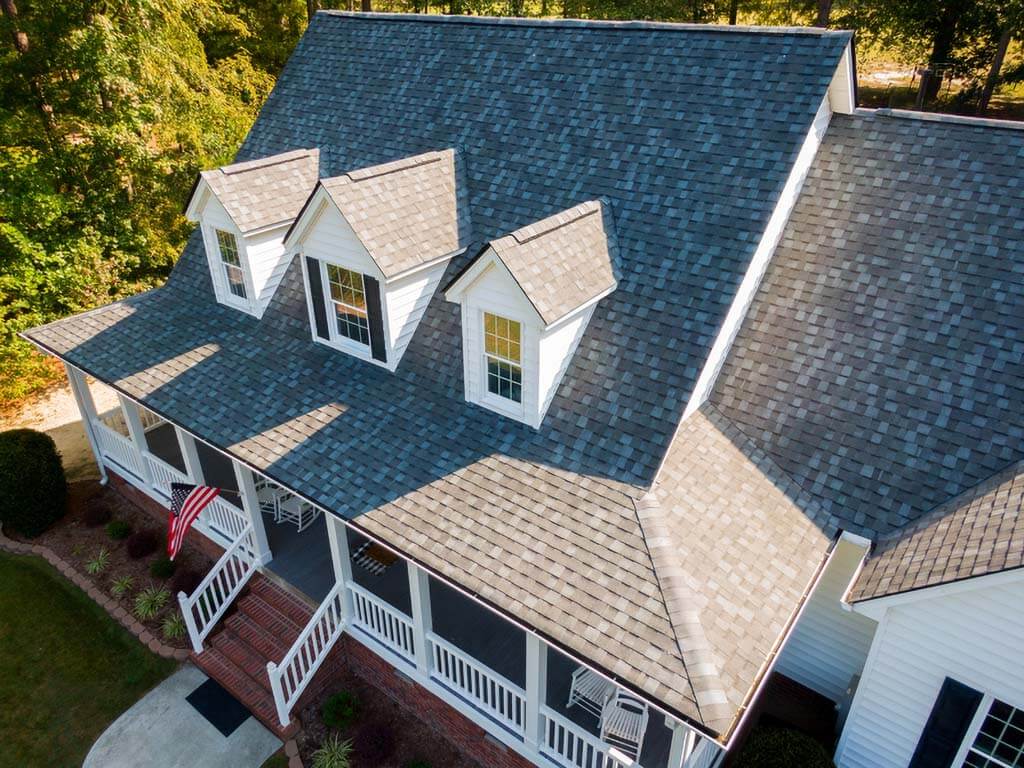
There’s nothing like a sunny day to make you feel more positive about life. For your roof, though, the thought of being bombarded by UV rays all day is
Oil depletion is the number one contributor to almost every type of shingle damage out there, which is why it’s so important to do everything you can to slow it down or treat it when it happens. But what’s actually happening at the molecular level while all that UV light is busy baking your shingles into oblivion?
According to science, they undergo a pretty predictable three-step process:
The protective layer of granules on the surface of your shingles is technically supposed to block out UV light, but it doesn’t create a perfect seal, and every roof sheds them slowly over time. Ironically, the more your shingles dry out, the easier for them to wash away, which creates a self-perpetuating loop of damage.
ProTip: You can turn those same UV rays into a real benefit and protect your shingles by installing solar panels on your roof. You get free power, your roof gets shielded from the sun.
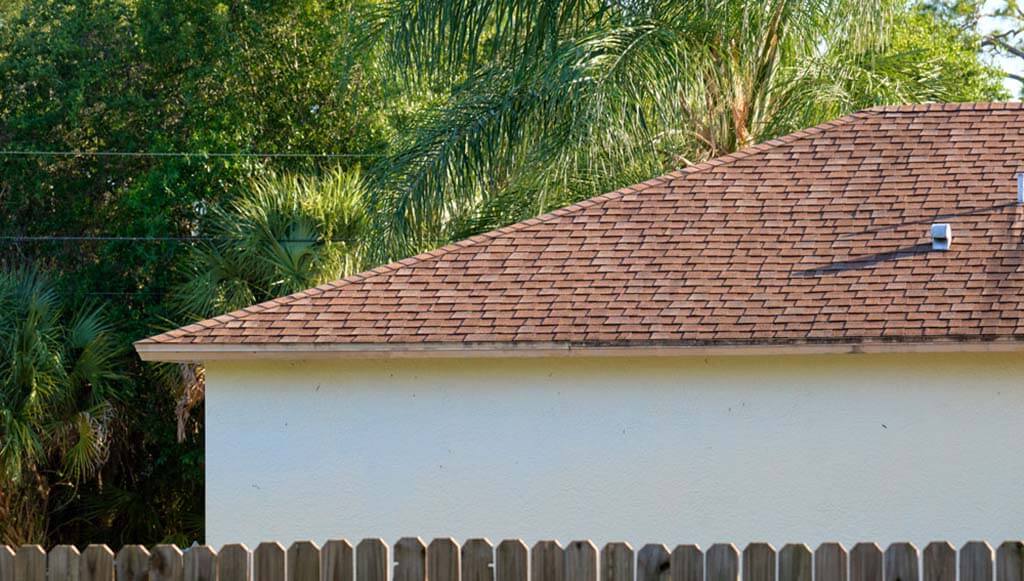
Two houses with the same asphalt shingle roofs can degrade and age at totally different rates, even if they’re in the same neighborhood or on the same street. Widen the lens to regions with very different climates, and you’ll find that roofs just don’t last as long in some zones.
The simple truth is that so many factors can affect how much UV light hits your shingles, how quickly they age, and how likely you are to lose features like surface granules.
For example:
The takeaway? Strategizing to prevent damage is a lot more complicated than just figuring out how often it’s sunny in your zone. The math changes completely, which means you may end up needing a totally different maintenance plan or solution than someone else with the same roof.
ProTip: Newer shingles made within the last 10 or 15 years are actually even more vulnerable to UV damage than an older roof. Want to know why? Here’s the answer, straight from our roofing experts.
You can’t always tell if your shingles are sun-damaged, especially early on in the life of your roof. The only real way to know for sure is to get a professional up there to do a hands-on check, which is why we recommend that all homeowners schedule one at least every couple of years.
For roofs past year five or so, or if you’re just curious what the damage tends to look like, use the table below to see where to look, what you’re looking for, and how to take action.
| Symptom | Where to Look | What It Means | What to Do |
|---|---|---|---|
| Faded or Uneven Colors | Anywhere on the roof | The granule coating is starting to thin out | Schedule an inspection |
| Granule Loss | On the roof, in your gutters, near downspouts | You have impact damage or your shingles are losing flexibility. | If minor, continue to watch. Call a pro otherwise. |
| Bare Patches | Any area with suspected granule loss. | Granule loss is severe enough that UV light directly strikes the shingle. | Contact a pro for help right away. |
| Rough or Scaly Shingles | Check shingles you can touch from a ladder or the ground. | Cumulative damage has dried the asphalt core out, compromising performance. | Schedule a Roof Maxx assessment. |
| Cracking | Along the edges of shingles first, then the face. | The structural integrity of your shingles is already at risk. | Contact a roofer for help right away. |
| Curling or Cupping | Along the sides and edges of your shingles. | Oil depletion is causing your shingles to shrink and pull away from the roof. | Schedule a Roof Maxx assessment. |

Sun damage might be inevitable, but that doesn’t mean there isn’t anything you can do about it. Roof Maxx restores dried-out shingles and makes them flexible again by replenishing the petrochemical oils they lose over time with safe, all-natural oils.
The treatment can also soften hardened maltenes in the core so they give your shingles the kind of flexibility they need to perform more like they did when they were new.
It’s a real win for homeowners that delivers serious benefits:
We’re so confident that it can help you solve this problem that we’ll give you a fully transferable 5-year flexibility warranty afterward. The only catch is that your shingles still need to be in generally good condition, which is why now is the best time to learn more about how it works.
You can’t move your house out of the sun, but you can slow how fast it wears your roof down. A few simple habits go a long way toward protecting the oils your shingles depend on.
No roof lasts forever, but tips like these can help you get as much life as possible out of your existing roof before you have to replace it. The less often you replace your roof, the fewer dollars you’re spending on roof care in total over time, and the savings can be huge.
Use our free Roof Replacement Cost Calculator to estimate how much YOU stand to save.
Think of the oil in your shingles as the currency they spend to survive the sun’s UV rays. Every day of exposure draws the balance down a little more, and eventually what was once a comfortable amount to live on depletes to the point where it’s little more than spare change.
Whether you live somewhere where the sun runs that balances down fast, or you live in a slightly kinder zone, it still pays to know where your roof stands before it’s too late. Get a quick estimate of how long your shingles have left with our Roof Lifespan Estimator, then schedule your free roof assessment to find out.
Absolutely. You can still get sunburned on an overcast day on the slopes, right? The idea is more or less the same here. Those harmful UVA and UVB rays still manage to make it through the clouds even when it’s gross outside. While cloud cover can filter it a little, it doesn’t really reduce it by a meaningful level.
Yes, but how much benefit you get depends on what kind of condition they’re in. If most of your shingles are already cracked, curled, or balding, that ship has sailed and you’re likely looking at a total replacement soon. But if they’re just dried out and stiff? Shingle rejuvenation can definitely help.
Yep. Darker shingles absorb more heat, and we know that higher temperatures worsen the effect of UV radiation along with the damage it causes. Installing lighter, more reflective shingles can help keep your roof’s temperature down, and it may even shave a bit off your cooling bill too.
Yes! We recommend having your roof professionally inspected at least once every year or two, so you can spot sun damage early and treat it before your shingles fail. Early fading and granule loss are hard to see from the ground, so a hands-on inspection is the better way to go.
It does. UV breaks down the oils, binders, coatings, and sealants in nearly all roofing materials over time, although the degree of damage varies significantly. On a tile roof, it usually shows up as faded colors or a chalky surface. Metal roofs tend to fade and lose the protective coating, if they have one. Copper oxidizes and develops a green patina instead.
No. Most shingle warranties cover manufacturing defects rather than the gradual wear that normal sun exposure causes, so UV damage usually isn’t included. Warranty terms vary by manufacturer, so check your own coverage for the specifics.


With our five-year, transferable warranty, you’ll enjoy the peace of mind that your roof and entire home are protected.