How To Maintain Your Roof

Most people think that after a new roof goes on, they don’t need to pay any attention to it until it’s time to replace it again or it’s damaged in a storm. Nothing could be further from the truth! All roofs need maintenance over the years if you want to get as much life as possible out of them.
“Maintenance” includes all ongoing care that keeps your roofing system in good working order, and regular inspections are the first step. Just fixing visible damage after the fact isn’t enough because issues like dry rot, leaks, and other concerns often start small and stay hidden until it’s too late.
A solid roof maintenance plan should include all of the following points:
Annual and as-needed roof inspections help you identify failures before they turn into serious structural damage behind the scenes. It’s best to have these handled by a professional because they know what to look for and can often fix any issues they find the same day.
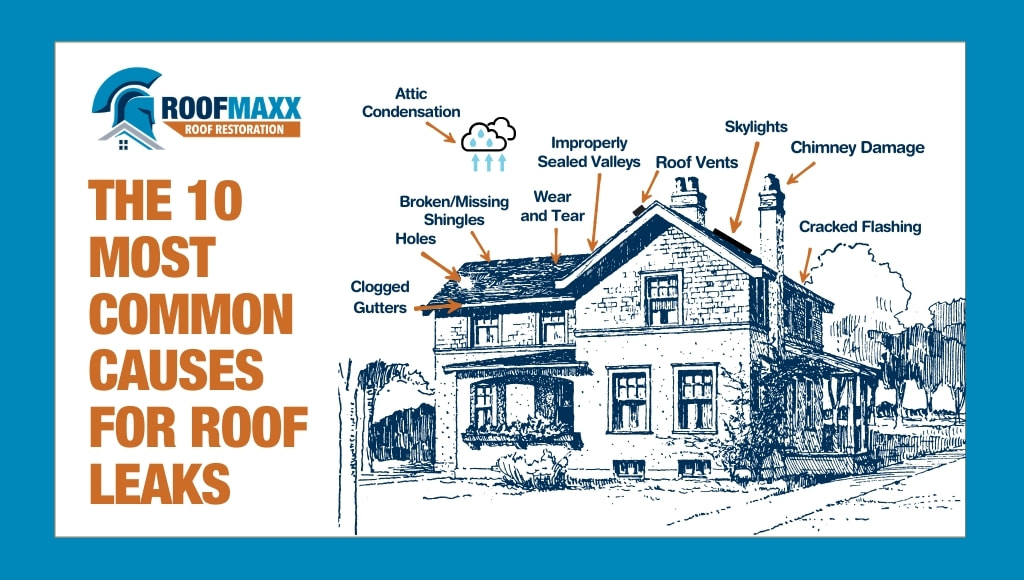
Your flashing, fasteners, nails, seals, decking, and shingles are your home’s first line of defense against leaks, but they don’t last forever. Something as simple as a torn plumbing boot that has dry-rotted after just 5 or 6 years is easy and inexpensive to repair if you catch it before the rot spreads.
Asphalt shingles dry out and become brittle over time, making them prone to cracks, wind damage, and leaks. Roof restoration brings back flexibility and performance fast.
Need Help? Chat with a Roof Maxx Restoration Specialist for Free.
Fill out this brief form to be contacted by your local Roof Maxx experts.


Assessing the Current Condition of Your Roof
Roof maintenance starts with understanding the current condition of your roof. Every Roof Maxx treatment begins with a thorough inspection that looks for the most common problems roofers find on asphalt shingles day-to-day.
If your roof is structurally sound, but still needs attention, we’ll give it a score based on what we find and use the info to recommend what comes next.
Everything looks good. No immediate maintenance necessary.
Your roof needs a little TLC. Minor repairs are needed and should be handled soon.
Your roof needs a little TLC. Minor repairs are needed and should be handled soon.
Your roof has reached the end of its lifespan due to damage or age. It's time for a replacement!

Taking Care of Any Minor Repairs
A score of 2 means it’s time to take care of basic maintenance needs before they get worse. Your Roof Maxx dealer may be able to handle any minor repairs for you as part of our optional Roof Tune-Up package. Maintenance tasks like these typically include any or all of the following tasks.
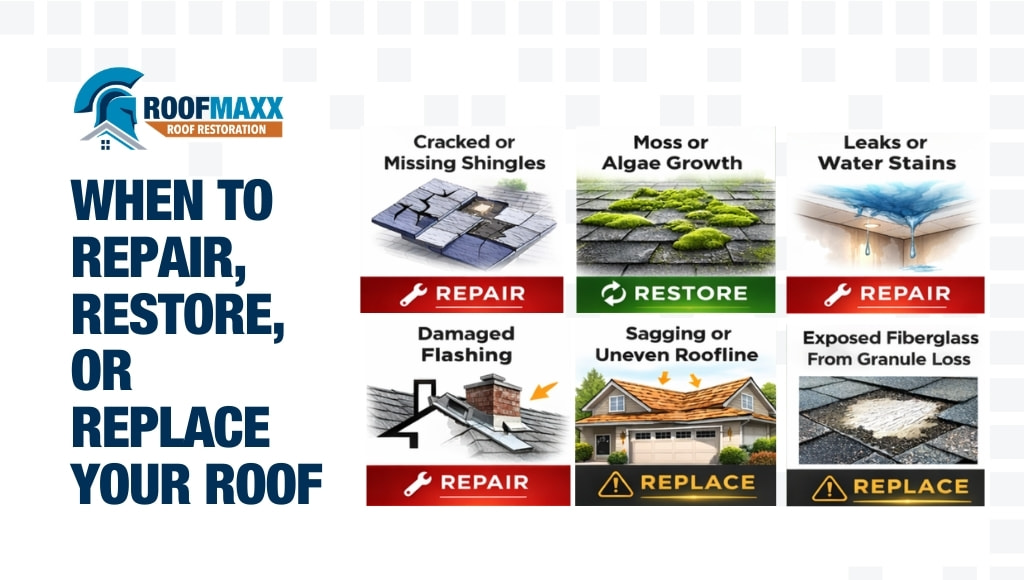
Some shingles loosen or fail long before the roof itself reaches the end of its lifespan. During a Roof Tune-Up, damaged shingles may be replaced, lifted shingles may be hand-sealed, and exposed nails may be sealed to prevent moisture intrusion.
Addressing isolated problem areas helps maintain the integrity of the roof system and reduces the risk of leaks forming around weakened shingles.
Many roof leaks begin at transition points or in your flashing, not in the middle of the shingle field itself. Components like rubber plumbing vent gaskets, rubber grommet screws, and sealant lines naturally wear down over time. A Roof Tune-Up may also include resealing deteriorated caulking, replacing cracked gaskets, and reinforcing vulnerable flashing areas to restore proper waterproofing.
Water that cannot drain properly will sit against roofing materials and accelerate wear. Clogged gutters, failing hidden hangers, debris buildup, and overhanging branches all contribute to premature deterioration. Clearing debris, maintaining proper drainage, and keeping branches trimmed helps protect both the roof surface and the structure beneath it.
Addressing areas like these helps ensure your roof is ready to benefit from Roof Maxx treatments, but it also reduces the risk that you’ll need a total replacement early. It’s our way of helping to strengthen your protection from the top down so you have one less issue to worry about.
Restoring Your Asphalt Shingles
With your roof cleaned, inspected, and prepped, we’re now ready to apply Roof Maxx!
Roof Maxx is sprayed evenly across your roof in a process that usually takes 2-4 hours. Once applied, it will take up to 72 hours to completely absorb.
Roof Maxx is a safe, all-natural formula that penetrates deep into the asphalt in your shingles, which takes the place of the petrochemical oils they’ve naturally lost over years of exposure to the elements. This improves their flexibility, durability, and remaining lifespan.
Watch a Roof Maxx treatment and see how the process works for yourself! The video in the link below explains everything your local dealer will do during your treatment so that you know what to expect.
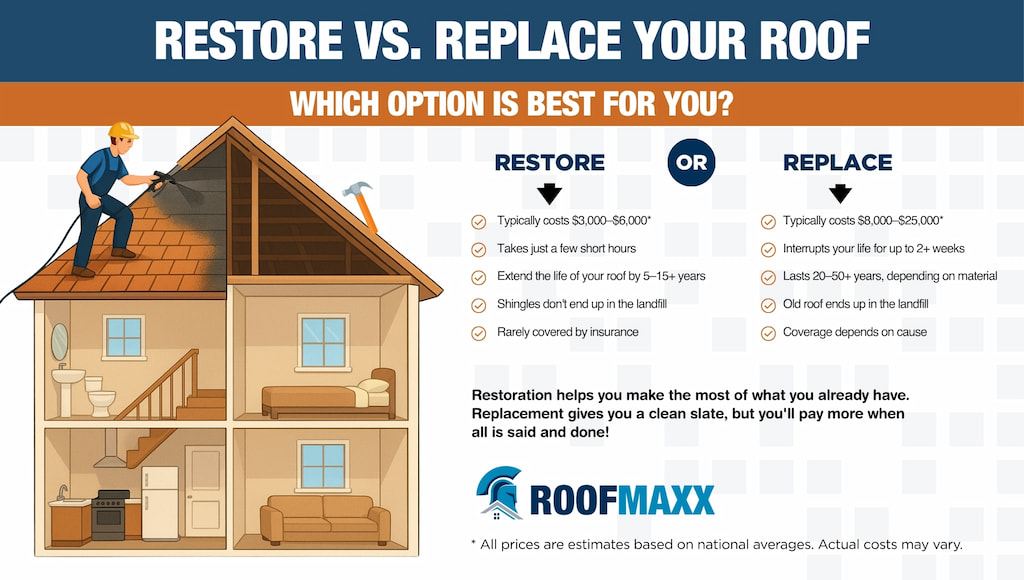
Find out exactly how much you’ll save with Roof Maxx, which typically costs up to 80% less than the price of a full roof replacement. Get a free quote from a Roof Maxx dealer in your area by reaching out below.
Need Help? Chat with a Roof Maxx Restoration Specialist for Free.
Fill out this brief form to be contacted by your local Roof Maxx experts.
| Area of Impact | No Maintenance | Repairs Only | Tune-Up + Roof Maxx Treatment | Replacement |
|---|---|---|---|---|
| Leak Risk | Small, quiet leaks continue unchecked until they cause mold and rot. | Repairing vulnerable areas prevents leaks from getting worse. | Vulnerabilities are addressed and shingles can shed water more effectively. | The risk for rot and damage resets, but newer shingles may provide inferior protection. |
| Shingle Condition | Shingles continuously dry out, become brittle, and eventually crack. | Damaged shingles are replaced, but the rest continue to age. | One or two bad shingles are replaced. Replenished oils boost flexibility roof-wide. | New roofs come with newer shingles, which don't contain as much protective asphalt. |
| Lifespan | Early replacement is almost guaranteed. | May slightly increase roof lifespan. | Significantly extends roof and shingle lifespan. | A new roof should last 30+ years with proper care. |
| Life Disruption | None—until leaks, dry rot, and other hidden or unseen problems become serious. | May be low or high depending on the repair or fix required. | Very low. The repair and treatment process is often over in a day. | Up to 2+ weeks depending on the size and complexity of your roof. |
| Savings Over Time | None. | $$$ | $$$$$ | $ (even lower if early) |
Learn more about how your roof works, why regular repairs and Roof Maxx are the best option for longevity, and how the parts of a roof work.
Get answers to the questions homeowners across North America ask us most often about Roof Maxx.
Yes! Most asphalt shingle roofs should be inspected annually as well as after major storms, tornados, and other weather events. Problems like small leaks, lifted shingles, and failed seals often start as a whisper and only become evident once the damage is severe.
Great question. Granule buildup in gutters that blocks water runoff, curled shingle edges, small nail pops, and brittle vent pipe gaskets often appear long before leaks, mold and mildew, or rot. If inspections caught these problems sooner, fewer homeowners would have to deal with sudden emergencies or failures.
Absolutely. Securing lifted shingles, sealing exposed nails, and reinforcing any loose or damaged flashing is an essential part of storm preparation. Lifted shingles act like a kite in a windstorm. If there’s enough force, they’ll crack or come off your roof completely. Nail holes and flashing are vulnerable to leaks.
Definitely. Leaves, sticks, twigs, and pebbles will build up over time and stop water, snow, and ice from flowing down onto the ground. Moisture that has nowhere to go will puddle up against your shingles, drip edge, and flashing instead. This can lead to ice dams, leaks, mold, and rot along the edge and decking.
Most recommended best practices stay the same, but others change completely. Shingles in hot, sunny climates dry out and become brittle faster because they’re bombarded by UV rays and high temperatures. In colder climates, freeze-thaw cycles put a lot of stress on your flashing, sealant, and caulking. Your maintenance plan should be adjusted to factor in influences like these.
Roof Maxx costs up to 80% less than a full roof replacement. This allows homeowners to reallocate money for other important home improvement projects or life expenses while avoiding the disruption of a complete tear-off.
No! Every roof needs maintenance. Even if yours is only a year old, you should still have it inspected for problems yearly and repair any issues identified right away. In fact, keeping up with tasks like these early on is the key to getting as much life as possible out of your roof and shingles.
No. Treating your roof counts as a type of maintenance, but other vulnerable areas and damaged components will still need to be repaired or replaced occasionally. That’s why we include an optional Roof Tune-Up—it’s an easy and effective way to correct minor issues and rejuvenate your shingles at the same time.