Roof work is dangerous and requires proper fall protection, training, and safety equipment. More than 150,000 people in the United States are injured in roofing accidents each year, and most of those injuries happen at home. The biggest hazards include falls from the edge, ladder accidents, lifting heavy bundles of shingles, cuts, burns, shocks, and falling through a bad roof. Professional roofers manage these dangers with personal fall arrest systems, roof ladders, special traction footwear, hard hats, and more.
Time to Read
~7 Minutes
What You’ll Learn
Why DIY roofing is so dangerous
The safety risks involved in roof work
How fall harnesses and other safety equipment can help
Why it’s always better to hire a professional roofer
Next Steps
Contact a roofer in your area for advice
Learn how to use safety equipment before you get up on the roof
Consider making Roof Maxx a part of your maintenance plan
Pulled muscles, puncture wounds, broken bones, and traumatic brain and spinal cord injuries are surprisingly common injuries when people fall off the roof of their home. In fact, roofers have the 4th most dangerous job in the United States.
Before you even think about climbing up that ladder and putting a foot on top of your house, please consider whether or not it’s worth the risk. We 100% recommend you call a professional roofer to do any inspection or work on your roof. If you’re committed to doing it yourself, read through this guide first.
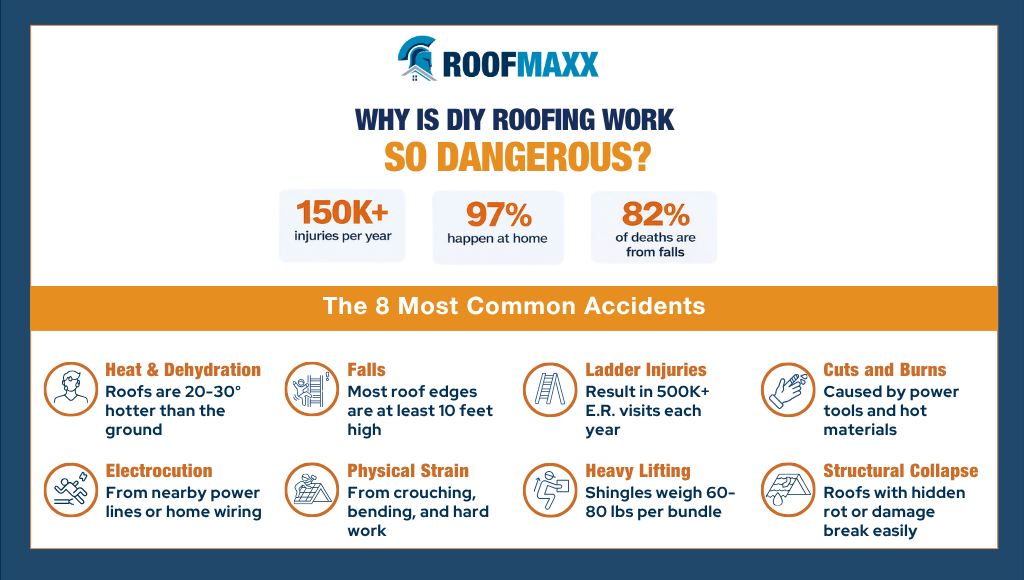
Infographic showing statistics for why DIY roof work is so dangerous. The lower half of the image lists the eight most common accidents with hints toward why they occur.
The Most Common Hazards in Roofing
There are multiple hazards to be aware of before you begin, and some of them may be less obvious than you think.Over 150,000 Americans require medical treatment from roofing accidents every year, and over 97% of those accidents happen at home.
Some of the most common examples include:
Falls from roof edges and heights, the #1 cause of roofing deaths
Ladder injuries from improper setup, overreaching, or carrying objects while climbing
Crouching and bending for long periods of time
Lifting heavy tools and materials (shingle bundles weigh 60–80 lbs each)
Sun exposure, heat, and dehydration
Puncture wounds, cuts, and burns from tools and materials
Electrocution from overhead power lines, interior wiring, and lightning
Structural collapse from hidden rot, moisture damage, or aging decking
There were134 workplace fatalities in 2023 alone, and 82% were a result of falls. One trauma center study found that 93% of roof-fall patients had to be admitted to the hospital for care.
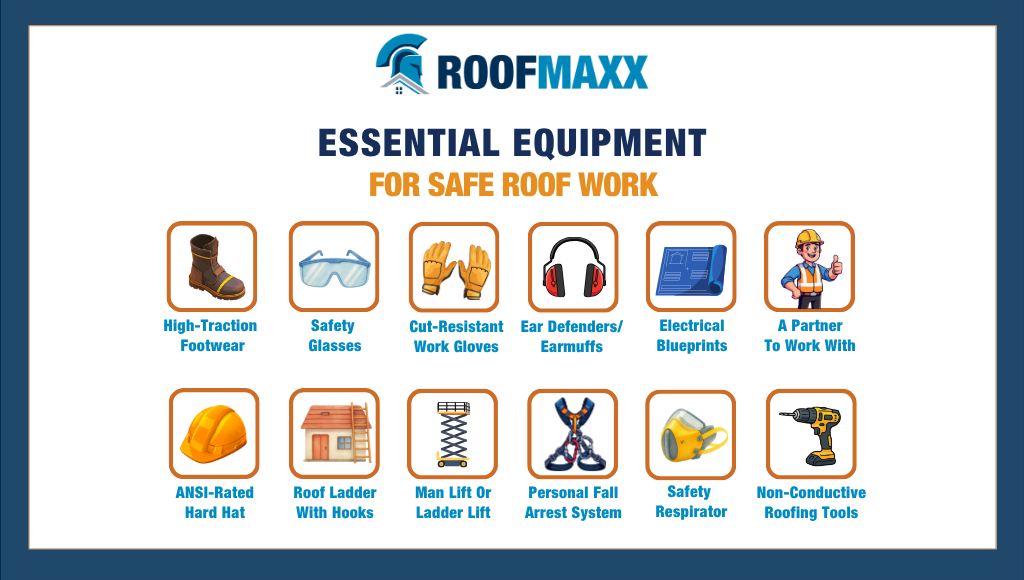
Infographic showing essential safety equipment roofers use to stay safe while working on a residential or commercial roof.
How Roofing Pros Stay Safe on the Roof
Professional roofers understand the risks of getting up on the roof, which is why they follow strict safety protocols. They also use highly specialized safety equipment that most homeowners don’t have, and it takes time and training to learn how to use them right.
That shortlist should include all of the following, at minimum:
Proper footwear with rubber soles and extra traction (Cougar Paws are a popular choice)
Safety glasses with polycarbonate lenses, anti-fog technology, and UV protection that fit
Cut-resistant gloves rated for handling sheet metal, nail strips, and raw shingle edges
Hearing protection (earplugs or over-ear muffs)
An ANSI Z89.1 rated hard hat to protect from falling debris and flying material
A roofing ladder that can be securely attached to the roof with hooks
An adequately weight-rated man lift or ladder lift for moving heavy materials
Anchors must be secured to a structural member and rated to 5,000 lbs per worker
Systems must have both a vertical and horizontal lifeline
You’ll also need a full-body harness with shock-absorbing lanyard
Respiratory protection for working around adhesives, solvents, asbestos, or silica
Non-conductive tools that reduce the risk of shocks and short-circuits
A blueprint or map of overhead and in-home electrical lines so don’t accidentally hit them
You should also always work with a partner, or at least have someone who can spot you and call for help if something goes wrong. If you don’t have all of this available, or don’t have the knowledge and training to navigate it, it isn’t safe for you to be on the roof. Do yourself a favor and call a roofing pro instead.
The Risks of DIY Maintenance Don't Stop At Personal Safety
Personal protective equipment (PPE) can be very expensive—so much so that it may actually cost you less to call a roofer for help than to just order everything you need. Even if you have it all already, there are other serious risks involved in DIY maintenance that go way beyond your own health.
Professional roofers get calls all the time from homeowners who:
Accidentally voided the manufacturer warranty by not having it handled by a pro
Tried to claim a roofing injury on their home insurance, only to be rejected for risky activities
Discovered leaks, mold, or other costly problems caused by a botched repair months after the fact
Totally missed damage in the first place because they didn’t understand what to look for (and how)
Decided on their own to go with a $20,000+ replacement when all they needed was restoration
The costs for fixing most minor problems is also low enough that it just doesn’t make sense for you to invest in all of this equipment for a once-off job. The only exception is if you’re in the process of becoming a roofer yourself, in which case, welcome to the field!
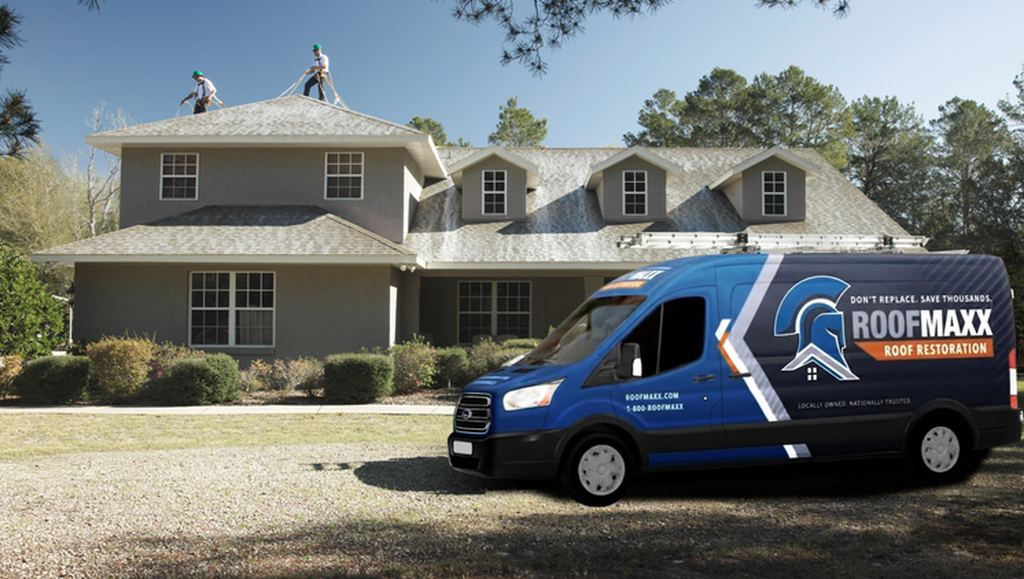
Two Roof Maxx dealers spray the treatment onto a customer's home behind a branded Roof Maxx van
Maintain Your Roof to Avoid Replacement
DIY roof work or maintenance might seem like a good way to save money and time, but the simple truth is that just isn’t usually the case for most homeowners. It’s safer and more reliable to reach out to a roofer in your area who has a good reputation so they can help you keep it in shape without taking risks.
Cleaning your gutters from the ground and calling a pro right away for help when you suspect a problem will help you get more life out of your roof, but Roof Maxx treatments can also help. To find out if you qualify and how it can help you save, get a free, no-obligation quote.
Frequently Asked Questions about Roof Work
At what height do falls from the roof become dangerous?
Depending on how you fall, including what you land on and which part of your body hits first, injuries can happen even after a short drop. Most residential roofs sit about 10–30 feet above the ground, which is more than enough to cause broken bones, head injuries, or spinal trauma.
How does roof pitch fit into staying safe on the roof?
Roof pitch has a big impact on fall risk. Roofs steeper than 6:12 (about 26.5°) are usually considered unsafe to walk on without specialized safety gear. As the slope increases, traction drops and it becomes much easier to slip, especially on asphalt shingles that have lost granules or become brittle with age.
Can I maintain my roof without walking on it?
Yes, but only some tasks can be done safely from the ground. Clearing debris from your gutters is a big help because it allows your roof to shed water more effectively. If you can reach the shingles from the ground, you can also check if they feel dry or brittle; this is a sign it’s time for roof restoration.
For anything beyond basic observation or cleaning, a professional inspection is usually the safest option.
How can I tell if my roof needs attention?
The only real way to be sure is to schedule an inspection, but that doesn’t mean you shouldn’t keep an eye out for common warning signs like these:
If you start noticing any of these problems, it’s usually a good idea to have a roofing professional take a look. Definitely don’t try to handle it yourself, as the damage under the surface might be worse than you think.
George Karakitsios owns the website and marketing technology behind Roof Maxx. He has spent more than 12 years building web experiences for homeowners and Roof Maxx customers.