
New roofs on primary residences aren’t tax deductible because they’re considered capital improvements that increase a home’s tax basis rather than a current expense. For commercial or rental properties, full roof replacements are usually depreciated over time depending how the property is classified by the IRS. However, routine repairs and maintenance can be deducted as business expenses in the same year. Roof restoration also lets property owners extend the lifespan of their rooftops at a fraction of what replacement costs.
| Time to Read | 6–8 minutes |
| What You’ll Learn |
|
| Next Steps |
|
Customers ask us all the time if they can deduct the cost of putting a new roof on their home on their taxes. The answer, unfortunately, is no, and that can sting big time when you get the final bill.
Many homeowners can’t afford roof replacements without a tax write-off. Fortunately, replacement isn’t always necessary. Roof restoration solutions can often add years of life to an existing shingle roof at a fraction of the cost.
Installing a new roof on a commercial or rental property is another story. Costs like these are typically considered a business expense, which means you may be able to claim them on your taxes.
We can’t give you tax advice, but we do spend a lot of time working around guidelines like these day-to-day. Find out what the IRS has to say about repairs and replacements, where to find the info you need to apply for them at tax time, and how alternatives like Roof Maxx can help.
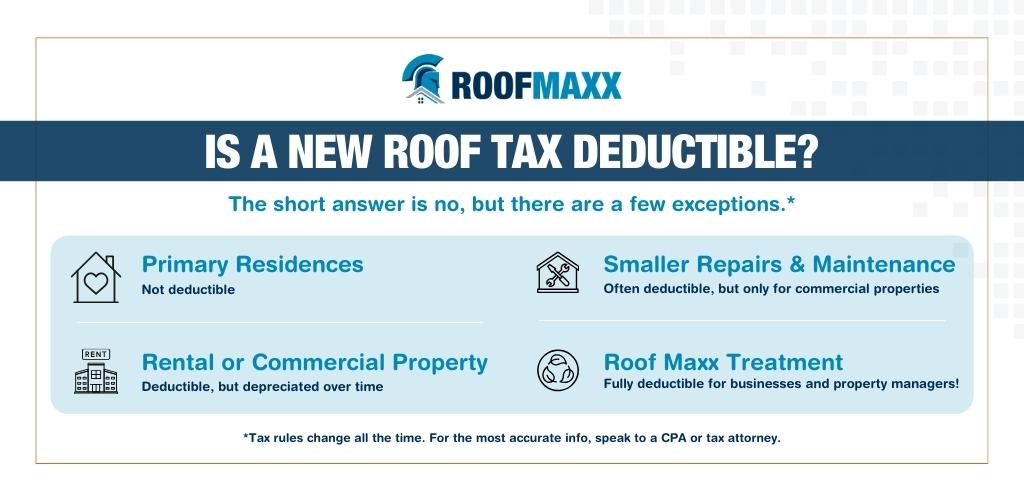
Tax deductions for residential projects like these are covered under IRS Section 263(a), but you can find the plain English version within the agency’s Publication 530 (Tax Information for Homeowners).
The language is pretty straightforward:
“You must add the cost of any improvements to the basis of your home. You can’t deduct these costs.”
Both substantial repairs and replacements fall under these guidelines because they’re considered a material improvement that adds to the overall value of your home. They reduce your “tax basis” which lowers the amount of taxes owed when you sell.
You’re still saving in the long run, you just don’t get any money back right now. But that can make it hard to pay for roof replacements and other home improvement projects in the meantime.
That means you might want to restore your current shingles instead of replacing them. Fortunately, older asphalt shingles are more durable than newer ones anyway, so this can actually be a good thing.
Deductions for roof repairs and replacements are covered in three main places: IRS Sections 162, 263(a), and 168, with additional guidance and instructions on Form 4562.
Full roof replacements are generally treated as a capital improvement instead of routine maintenance or repairs. You can claim a portion of the deduction in the same year, but the whole amount must be depreciated (stretched out) over the life of the product (typically 27.5 or 39 years).
The good news is that most regular repairs and maintenance (including Roof Maxx treatments) are considered a basic business expense. You can write off 100% of the costs in the same year, and potentially avoid a disruptive tear-off that affects your work or tenants for up to 80% less.
Remember: not being able to write off the cost of a new roof is only an issue if you really need one, and many homeowners don’t. The truth is that you probably don’t need to replace your shingles nearly as often as you believe. You may just need to restore their durability and flexibility by treating them.
Roof Maxx is a cost-effective alternative to asphalt shingle replacement that can:
When you get more life out of your existing roof, you spend less on installing new ones over time. That means you enjoy short-term and long-term savings without risking tax laws changing later on.
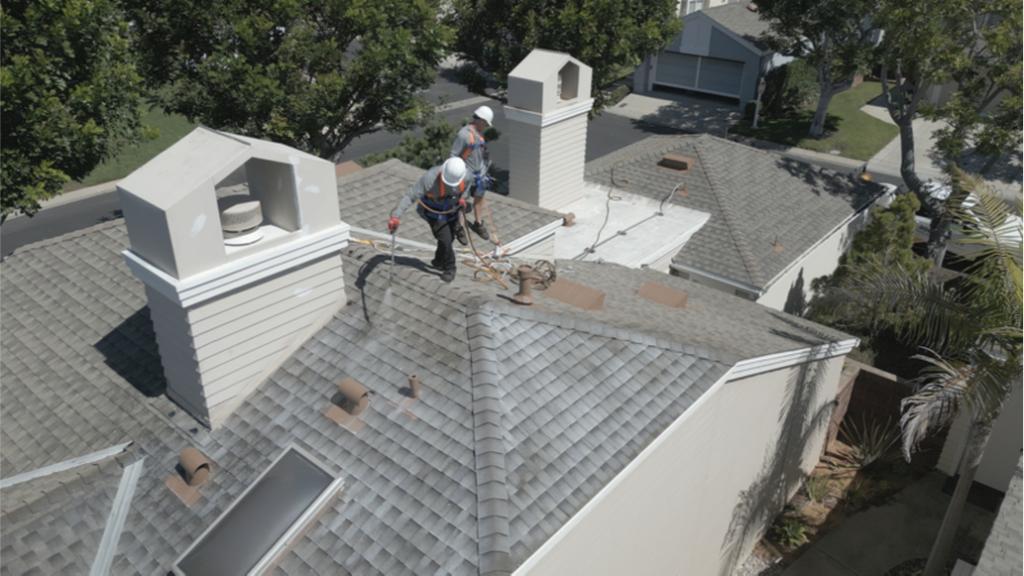
See what a typical Roof Maxx treatment looks like for yourself.
*With regular applications every 5 years.

This is a situation many customers find themselves in every day. You aren’t alone, but you do have options. We recommend scheduling a free roof assessment with one of our dealers first. There’s no obligation, and if you qualify for the treatment, you could save thousands of dollars.
There are some situations where only a new roof will do. Loans, lines of credit, and other financing options can help you stretch the payments out over a few months or years. Just make sure you understand the fine print and the interest rate, as a bad rate can leave you paying twice as much or more in the end.
Maybe. The guidelines specifically state that the work needed to be done before December 31, 2025, so you might be okay as long as it was fully complete by then. This is a great question for your accountant, bookkeeper, or whoever handles your personal or commercial taxes each year.
You can also call the IRS to ask at 1-800-829-1040 (for individuals) or 1-800-829-4933 (for businesses).
This is another great question for your tax pro. The answer will usually depend on whether you qualify for business use of home and/or a home office, and if so, how much of the space is work-specific. If your office takes up 25% of your home, you can usually only deduct around 25% of the total cost.
Yes, absolutely. Always keep all invoices, contracts, receipts and proof of payment for any work you have done for a period of at least 7-10 years. If the expense is deductible or depreciated, you’ll need records to support it, but this can also save you if you need to file a warranty claim, too.
We’d love to tell you that this is another area where you can get your money back, but that just isn’t the case. A rebate was previously available for shingles with cooling granules as part of the now-defunct Energy Efficient Home Improvement Credit (25C), but it expired in December 2025.
Some roofing materials were also covered for customers who were installing new solar energy systems under the Residential Clean Energy Credit (25D) Unfortunately, it, too, expired.
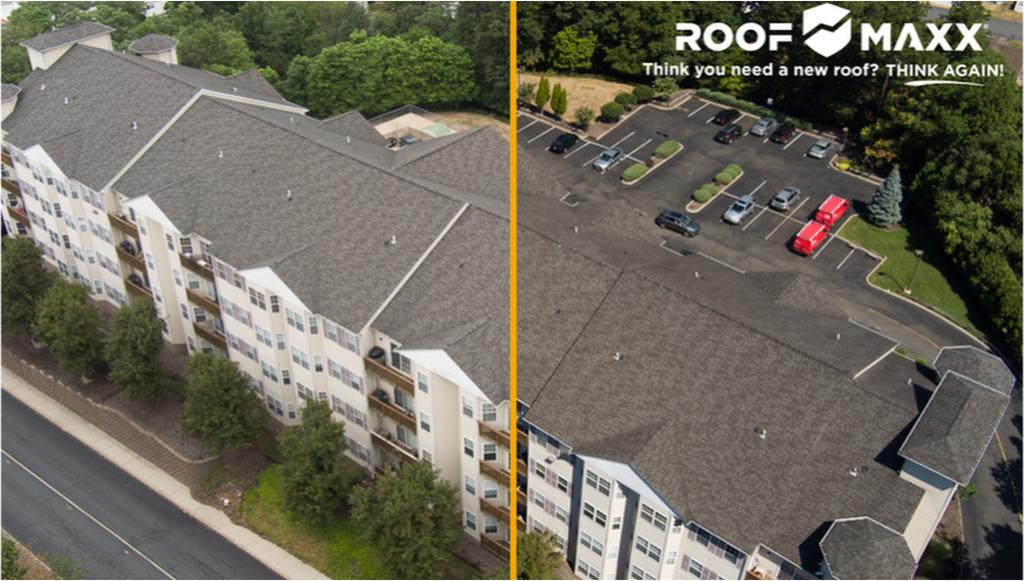
So many property owners rush into an expensive roof replacement without ever realizing that alternatives like Roof Maxx exist. Our plant-based roof restoration solution soaks down deep into your asphalt shingles to soften the petrochemical core, restoring flexibility and performance for up to 80% less.
Whether you’re managing a rental property or just maintaining your home, Roof Maxx can help you put off roof replacement until it’s absolutely necessary. Find out if you qualify with a free roof assessment!

With our five-year, transferable warranty, you’ll enjoy the peace of mind that your roof and entire home are protected.